The Collection
The finds, one by one
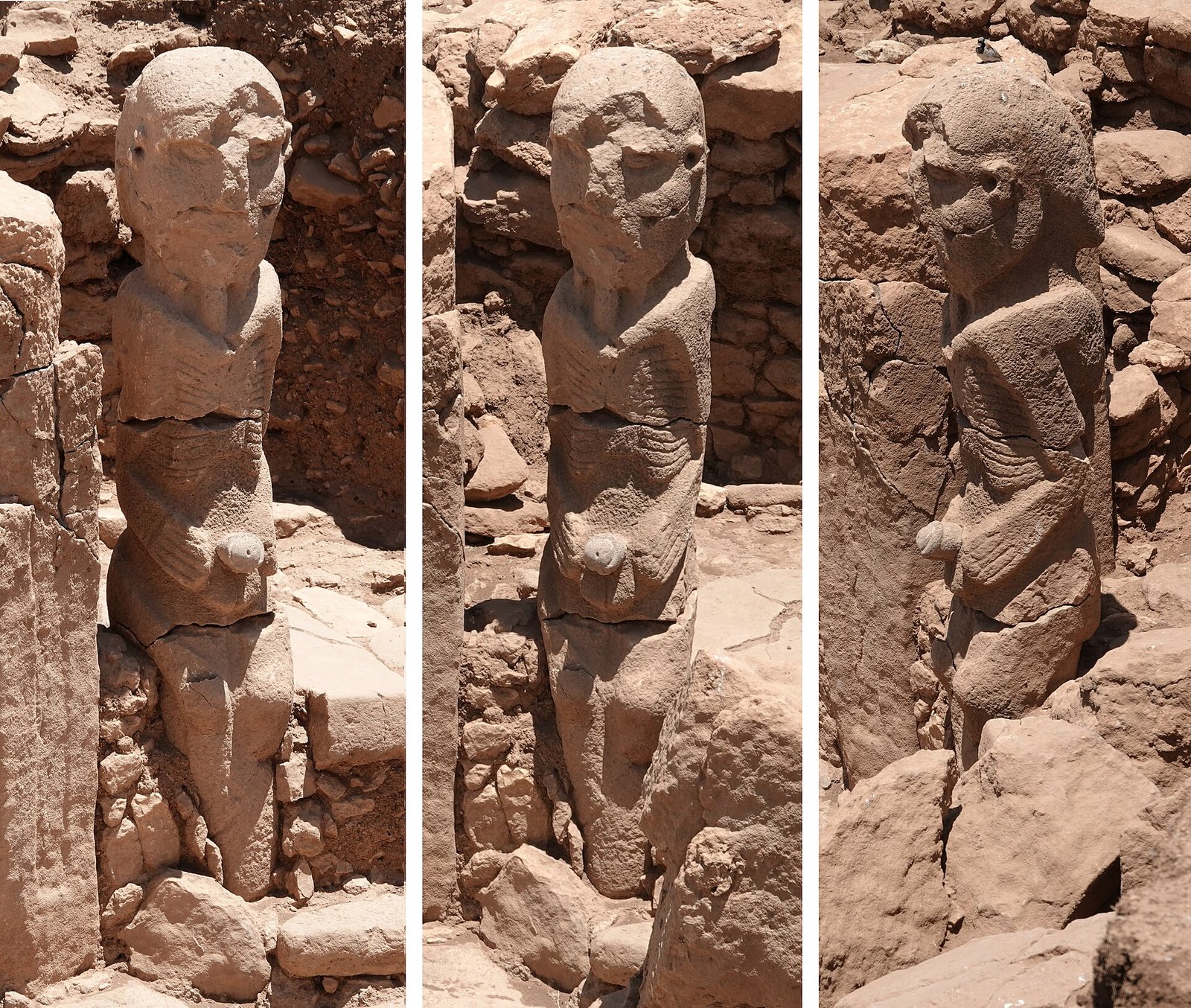
The "Ribbed Man"
A life-sized limestone figure, 2.3 m tall, seated with its hands at the front of the body, its ribs and spine carved in gaunt relief. Set in a floor niche beneath a vulture — a shrine to death and rebirth.
See the figures →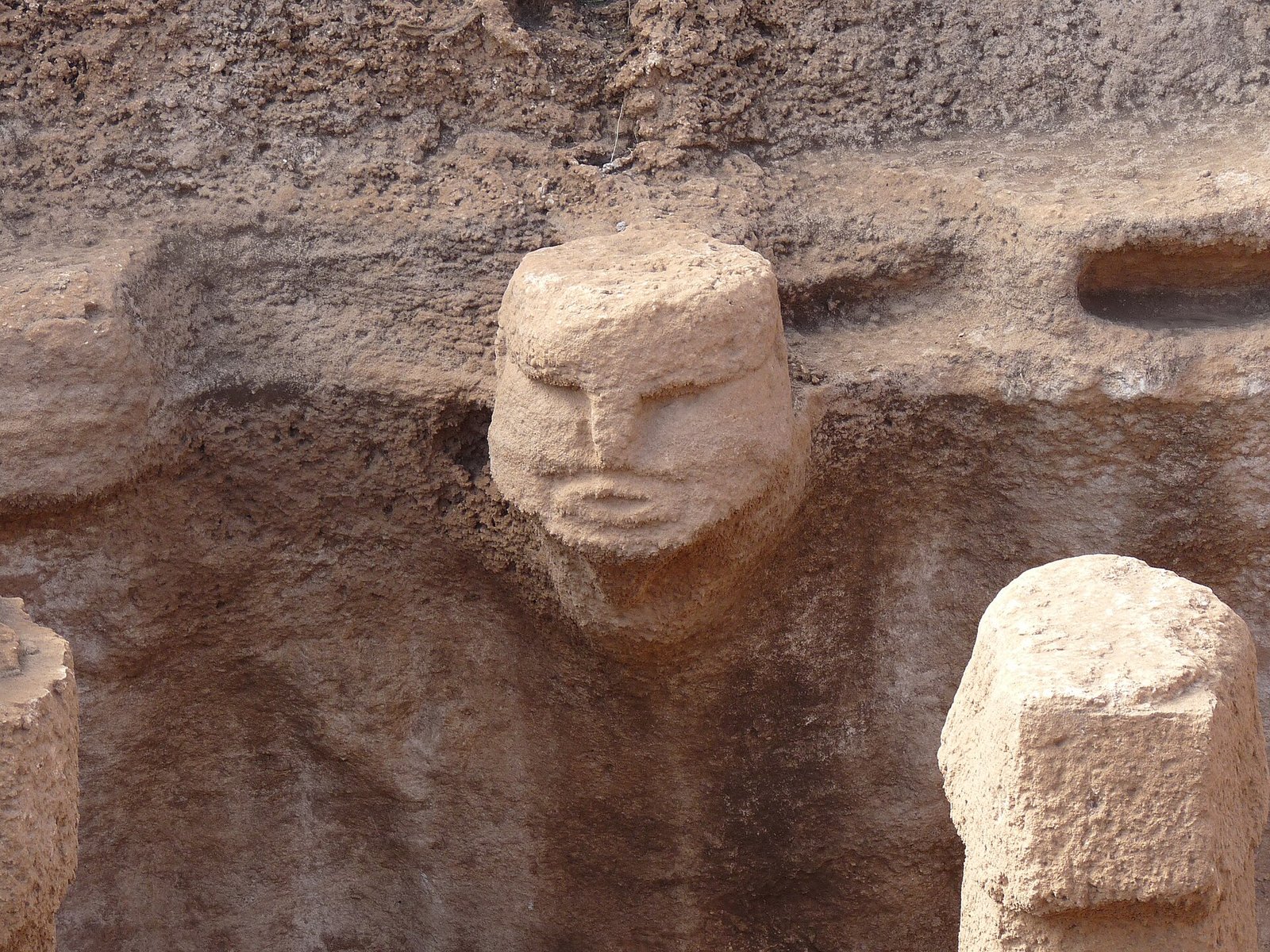
The Human-Faced Pillar
The first T-shaped pillar ever found with a human face — nose, deep-set eyes, an angular jaw on a 135 cm stone. Proof, the excavators say, that the pillars were people.
Read the story →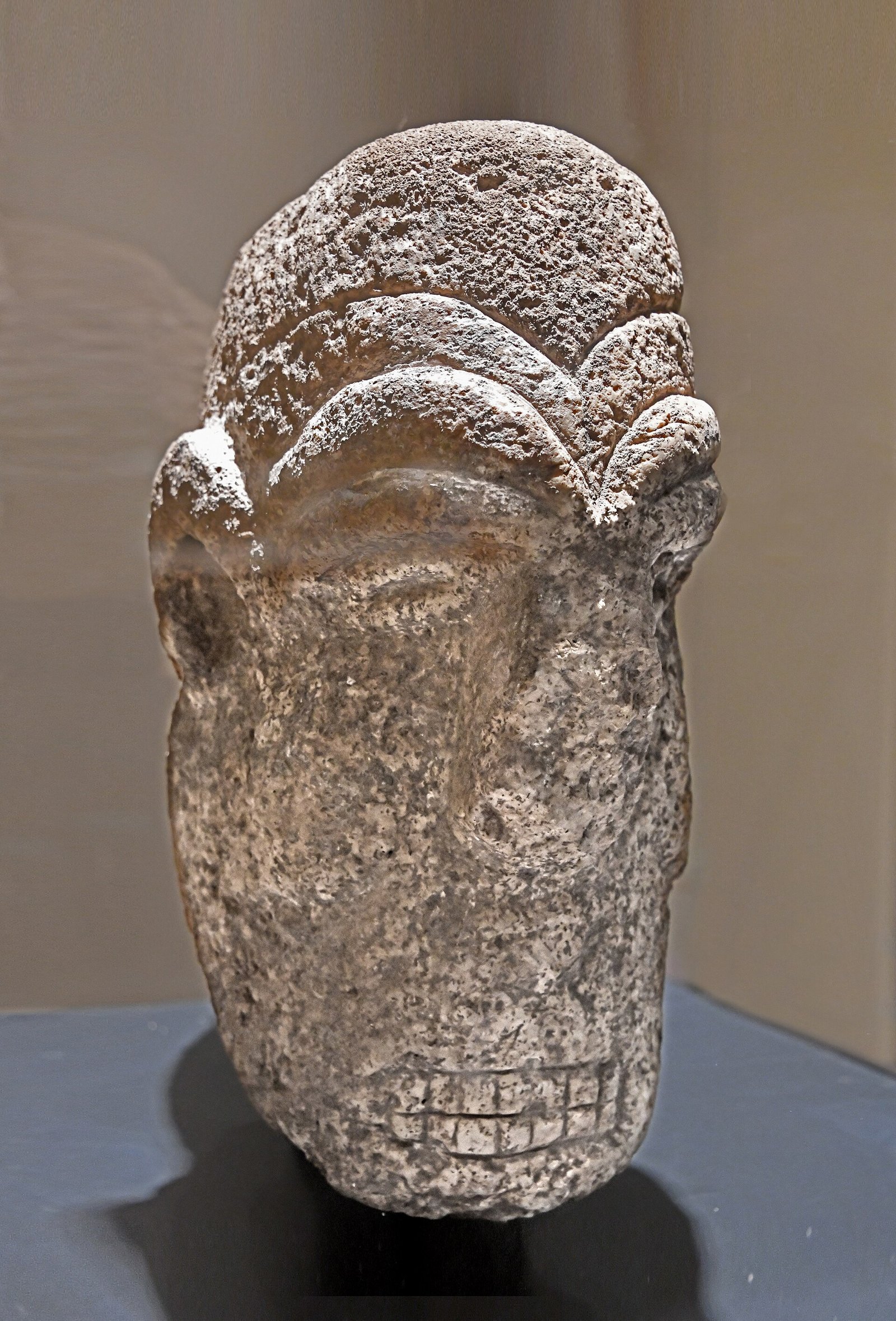
The Carved Head
A sculpted human head from Karahan Tepe — the stylised hair, deep-set eyes and bared teeth of a face made eleven thousand years ago, and one of the most recognisable finds from the site.
Read the story →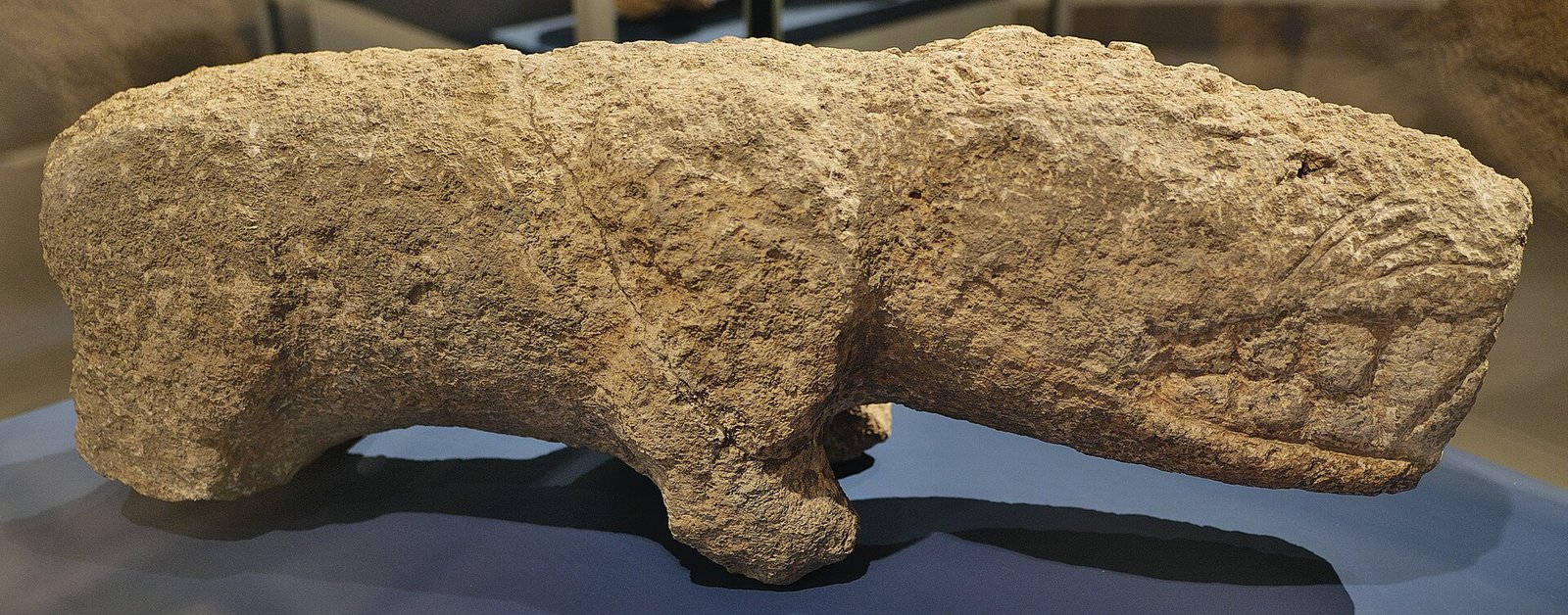
The Leopard
The apex predator — the one animal that could kill a person — carved as sculpture and buried as selected bone among the site's curated deposits. The most powerful figure in the whole bestiary.
Read the leopard's story →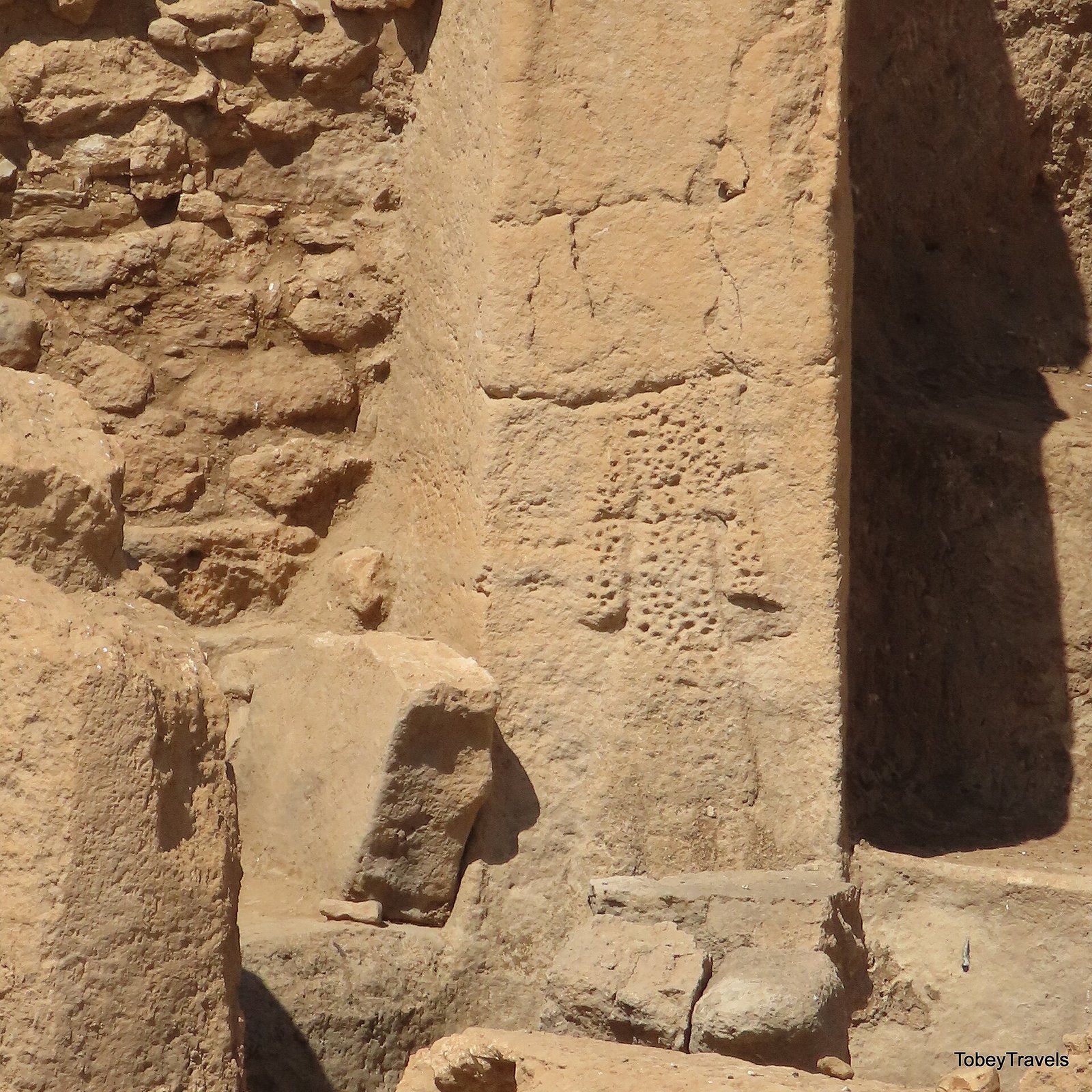
The Eight-Fingers Pillar
A standing stone carved as a figure with two arms — and on each hand, eight fingers instead of five. A deliberate break from nature, now in the Şanlıurfa museum.
Read the story →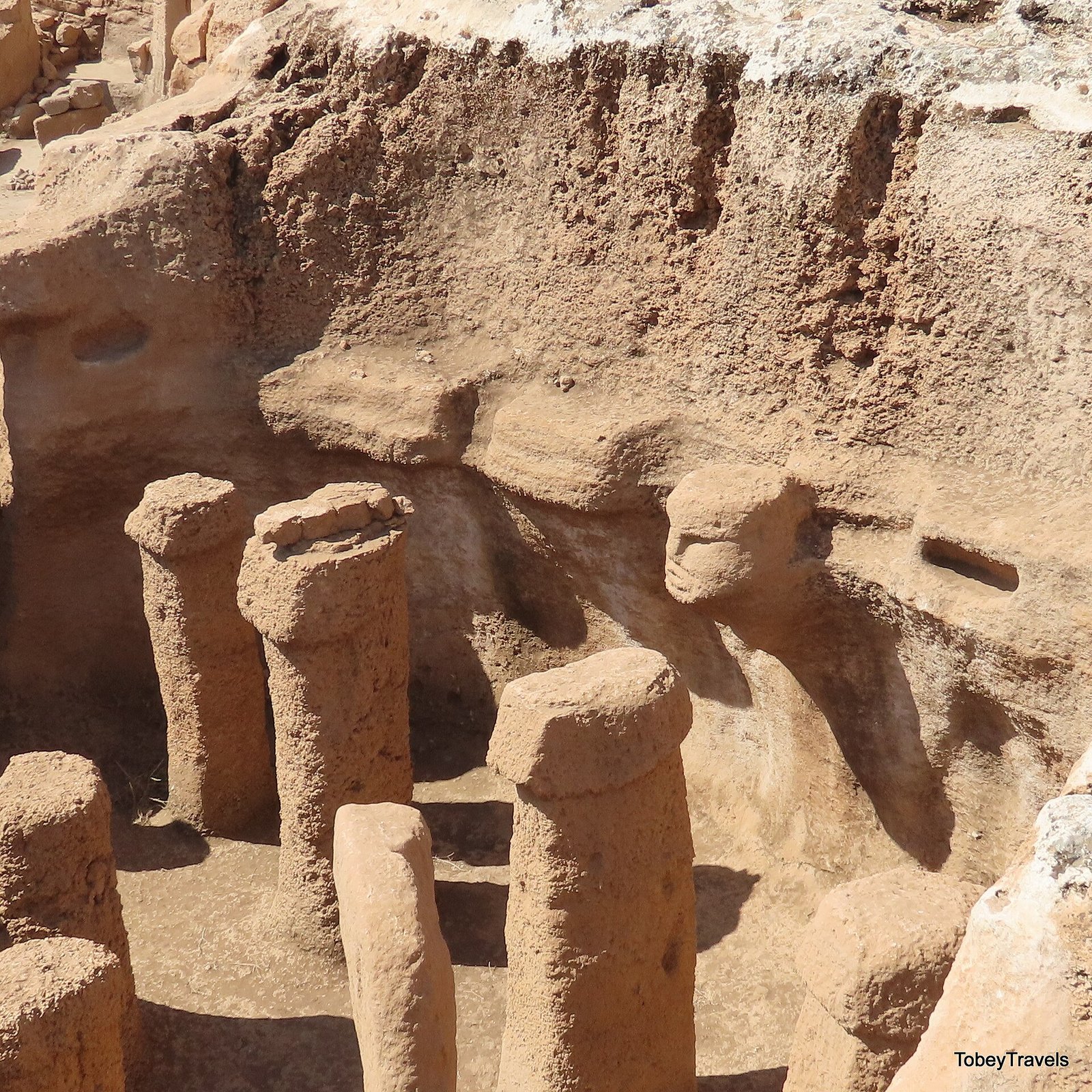
The One-Way Path
A 70 cm opening, a five-step descent, and a different stair back out — the choreographed, one-directional passage through the pillar room, read from the wear on the steps.
Walk the path →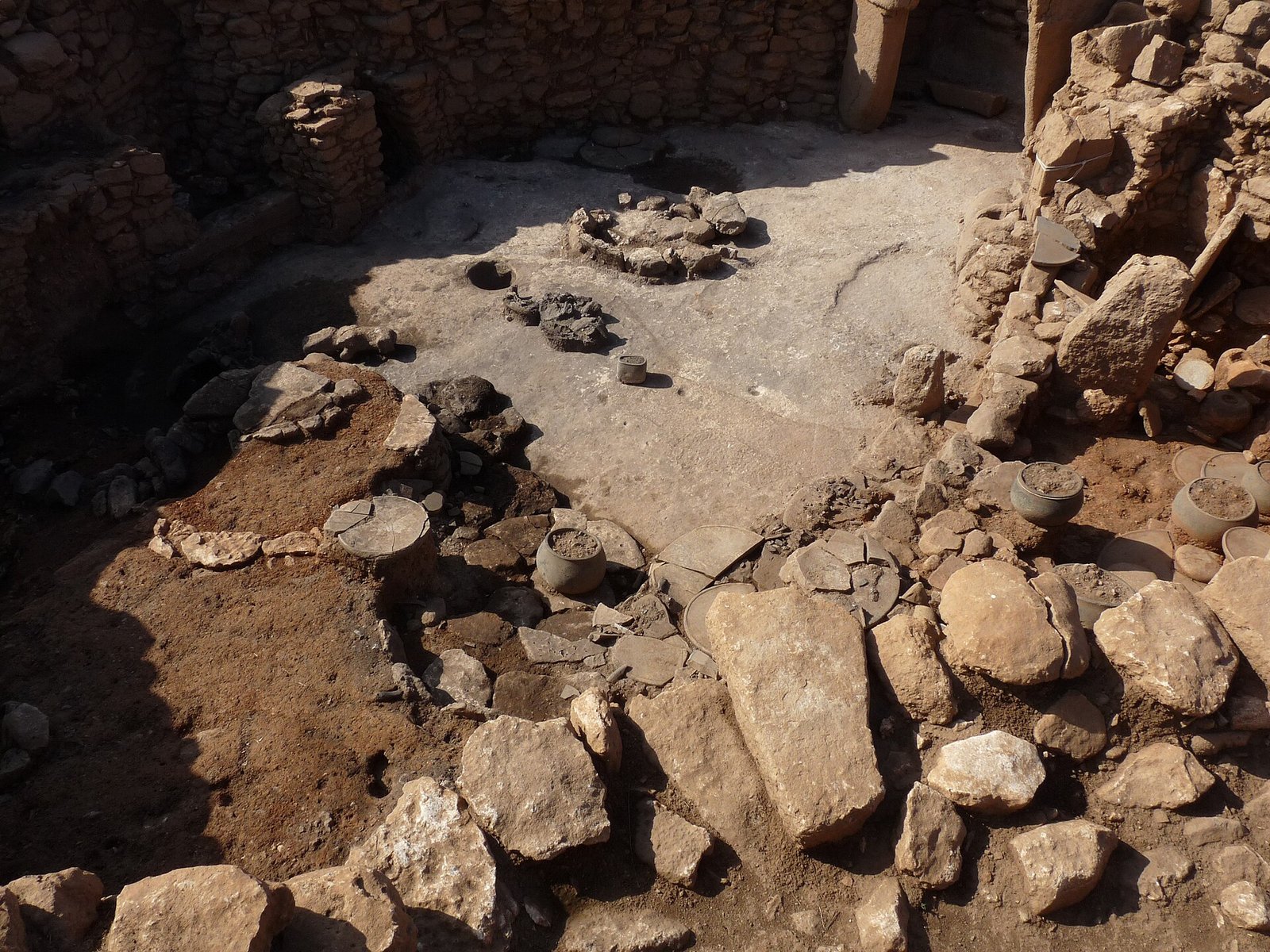
They Buried Their Own Temple
The pillar rooms weren't lost — they were filled and sealed on purpose, with flat slabs laid over the standing pillars. Closure, not ruin.
Read the story →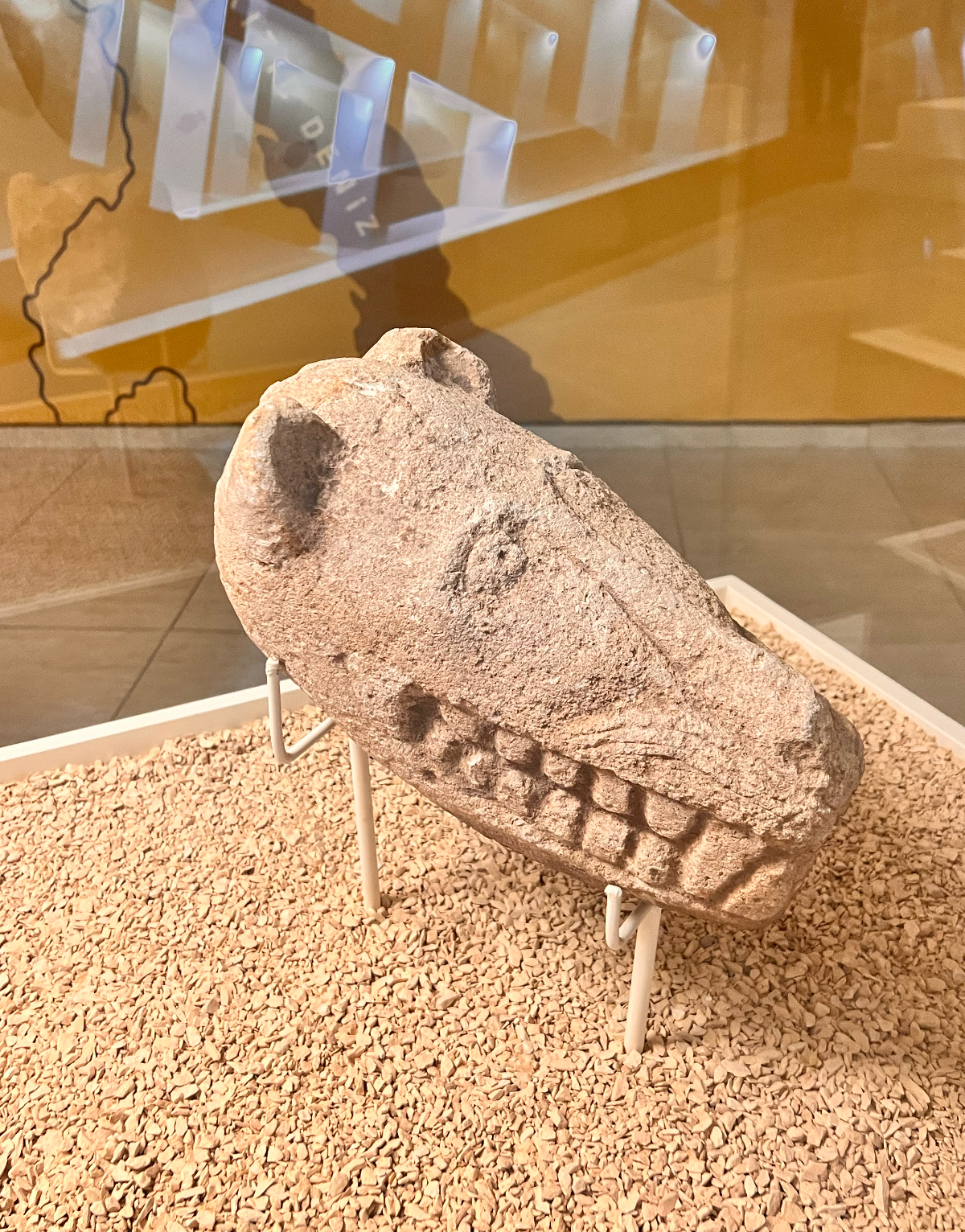
The Sacred Leopard
Leopards are carved and sculpted across Karahan Tepe — and their bones were buried here too, carefully placed among aurochs and wild goat. A predator that clearly carried weight.
Explore the symbols →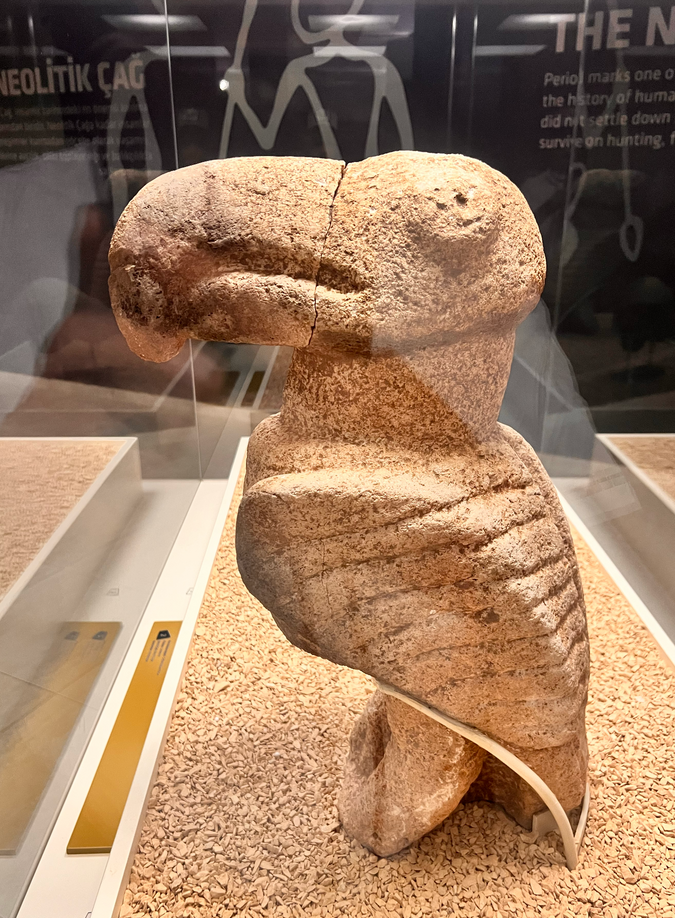
The Griffon Vulture
A vulture carved in the round, tied to the region's sky-burial rites — the bird that carried the dead. Found in association with the site's Western Terrace buildings.
Explore the symbols →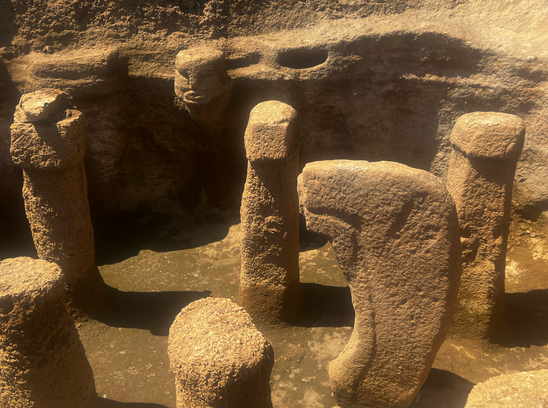
The Standing Pillars
Eleven upright pillars rising from the bedrock of the Pillar Room beneath the watching head — several carved in a stylised phallic form, in the arrangement that made Karahan Tepe world news.
Enter the room →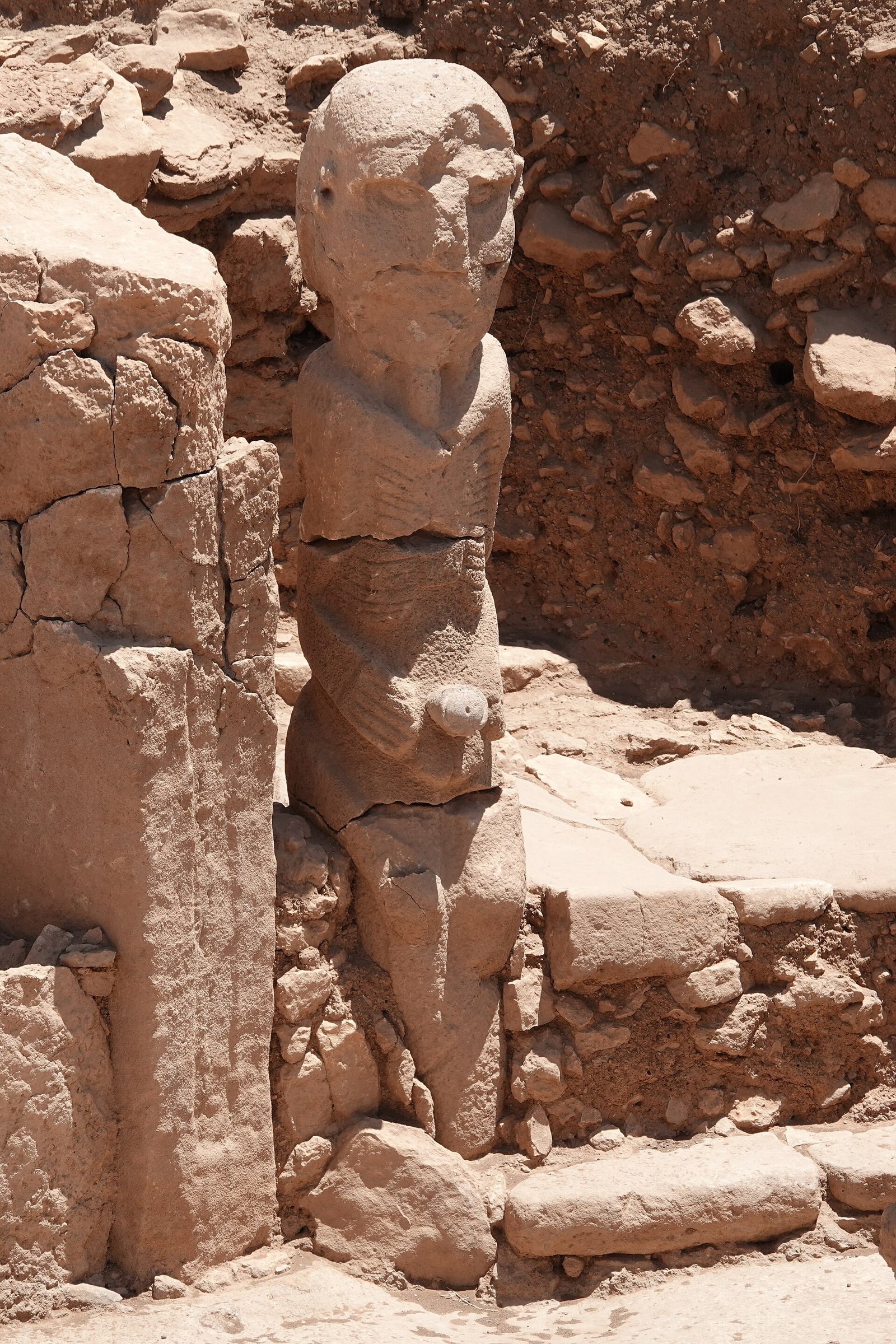
The Eight-Fingered Pillar
A hand carved with eight fingers, and shoulders set at an angle unlike any other pillar here. A mistake — or a signal that this figure was never meant to be quite human?
Who built it? →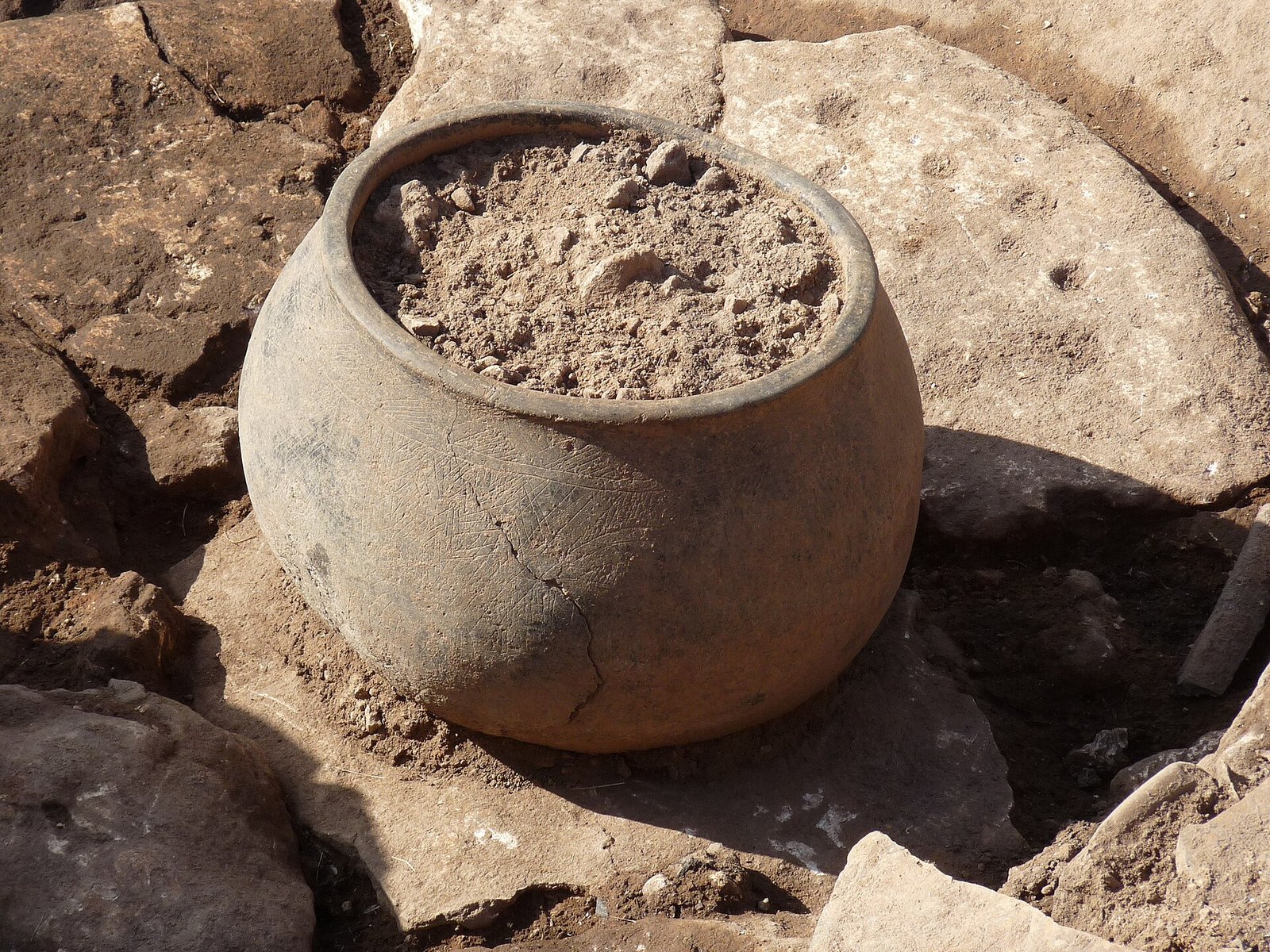
The Nested Vessel Scene
A vessel within a vessel, holding three stone rings and three tiny animals — fox, vulture, boar. The excavator calls it an early three-dimensional story.
See the scene →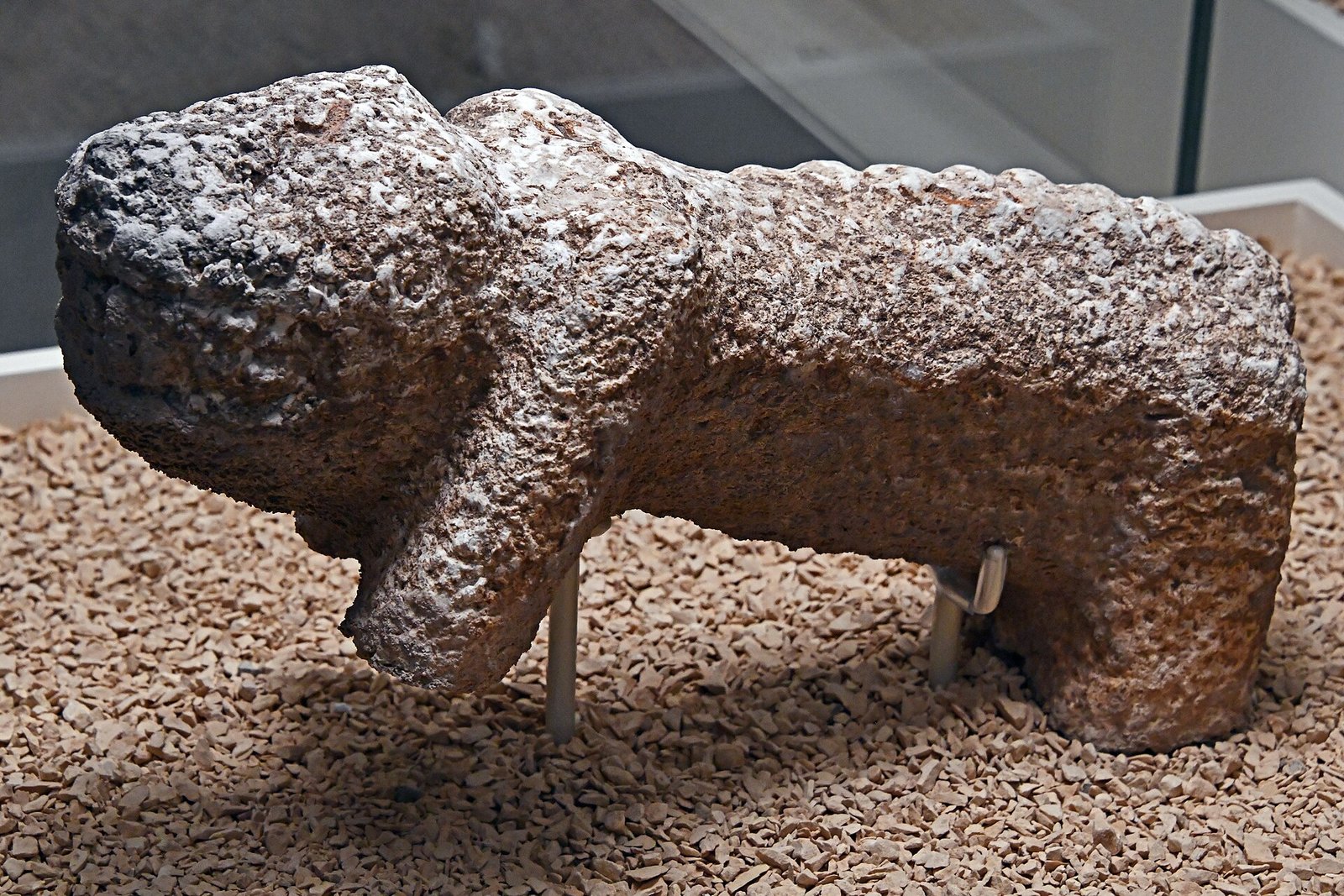
The Animal-Part Deposits
Leopard bone, vulture wing, wolf jaw, fox paw — selected animal parts, deliberately buried with vessels and fire. Not rubbish; a gathering of chosen parts.
Read the story →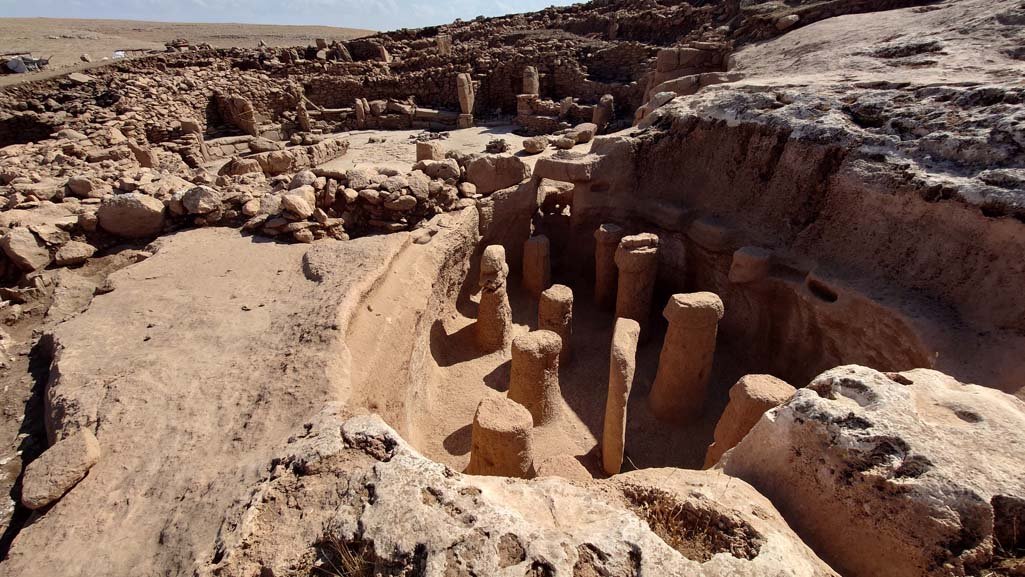
The Serpentine Channel
A long, snake-like groove cut into the bedrock of the Pillar Room. Something flowed through it — what, we don't yet know.
Follow the channel →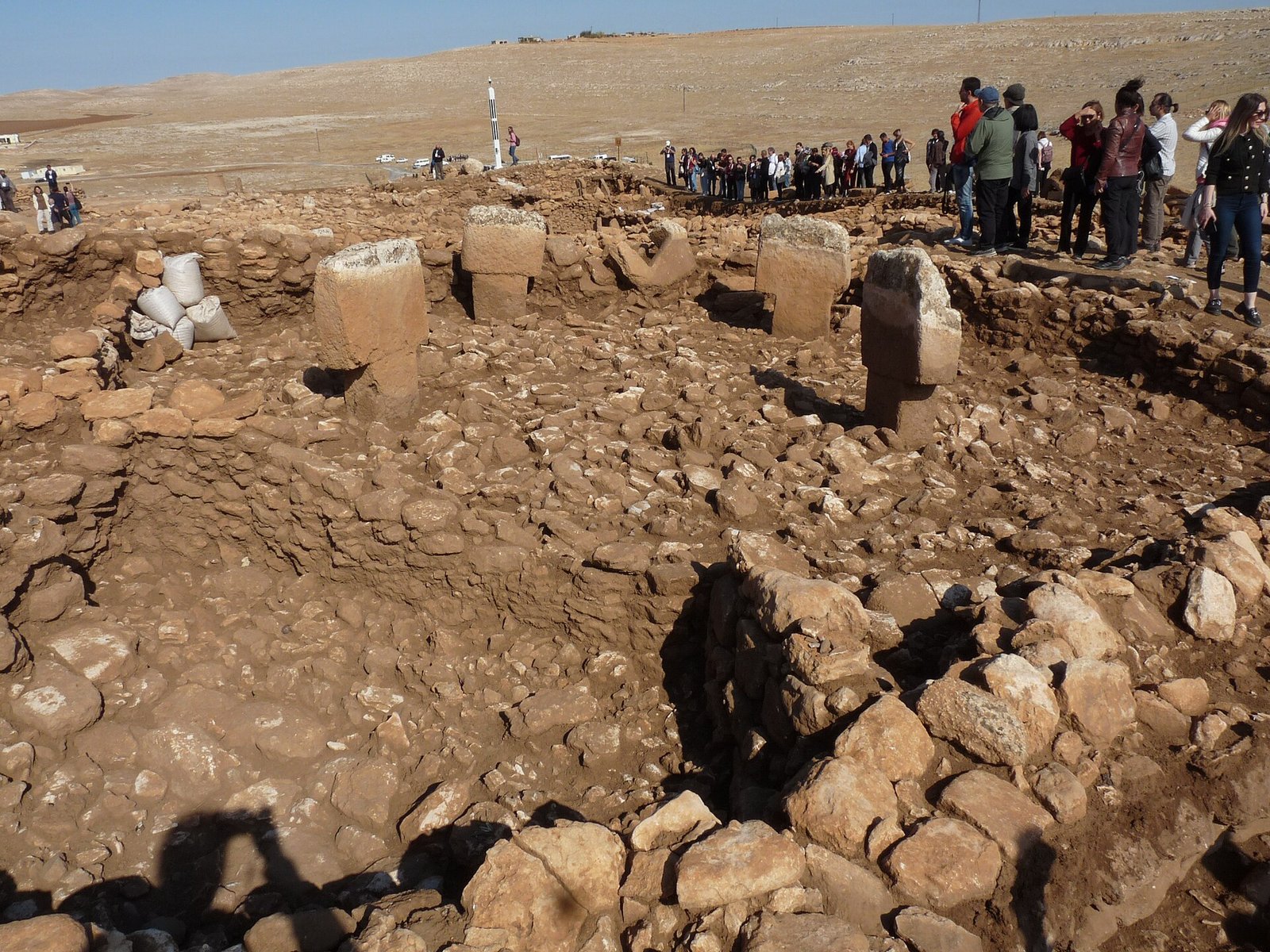
The Running Donkey Slab
A wild donkey caught mid-gallop, carved on a small slab and set into a working floor — the imagination of Karahan Tepe at the scale of daily life.
Read the story →Only a small fraction of Karahan Tepe has been excavated, and new objects emerge every season — this collection grows as they are published. Descriptions draw on Prof. Necmi Karul's reporting and official Taş Tepeler material; where interpretation is debated, we say so. Some entries link to fuller pages; others are being expanded.