The Leopard — Key Facts
No animal at Karahan Tepe was singled out like the leopard. It was rendered fully in the round as a freestanding sculpture and as a carved head, and — most strikingly — buried in fragments inside the site's buildings. In a place built to put the human body under pressure, the leopard is the animal that raises the sharpest question of all.
The only animal that could kill you
Every other animal in the Karahan bestiary can be read as a neighbour: the fox at the edge of the camp, the wild donkey on the plain, the vulture over the dead, the snake underfoot. The leopard is different. In this landscape it was the one predator with the power to hunt and kill a human being. That single fact changes how we should read its presence. A leopard carved into a wall or set on a floor is not a picture of the countryside. It is a picture of danger — of the thing at the top of the food chain, brought deliberately into human space.
The leopard in stone
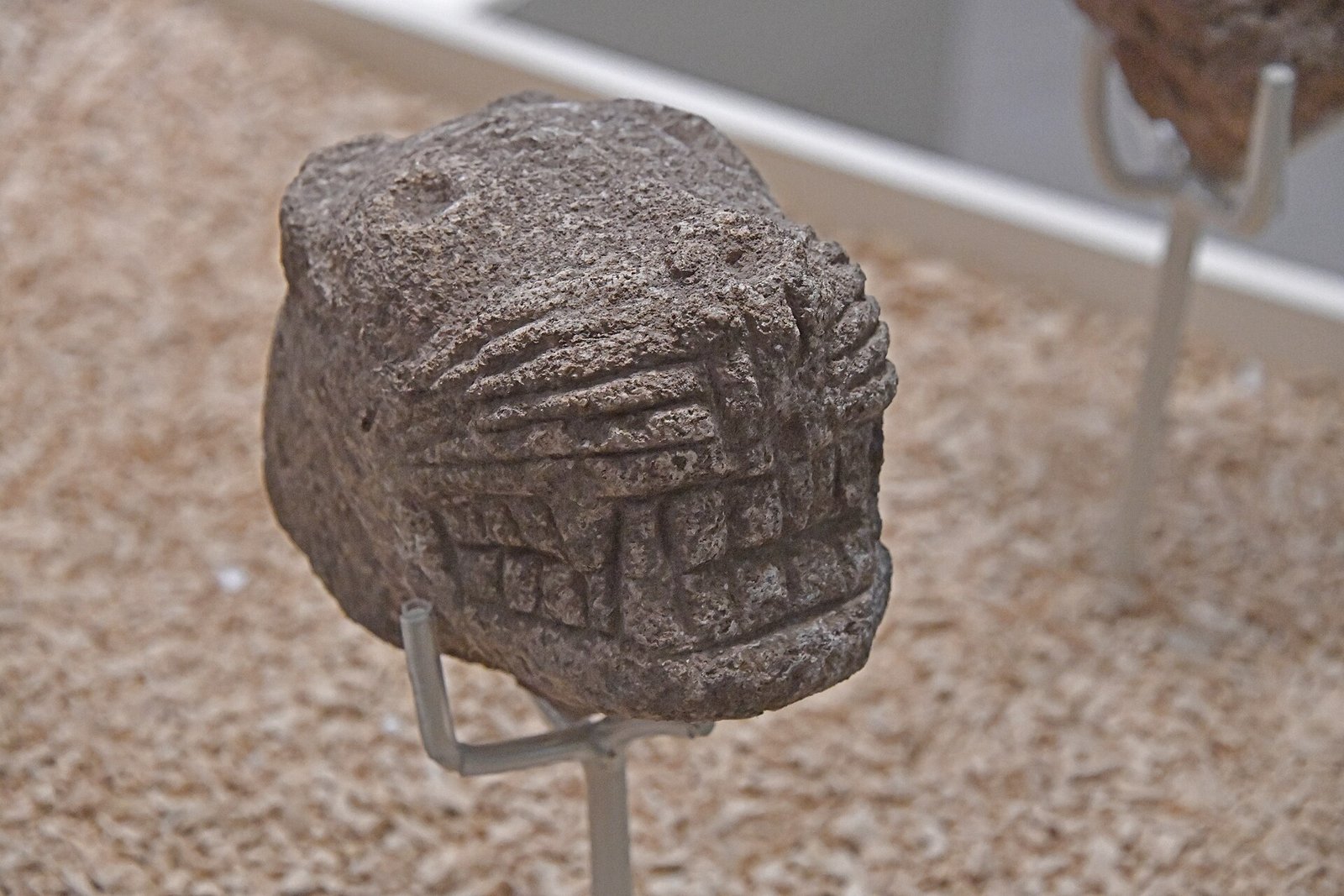
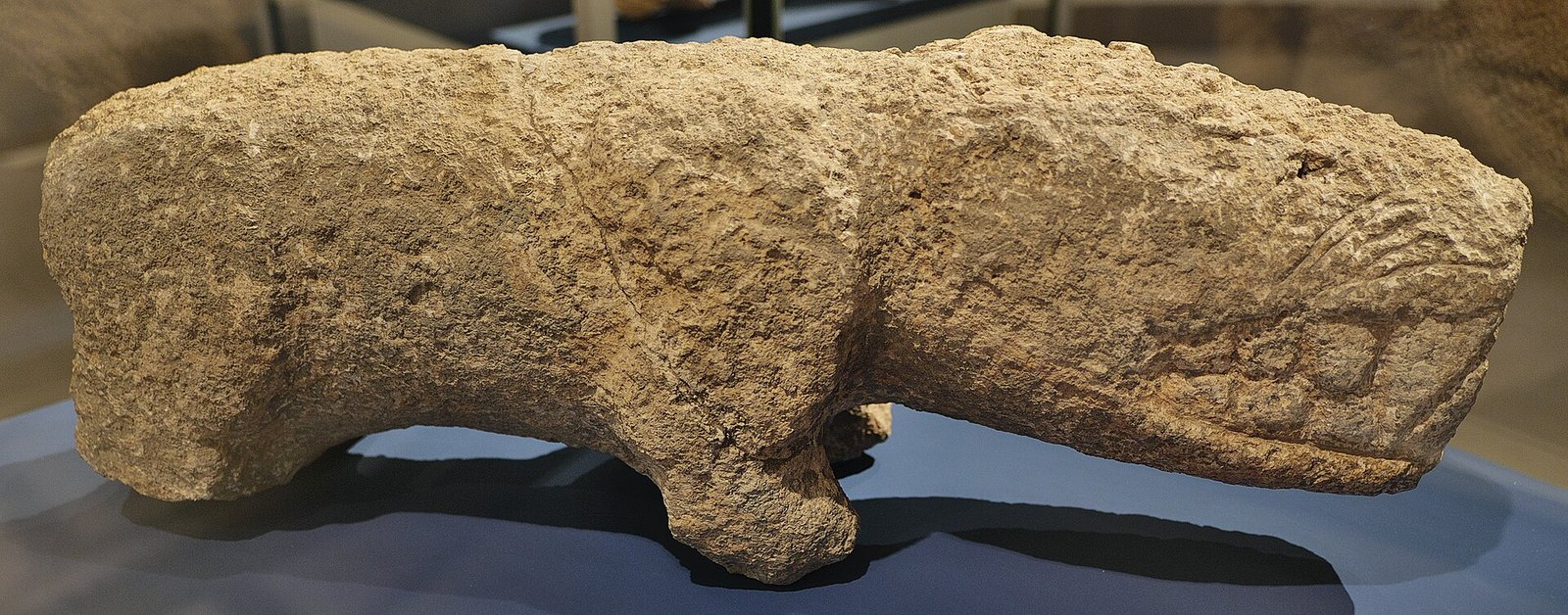
Karahan Tepe has produced carved leopard figures and leopard heads, now held in the Şanlıurfa Archaeology Museum. This matters more than it might first appear. Most animals in this world survive as low reliefs — shapes cut into the surface of a pillar or a bench. The leopard was worked in the round, as sculpture: a body and a head given three dimensions and real presence. To carve a predator that fully is to spend time, skill and stone on it — a measure of how much it mattered. Karahan has also produced a related and even more telling object: a statue of a human figure carrying a leopard on his back, now in the Şanlıurfa museum — not just the animal, but a person joined to it, the predator's power brought onto a human body.
The leopard in bone
The rarer form is not carved at all. In one of the site's buildings — Structure BF — excavators report an unusual field of selected animal parts handled with visible care: wolf jaws, vulture remains, fox paws and pelt, burned cattle skulls — and leopard bones. These are not the leftovers of a meal scattered across a floor. They are specific body parts, chosen and placed. Whatever was happening in that room, the leopard was physically part of it — not only shown on the walls but present as the animal itself, reduced to bone and kept.
That combination — the predator carved and the predator curated as bone — is what sets the leopard above every other animal at Karahan. No other creature here appears in both registers with the same intensity.
A power animal across the whole region
The leopard's importance is not confined to Karahan. Across the wider Taş Tepeler world it recurs wherever these communities carved their most charged images. At neighbouring Sayburç, a celebrated bench relief shows a man flanked by two leopards, gripping his own body as the predators close in from either side — one of the most famous scenes in all of Neolithic art. Leopard imagery has also been reported among the small finds at Sefer Tepe and in a possible leopard-head sculpture fragment at Ayanlar Höyük. The people who built Karahan Tepe belonged to a world in which the leopard was, again and again, the animal chosen to stand for danger, contact and power.
"Predator power" — how we read the leopard
Here we cross from what was found to what it may have meant, and we label that line clearly. Our reading — offered as an open, specific hypothesis, not a proven fact — is that the leopard at Karahan represented the danger of becoming prey, and the prestige of surviving contact with it. To kill, carry, wear, or ritually bring the leopard into a chamber is to bring the animal that could have ended you into the heart of human space — and, perhaps, to claim some of its power for a person.
Set that alongside the rest of Karahan's design — the descent into rooms cut from bedrock, the standing pillars, the carved head watching the space, the narrow porthole between chambers — and a bigger idea emerges: that some of these rooms may have staged moments of transformation, where a person was changed by what they faced inside. The leopard is the sharpest edge of that reading. It is why Karahan Tepe can be discussed as a candidate place of initiation, even though the evidence never hands us a complete ceremony. We hold this open, and we keep it separate from the list of what was actually excavated.
What we claim, and what we don't
Frequently asked questions
Is the leopard the most important animal at Karahan Tepe?
It is the most powerful and the most singled-out. The snake recurs through the chambers, but the leopard was carved fully in the round as a freestanding sculpture and also buried as selected bone — treated with unusual care in two very different forms.
Was a real leopard found at Karahan Tepe?
Leopard bones are reported among the curated animal-part deposits in Structure BF, alongside wolf, vulture, fox and cattle remains. The site has also produced carved leopard sculptures and heads, now in the Şanlıurfa Archaeology Museum.
What does the leopard mean?
Its exact meaning is not known. Our reading — clearly labelled as interpretation — is that it stood for the danger of becoming prey and the prestige of surviving the one animal that could kill you. Across the region, at sites like Sayburç, the leopard recurs as a figure of danger and power.
Where can I see the Karahan Tepe leopard?
The leopard sculptures and heads from Karahan Tepe are held in the Şanlıurfa Archaeology Museum, which is the natural companion visit to the site itself.
Karahan Tepe Research & Archive · Last updated July 2026.
The leopard sculptures and heads are held in the Şanlıurfa Archaeology Museum; the curated animal-part deposits (including leopard bone) in Structure BF draw on Taş Tepeler project reporting associated with Prof. Necmi Karul, and remain reporting-grade as zooarchaeological study continues. The "predator power" and transformation readings are our interpretation, offered as an open hypothesis and kept separate from the excavated inventory. This is a living archive summary, not an official academic publication.
Explore further: Symbols & Animals · The Animal-Part Deposits · The Pillar Shrine (Structure AB) · Karahan vs Göbekli