The Ribbed Man — Key Facts
In 2023, excavators at Karahan Tepe uncovered a 2.3-metre statue of a man, set into a niche and fixed to the ground, carved around 9400 BCE. Nicknamed the "Ribbed Man," he is startlingly realistic — a defined face, a bald head, and a torso whose ribs and spine are carefully incised, with the hands held at the front of the body. Many researchers read him as a depiction of a deceased ancestor, and he is among the earliest realistic portrayals of a specific human being ever found.
Where the T-pillars are abstract and the carved heads are focused on the face, the Ribbed Man is a whole person — and that makes him unique.
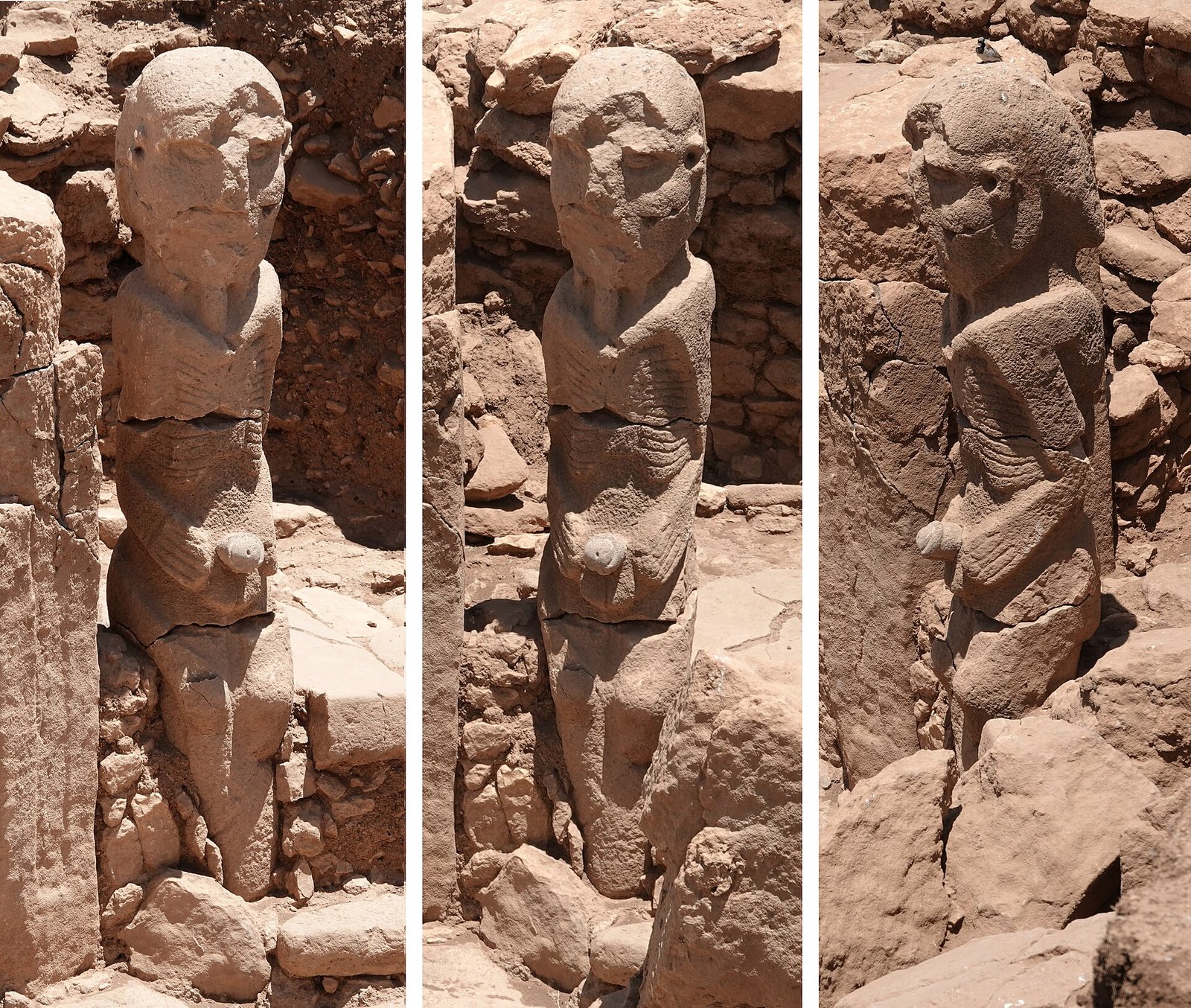
The Ribbed Man, in detail
The statue was found seated, placed deliberately into a niche fixed to the ground — not toppled or discarded, but installed. Its maker rendered the human body with unusual anatomical attention: the ribs and spine are marked with deep incised lines, the fingers defined, the face carved with eyes and a nose still legible after twelve thousand years. The exposed ribs are the detail everyone remembers — they give the figure the uncanny quality of a body at the threshold between life and death.
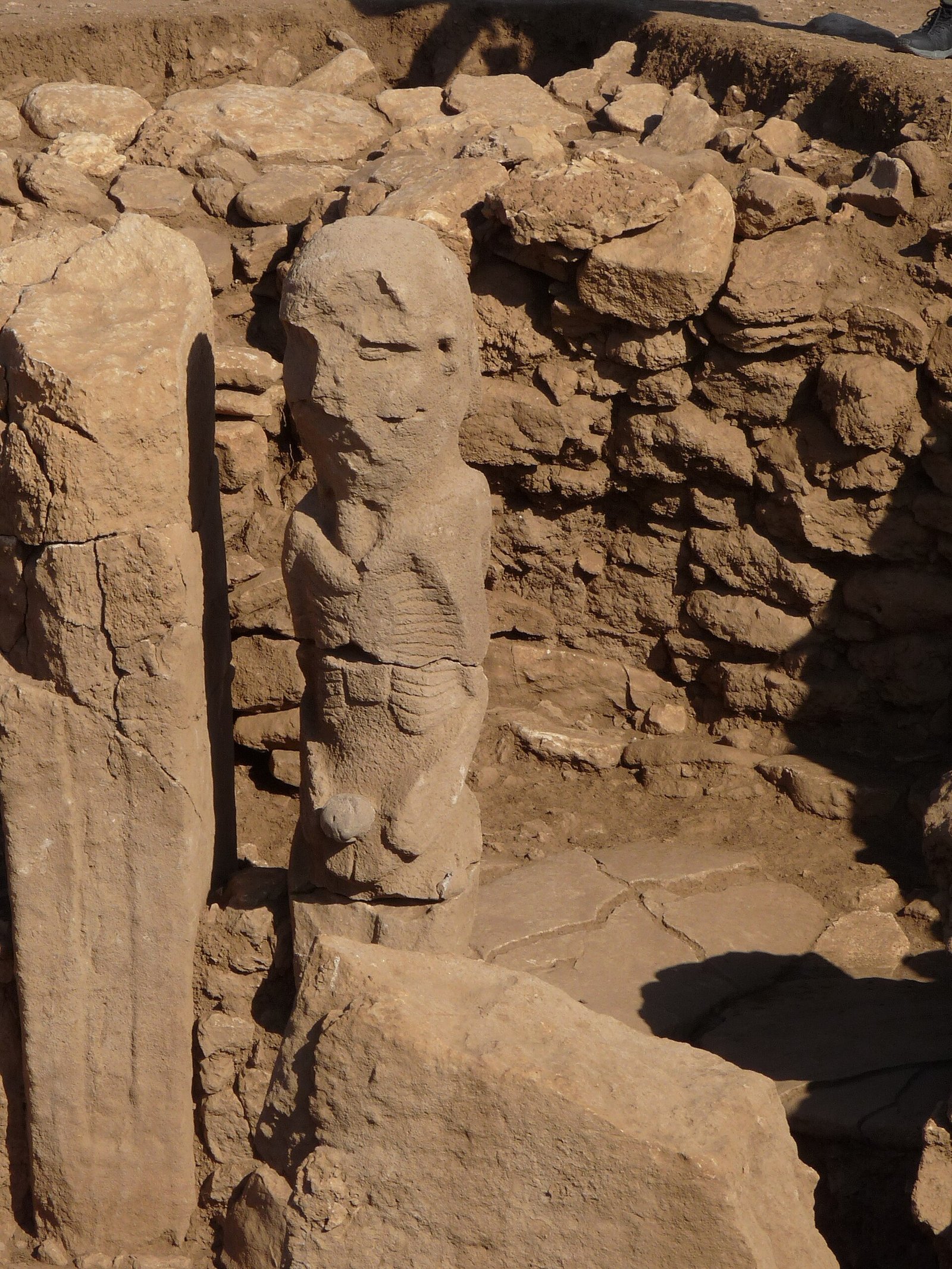
The chamber where he was found
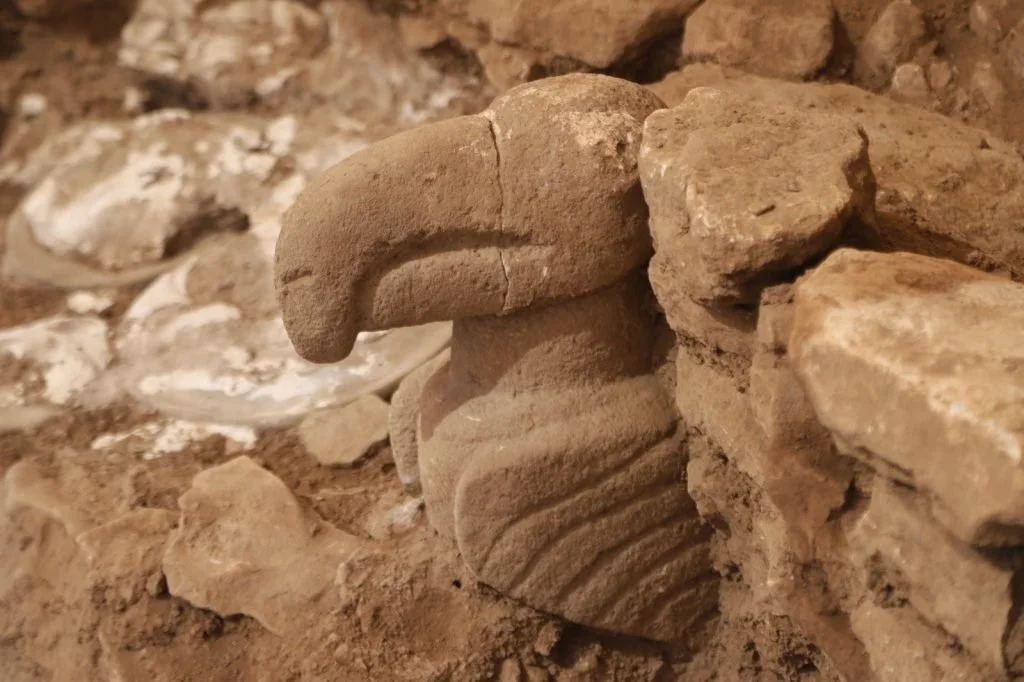
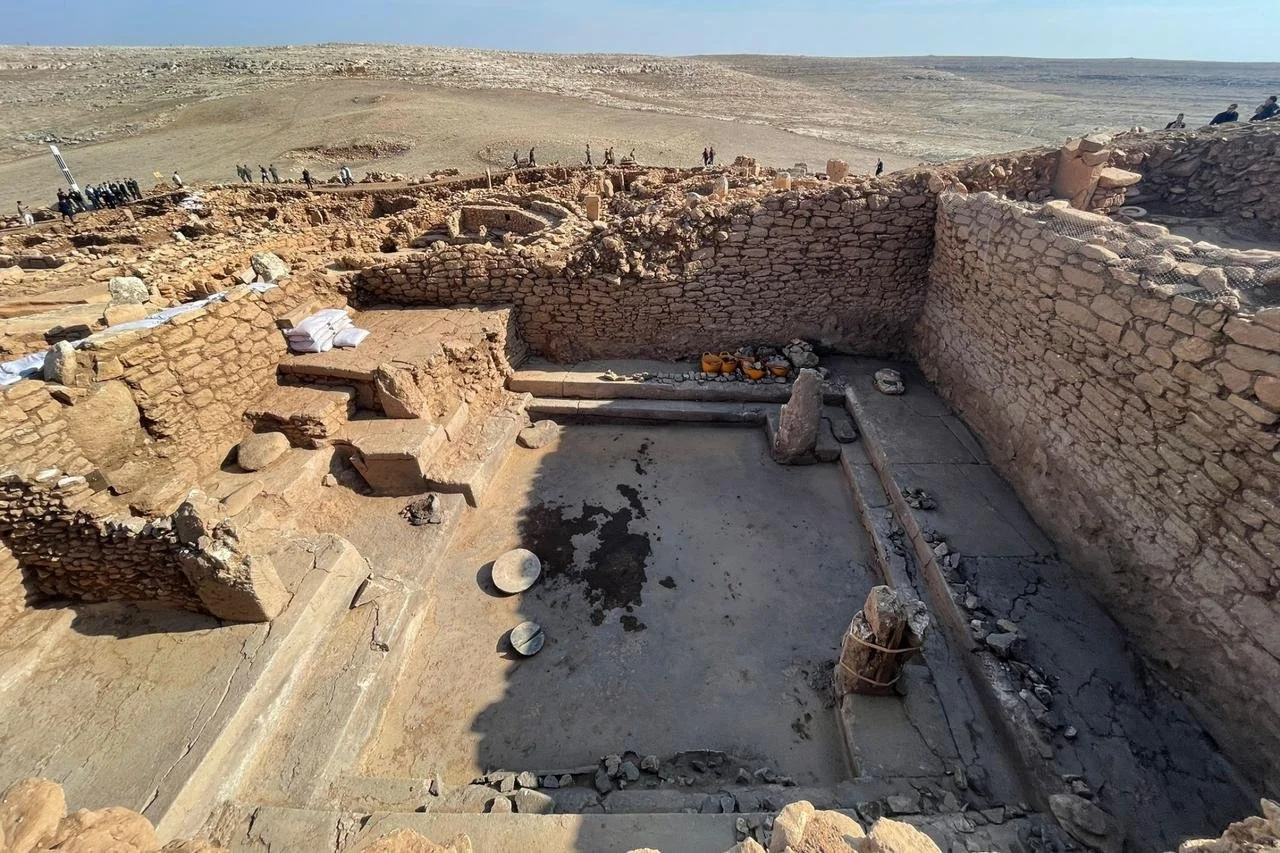
The Ribbed Man did not stand in an empty room. He was set into a niche fixed to the ground in a bedrock chamber that carried the signs of ceremony: a U-shaped bench, stone plates and bowls that read as offerings, human bone, and a vulture sculpture — the bird tied across this Neolithic world to death and the treatment of the dead. The space feels less like a house than a subterranean ritual room. Prof. Necmi Karul has called the statue a "cornerstone" for understanding early Neolithic art, while staying careful about what it means.
And the dead were handled here with deliberate care. Karul has reported more than ten human skull fragments from Karahan Tepe, some burnt or heat-exposed, some bearing irregular cut-marks from flint tools — treatments applied to the skulls repeatedly, which he reads as evidence of ritual. On site, the team was told that a skull or fragments had been placed in a square portal-hole in the same enclosure. Whatever it meant, the skull and the body were being worked, kept, and staged.
Not one statue, but a tradition — and a second figure
The Ribbed Man is the most famous, but he is not alone. In November 2025, excavators revealed a second full-bodied human statue at Karahan Tepe — nude, upright, ribs showing, hands brought toward the lower abdomen, the phallus carved: the same unmistakable gesture as the first. It was found in the same enclosure as the original, alongside a square wall niche holding a human skull — a pairing that pushes these figures past "artwork" and toward symbol. Two nearly identical poses, from one ritual complex, speaking to the same beliefs about life and death.
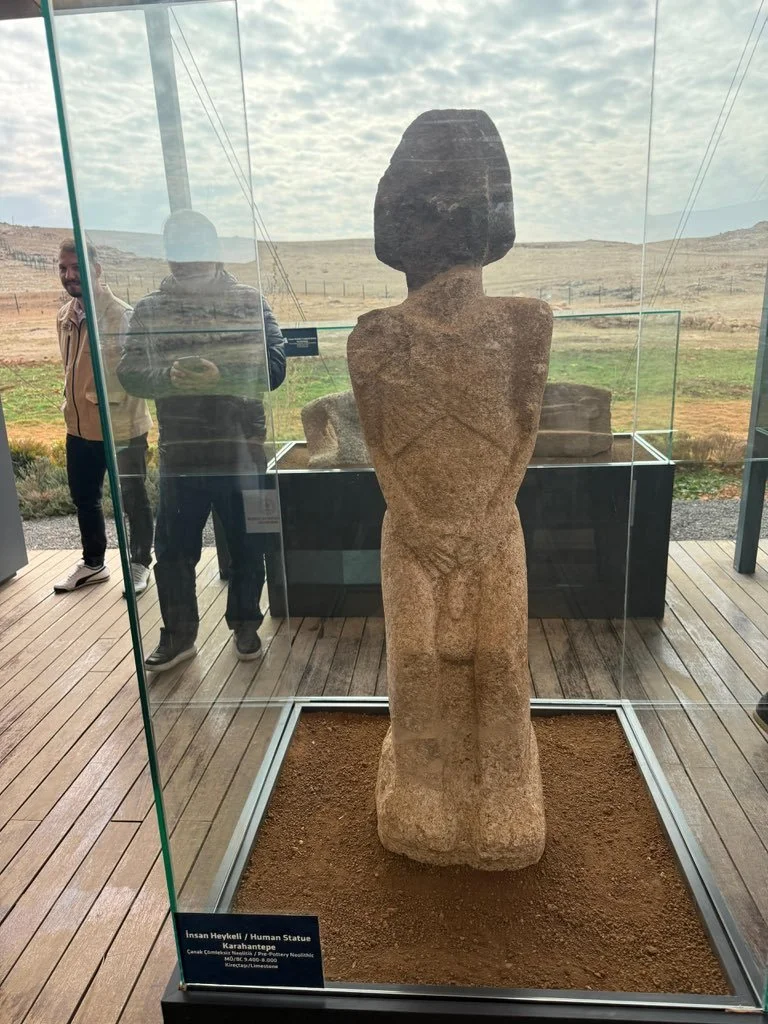
Together they belong to a wider tradition of the human form across the Taş Tepeler — from the several Karahan figures now in the Şanlıurfa museum to the famous "Urfa Man," the oldest known life-size human statue.
What do the human figures mean?
The most widely held reading is that the Ribbed Man represents a deceased ancestor tied to the building in which he was placed — an individual remembered and honoured, not a generic idol. The exposed ribs may signal death, or a moment of transformation. As always, we distinguish what the excavators observed (a realistic, deliberately installed figure) from what it might have meant (interpretations that remain open). What is not in doubt is the skill and intent behind him — proof that people twelve thousand years ago could look at a human being and render him, unmistakably, as himself.
The mysterious rectangular enclosure
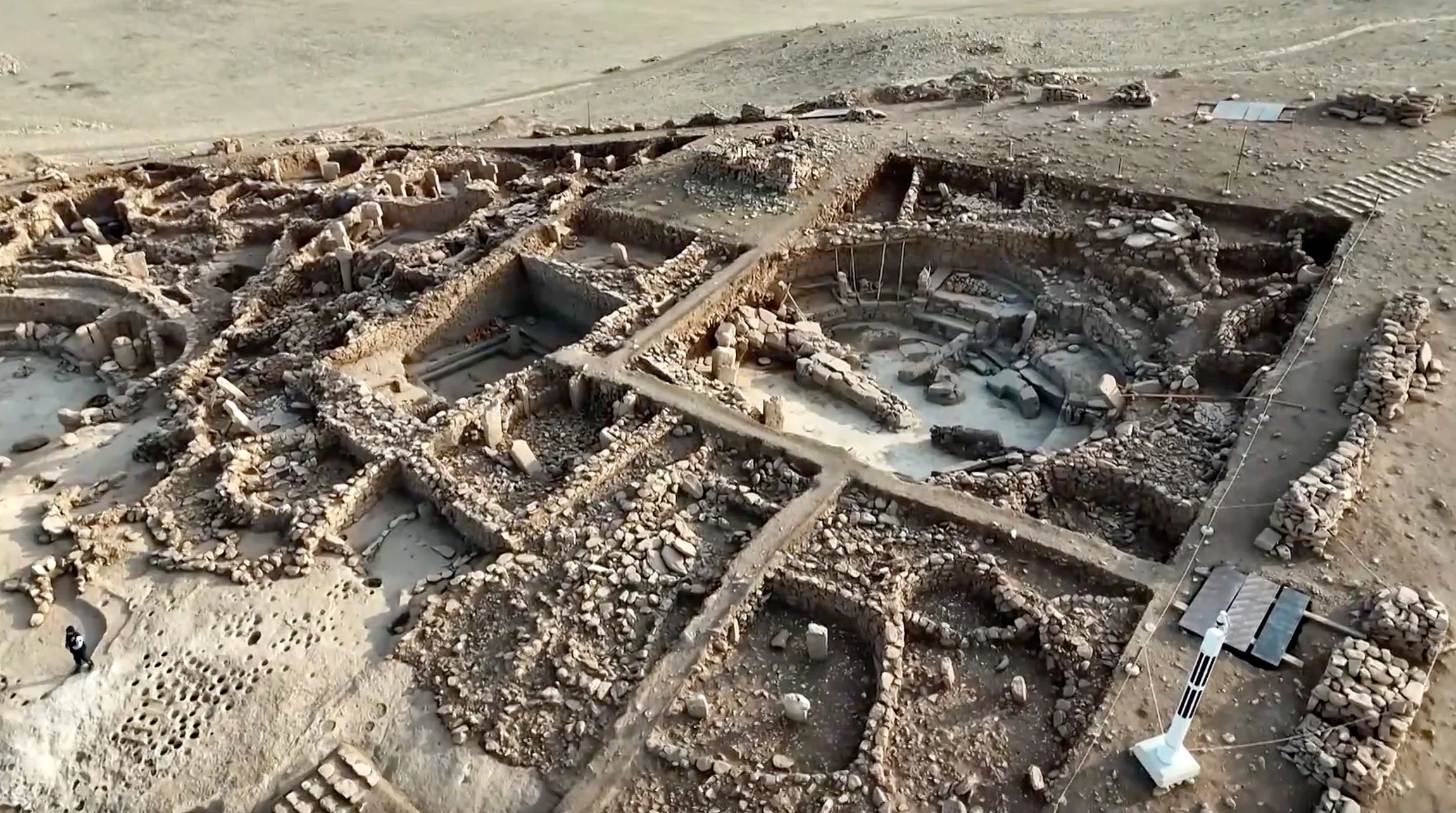
The same recent work uncovered something that breaks Karahan's own pattern. Where the site's known chambers are round, excavators exposed a long, straight rectangular room cut directly into the bedrock — narrow and rectilinear, almost like a stone amphitheatre set into the hillside. Its purpose is not yet known, but it is one more proof of how completely these builders could command stone.
Frequently asked questions
What is the Ribbed Man statue at Karahan Tepe?
A 2.3-metre stone statue of a seated man, carved around 9400 BCE and found in 2023, with realistic ribs, face, and hands. It is often interpreted as a depiction of a deceased ancestor.
How old is the Karahan Tepe statue?
About 11,400 years old — carved around 9400 BCE, in the Pre-Pottery Neolithic.
Why does the statue have visible ribs?
The carefully incised ribs are thought to signal death or a moment of transformation, fitting the interpretation of the figure as a deceased ancestor. The exact meaning remains debated.
Is the Ribbed Man the only human statue at Karahan Tepe?
No. A second seated statue in the same pose has since been found — evidence of a developed tradition of human figures at the site.
Karahan Tepe Research & Archive · Last updated July 2026.
Sources & further reading: the Taş Tepeler project (tastepeler.org) and Prof. Necmi Karul; the German Archaeological Institute's Tepe Telegrams; and coverage in Smithsonian Magazine, Live Science, Archaeology Magazine, and Artnet (2023–2025). This is a living archive summary, not an official academic publication; we update it as new findings are published.
The three structures: The Pillar Room · The Carved Heads · Human Figures & the Ribbed Man. Or return to the interactive overview.