The Carved Heads — Key Facts
Karahan Tepe is defined by faces. Its builders carved the human head again and again — sculpted from the living wall of the Pillar Room, and later carved directly onto a T-shaped pillar. Together these are some of the earliest deliberate, realistic depictions of the human face anywhere in the world, made by people who had not yet invented pottery or farming.
Why the head, so early and so insistently? That is one of the most interesting questions the site poses — and one where we can point to strong patterns without pretending to certainty.
The head in the Pillar Room
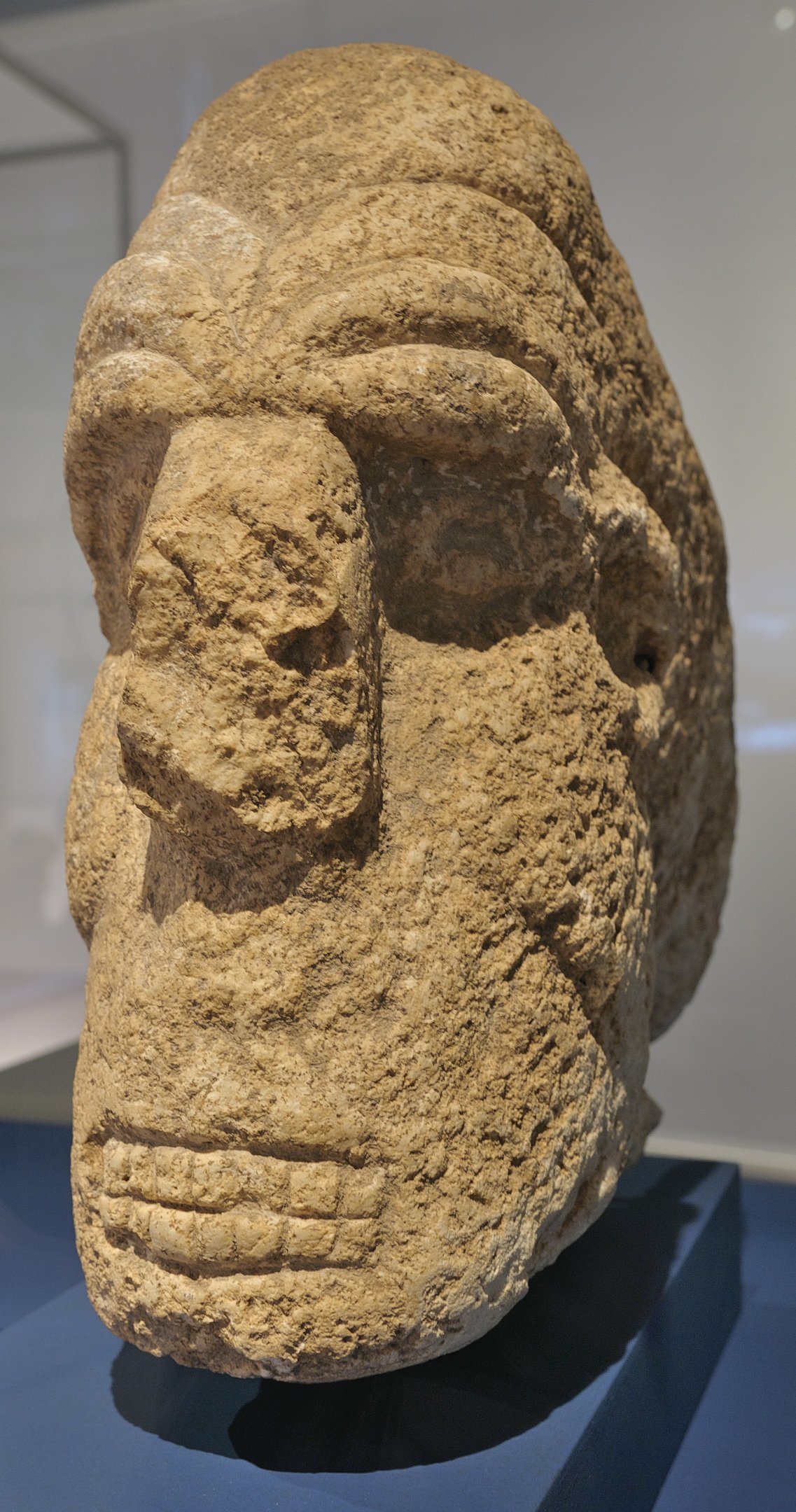
The most famous of Karahan Tepe's heads is sculpted from the wall of the Pillar Room (Structure AB). Apparently bearded, its neck extended so it seems to lean out into the room, the head looks across the eleven standing pillars. From it, a low relief of a snake runs sideways along the wall. This is not a decorative flourish — placed where it is, presiding over the chamber, the head reads as the focal presence of the whole space.
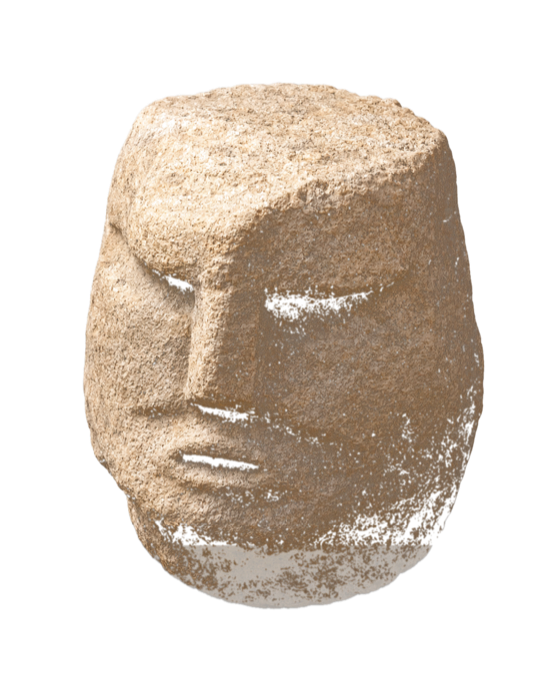
The human-faced pillar (2025)
In 2025, excavators uncovered something never seen before at the site: a T-shaped pillar carved with a human face, roughly 1.4 metres (about four and a half feet) tall — the first of its kind found in the region. Until then, the T-pillars of Karahan Tepe and Göbekli Tepe were read as abstract, headless figures — a T-top standing in for a head. A pillar bearing an actual human face changes that reading, and hints that the line between "abstract figure" and "portrait" was one these people crossed deliberately.
Why did heads matter so much?
Across the Neolithic Near East, the human head and skull carried special weight. At many sites of this era, archaeologists find evidence that skulls were kept, curated, and sometimes decorated after death — often interpreted as the veneration or remembrance of ancestors. Karahan Tepe's carved heads sit within that wider world of meaning. The strongest, most cautious reading is that the head stood for identity, presence, and the remembered dead — rather than any confident claim about specific gods. We flag clearly where interpretation begins and the evidence ends.
Frequently asked questions
What are the carved heads at Karahan Tepe?
Two stand out: a human head sculpted from the wall of the Pillar Room (with a snake relief), and a T-shaped pillar carved with a human face, found in 2025. Both are among the earliest realistic depictions of the human face.
What is the human-faced pillar at Karahan Tepe?
A T-shaped pillar, about 1.4 metres tall, carved with a human face — uncovered in 2025 and the first of its kind found in the area. It reframes how the T-pillars represented people.
How old are the carved heads?
More than 11,000 years old, dating to the Pre-Pottery Neolithic — older than Stonehenge and the pyramids by thousands of years.
Why did Neolithic people carve human heads?
The exact reason is debated, but across the Neolithic Near East the head and skull were tied to ancestors, identity, and remembrance of the dead — a symbolic world Karahan Tepe's heads appear to belong to.
Karahan Tepe Research & Archive · Last updated July 2026.
Sources & further reading: the Taş Tepeler project (tastepeler.org) and Prof. Necmi Karul; the German Archaeological Institute's Tepe Telegrams; and coverage in Smithsonian Magazine and Live Science (2023–2025). This is a living archive summary, not an official academic publication; we update it as new findings are published.
The three structures: The Pillar Room · The Carved Heads · Human Figures & the Ribbed Man. Or return to the interactive overview.