The Builders — Key Facts
Karahan Tepe was built by hunter-gatherer communities more than 11,000 years ago — people who lived by hunting wild animals and gathering wild plants, who worked entirely in stone, and who had not yet taken up farming. We don't know their names, their language, or the words they spoke in these rooms. But the site itself is a detailed record of who they were, and it overturns almost everything the old textbooks assumed about people at this stage.
Who were they?
The builders belonged to the Pre-Pottery Neolithic world of Upper Mesopotamia — the arc of hills and rivers where, over the following centuries, farming would eventually take hold. When Karahan Tepe was raised, that hadn't happened yet. The animal bones and plant remains from the site are those of wild creatures and wild grains: gazelle, aurochs, wild cereals. These were foragers — but foragers capable of extraordinary coordination and craft.
That is the part that upends expectations. "Hunter-gatherer" once implied small, mobile, improvised bands. The people of Karahan Tepe carved chambers into bedrock, raised and shaped standing pillars, sculpted the human face and body with startling skill, and organised the labour to do it — repeatedly, over generations.
Did they live here, or only gather?
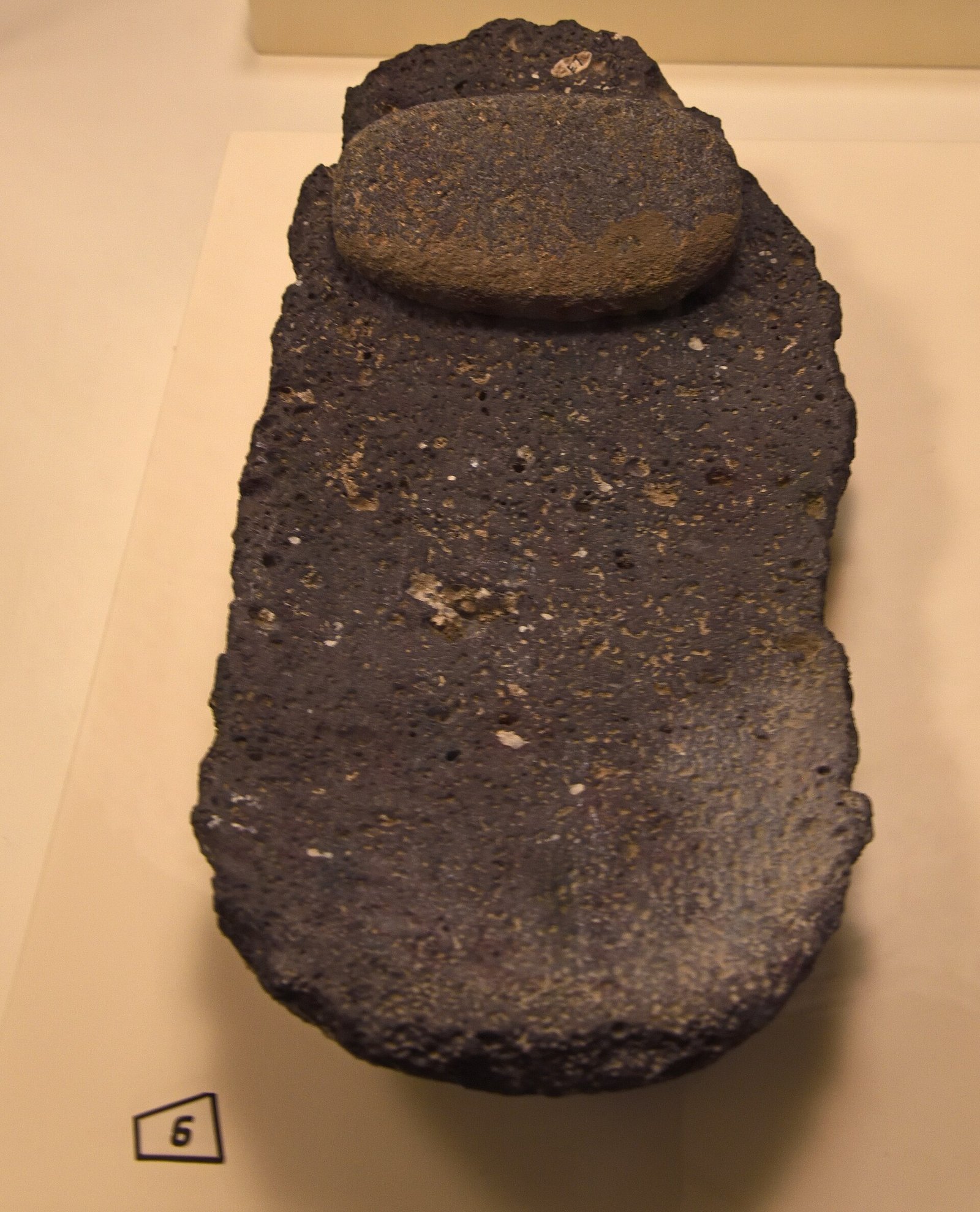
For a long time, sites like this were imagined as pure sanctuaries — visited for ritual, then left. Karahan Tepe complicates that. Alongside its dramatic rock-cut chambers, the site has produced domestic buildings on its Western Terrace — with stone-paved floors, plastered benches, and grinding stones for processing food. In other words, people seem to have lived here, not just worshipped here. The sharp modern line between "settlement" and "sanctuary" may simply not have existed for them.
How did they build it, without metal?
This is where the achievement becomes tangible. The builders had no metal tools, no draft animals, no wheel. They shaped the rock with stone and flint, and they raised the site through human effort and organisation alone. Carving a chamber down into bedrock — the Karahan method — is slow, deliberate work that can't be rushed and can't be done alone. It implies planning, shared knowledge passed between people, and a way of pulling a community together long enough to finish. Feasting may have been part of how that labour was mobilised; the animal remains and large vessels at the site hint at gatherings around food.
Why did they build it at all?
This is the real question, and the honest answer is that we don't fully know. What the evidence supports is that Karahan Tepe was a place of gathering and ritual — the carved figures, the ranked pillars, the human head watching a chamber, the deliberate sealing of rooms at the end of their use. The dead, ancestors, animals, and the human body all seem to matter here. Beyond that, interpretations range widely, and we're careful not to collapse the mystery into a single tidy answer.
But there's a bigger idea worth sitting with. If people were building monumental gathering-places before they farmed or settled into towns, then the old story — first agriculture, then surplus, then religion and monuments — runs backwards. The desire to come together, to build, and to mark a place with meaning may have been one of the forces that drew people into settled life, rather than a luxury that came after it. Karahan Tepe is one of the best places on Earth to see that possibility in stone.
How they handled their dead
One of the most striking things about the people of Karahan Tepe is how they treated the dead. Excavators have recovered more than ten human skull fragments at the site, and — in the words of director Prof. Necmi Karul — some were burnt or exposed to heat, and others bear irregular cut-marks left by flint tools, treatments applied to the skulls repeatedly over time. Karul reads this as evidence of ritual: the skull singled out, worked, and kept, rather than simply buried. It belongs to a wider Neolithic pattern across the region, where the head and the skull were curated and given a continuing role among the living — and it sits beside Karahan's own imagery of ribs, vultures, and the human body poised between death and life (see the human figures and the power of the head). What exactly these rites meant we do not claim to know; that they happened, and mattered, the evidence supports.
What we can, and can't, know
We can read the builders through what they made, ate, carved, and buried. We cannot recover their names, their gods, or the meaning of a single word they spoke. Anyone who tells you exactly what these people believed is guessing. We keep the two apart on this site — the solid evidence, and the open questions — because the honest version is more interesting than a manufactured certainty.
Frequently asked questions
Who built Karahan Tepe?
Hunter-gatherer communities of the Pre-Pottery Neolithic, more than 11,000 years ago, using stone tools. Their names and language are unknown, as no writing survives.
Were the builders farmers?
No. The plant and animal remains are from wild species — the people lived by hunting and gathering. Farming spread across the region only later.
How did they build it without metal tools?
With flint and stone tools, and organised human labour — no metal, wheel, or draft animals. Carving chambers down into bedrock required planning, shared skill, and cooperation over long periods.
Why did they build Karahan Tepe?
The evidence points to gathering and ritual — carved figures, ranked pillars, and the deliberate sealing of rooms. The precise purpose is debated, and a single settled answer isn't supported.
Did people live at Karahan Tepe?
Likely yes. Domestic buildings with stone floors, benches, and grinding stones suggest the site was lived in, not only visited for ritual.
Karahan Tepe Research & Archive · Last updated July 2026.
Sources & further reading: the Taş Tepeler project (tastepeler.org) and Prof. Necmi Karul; the German Archaeological Institute's Tepe Telegrams; and reporting on the site's domestic buildings and subsistence evidence (2021–2025). This is a living archive summary, not an official academic publication; we distinguish evidence from interpretation and update as new findings are published.
Keep exploring: What Is Karahan Tepe? · The Enclosures · Is it a lost civilization?