The Head — Key Facts
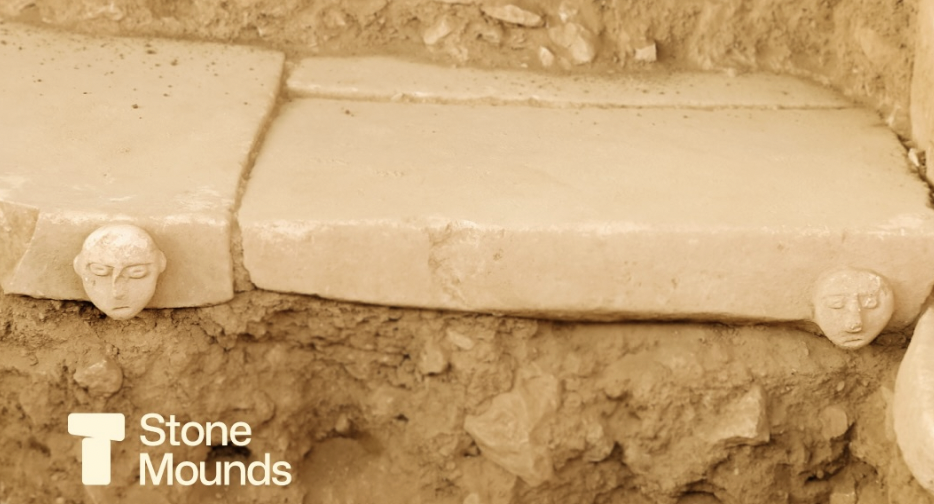
The recent discovery of a stone slab carved with two human heads at Sefer Tepe adds a significant piece to a growing puzzle. Striking on its own, the double-headed motif does not stand in isolation: the same emphasis on the head — isolated faces, detached and mirrored forms — appears at Karahan Tepe and across the wider Neolithic Near East. Which raises the real question: what did the head mean to these early communities, and why was it repeated with such persistence?
The Sefer Tepe heads in context
The Sefer Tepe piece is a carved architectural slab, most likely built into a wall or structural feature. Two human heads emerge from either end of the stone in a clear symmetry. They are not decorative additions dropped into empty space — they sit at the very limits of the slab, almost defining its edges. They structure the boundaries of the stone itself.
At Göbekli Tepe, the human presence is often abstracted through T-shaped pillars and stylised reliefs. At Karahan Tepe, isolated heads and anthropomorphic carvings press the emphasis onto the upper body and the face. Sefer Tepe continues that pattern, isolating the head as the primary expressive element within architecture. Across the whole region, the head is repeatedly separated from the body — carved on its own, or embedded in built space. The Sefer Tepe slab fits obviously and clearly into that larger pattern, and that consistency is exactly what suggests it mattered.
The head at Karahan Tepe
At Karahan Tepe the emphasis on the head is direct and intentional. Excavation has revealed carved human faces emerging from the bedrock inside the rock-cut chambers — not loose objects, but faces integrated into the architecture itself, looking outward from the wall to anyone standing in the room. Karahan has also produced ribbed anthropomorphic figures, their torsos rendered almost skeletal.
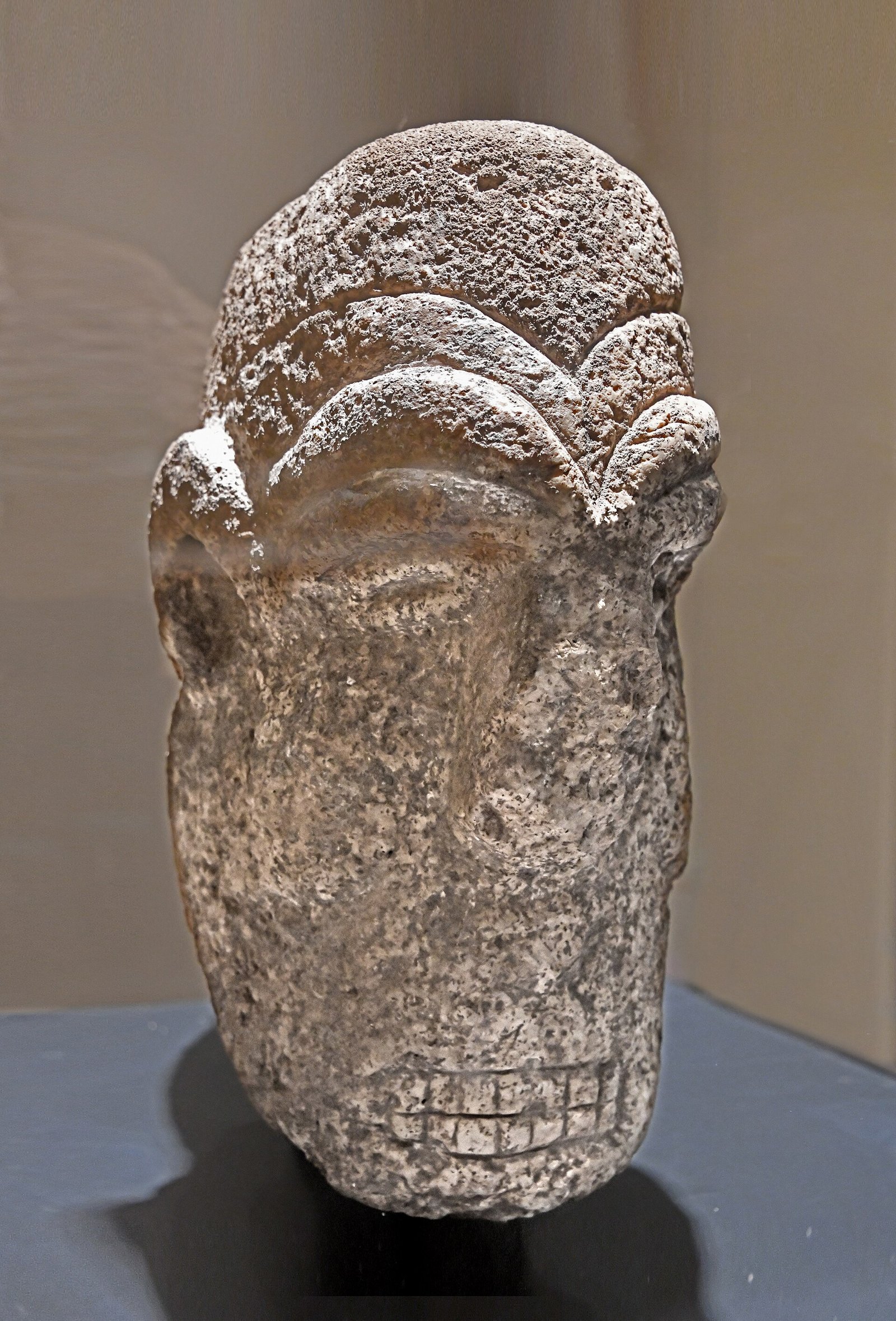
Göbekli Tepe adds another dimension: decapitated imagery and isolated heads — bodies shown without heads, heads shown detached from bodies. The fragmentation does not look accidental. Together with the careful, ritual placement of skulls and bones across the region, many researchers read this as an emphasis on death and ancestry woven deep into these communities' image-world. We present that reading as interpretation, not settled fact — but the pattern itself is hard to miss.
Why the skull, and the head?
Across the Pre-Pottery Neolithic of Upper Mesopotamia and the Levant, skulls were not simply left in the ground. They were removed from burials, curated, and in many cases plastered and modelled, then placed beneath floors or within architectural niches — a deliberate, repeated, post-burial practice. The skull was treated differently from the rest of the body. (At neighbouring Çayönü, an entire "Skull Building" preserved dozens of human crania; plastered skulls are known from Levantine sites such as Jericho and Ain Ghazal.)
Why? In communities that were settling down for the first time in human history, ancestry suddenly mattered in new ways. When people stop moving with the seasons and anchor themselves to a place, lineage becomes territorial — a claim on the land. Skulls may have worked as tangible anchors to that lineage: by keeping the head, the living kept continuity with the dead, who were not sent away but folded back into domestic and communal space. Seen against that background, the carved heads at Karahan Tepe and the double-headed slab at Sefer Tepe begin to look less like decoration and more like architectural echoes of the same logic.
And at Karahan Tepe this is not only a matter of carved images. Excavation has recovered more than ten human skull fragments at the site; in the words of director Prof. Necmi Karul, some were burnt or heat-exposed and others carry irregular cut-marks from flint tools, applied to the skulls repeatedly — which he reads as ritual. The people who carved the heads were also, in some way, working the real ones. (More on this in how they handled their dead.)
The meaning of the double head
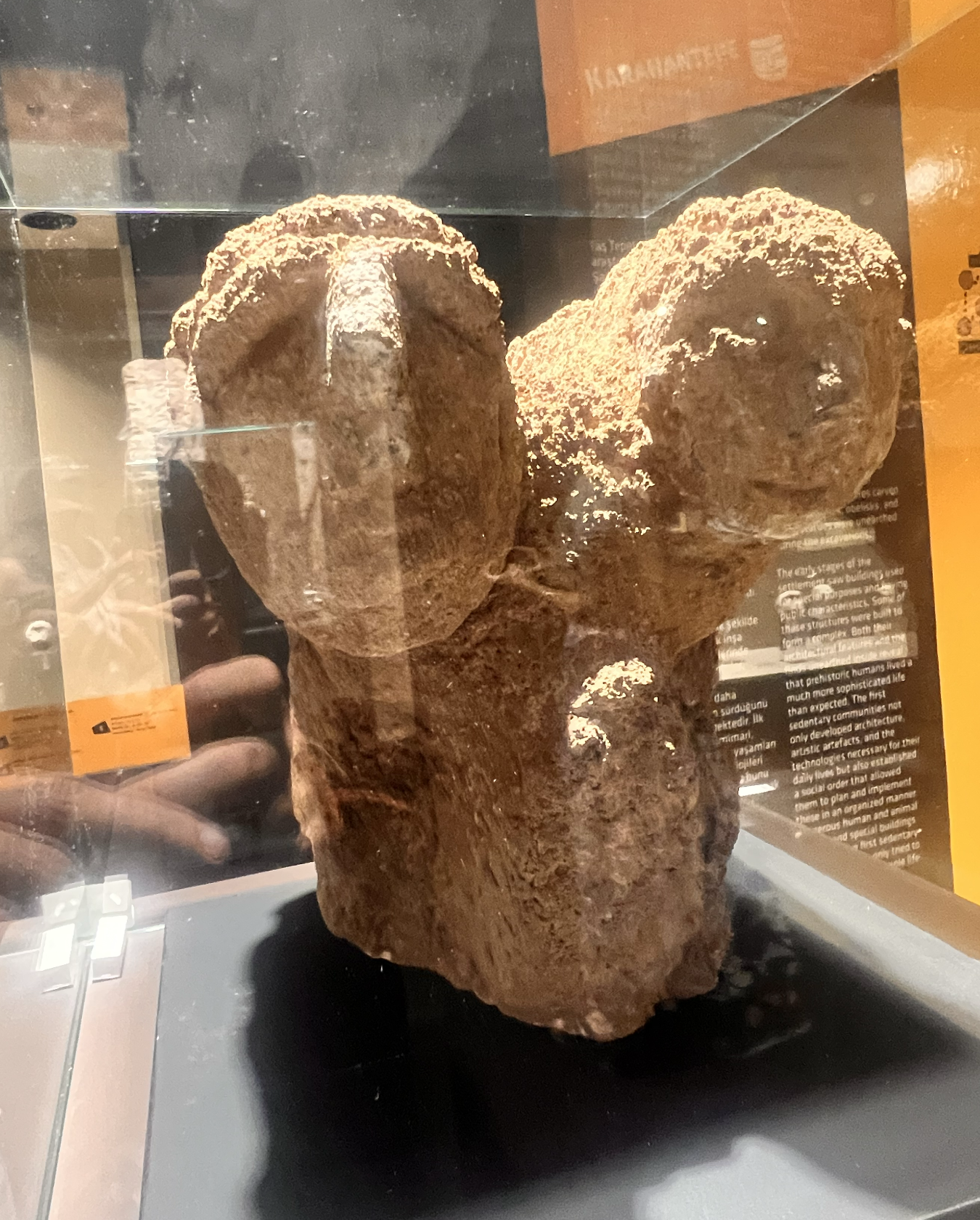
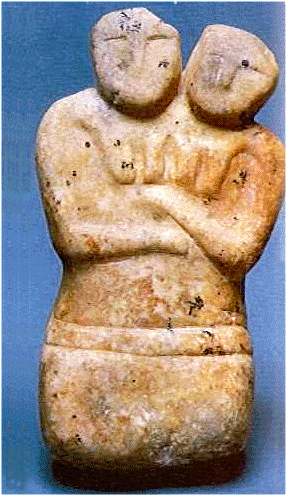
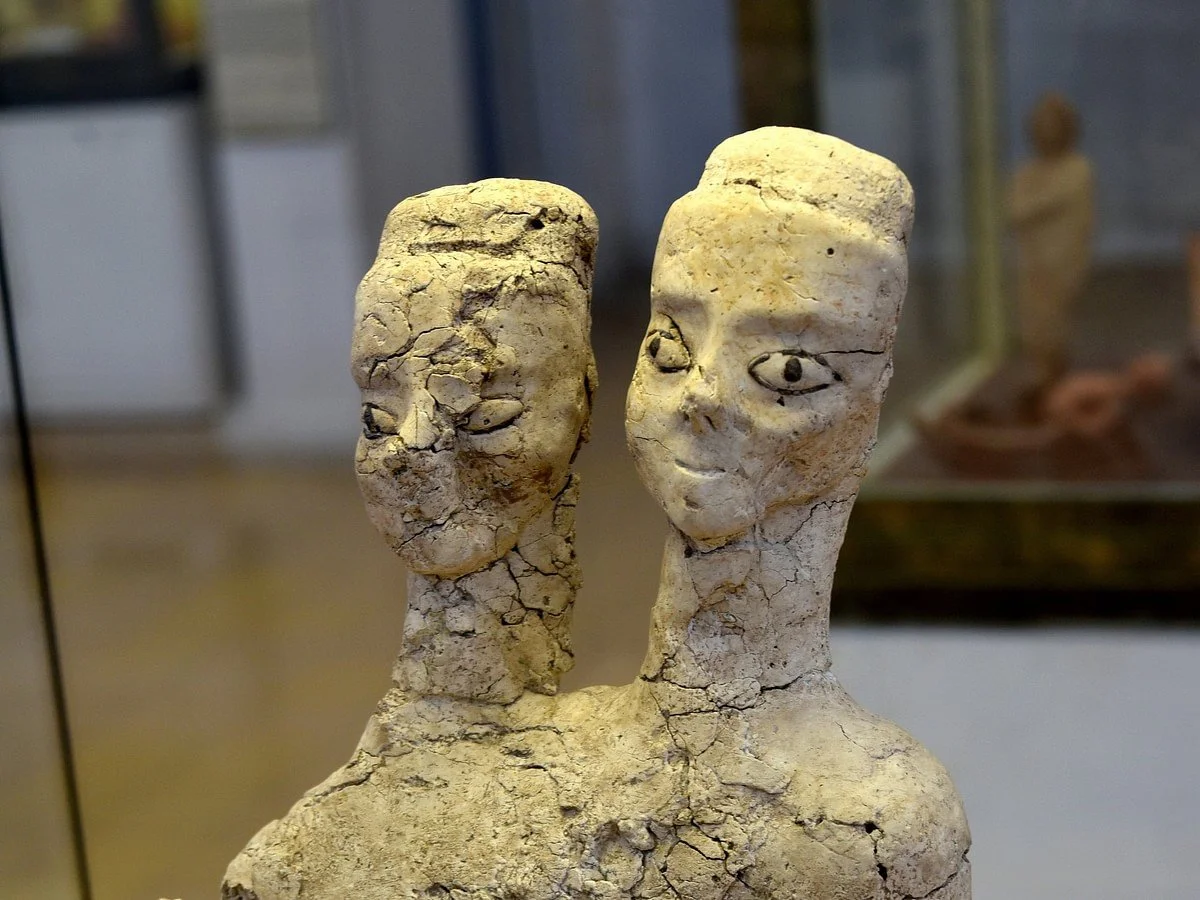
Doubling, in early symbolic systems, often encodes duality: life and death, male and female, ancestor and descendant, inside and outside, human and other. In societies where cosmology is embedded in architecture rather than written in text, such pairings tend to be expressed visually. At Karahan Tepe, pairing appears in more than one form — including a double-headed figure (now in the Şanlıurfa museum) and a mirrored fox relief carved on a T-pillar.
The motif reaches well beyond the Stone Hills. At Çayönü, a carved double-headed human figure is documented within a ritual architectural context — and Çayönü sits in the same Upper Mesopotamian cultural sphere, sharing skull-removal practices and an emphasis on the human form. Further away, at Ain Ghazal in Jordan, a monumental two-headed plaster statue dating to around 6500 BCE was found. Separated by geography and centuries, these paired forms keep recurring — which strengthens the case that the doubled head carried real and enduring significance across the Neolithic Near East.
What it means — honestly
We do not yet know exactly what the double head represented. But each new find adds context, and the direction is consistent: the head clearly held meaning for these communities, and the repetition of the motif across many sites shows it was not incidental. The Sefer Tepe slab is one more piece of that story. The journey continues.
Frequently asked questions
What was found at Sefer Tepe?
A carved stone slab with two human heads, one emerging from each end — most likely part of a wall or architectural feature. It belongs to the same head-focused symbolic tradition seen across the Taş Tepeler region.
Does Karahan Tepe have a double-headed figure?
Yes — a double-headed figure from Karahan Tepe is held in the Şanlıurfa Archaeology Museum, and a mirrored fox relief appears on one of its T-pillars. Pairing and the head are recurring themes at the site.
What is the "skull cult" of the Neolithic?
A shorthand for the widespread practice of removing, curating, and sometimes plastering human skulls and re-placing them in buildings — documented across the Pre-Pottery Neolithic Near East (for example at Çayönü, Jericho and Ain Ghazal). The carved heads of the Taş Tepeler are often read as related to this concern with ancestry and the dead, though the link is interpretive.
Karahan Tepe Research & Archive · Last updated July 2026.
The Sefer Tepe double-headed slab is reported by the Sefertepe excavation team (via Stone Mounds). Karahan Tepe's carved faces, double-headed figure and mirrored-fox relief are documented finds (the double-headed figure photographed at the Şanlıurfa Archaeology Museum by Dakota Wint). Çayönü's double-headed figure and skull building, and the Ain Ghazal two-headed plaster statue (~6500 BCE), are published parallels. The "skull cult" / death-and-ancestry reading of the carved heads is interpretation, offered as such and kept separate from the finds themselves. This is a living archive summary, not an official academic publication.
Explore further: The Carved Heads of Karahan · Human Figures · Sefertepe.com · More discoveries