The Debate in Brief
Karahan Tepe and its sister site Göbekli Tepe are so old, and so sophisticated, that they force an uncomfortable question: how did people who hadn't yet invented farming, pottery, or writing build them? For some, the answer is that they didn't do it alone — that a lost, advanced civilization stood behind them. For most archaeologists, the answer is that we simply underestimated what hunter-gatherers could do. Both positions have real arguments. Here they are, at full strength.
This debate has spilled far beyond academia — into Graham Hancock's Netflix series Ancient Apocalypse, into countless documentaries, and into the "ancient astronaut" corner of the internet. Rather than tell you what to think, we'll give you the best version of each case and let you weigh them.
The case for a lost civilization
Take the theory seriously and it rests on several genuinely striking points:
- The sophistication appears "too early." Planned architecture, life-size sculpture, and complex symbolism show up more or less fully formed at the dawn of the Neolithic — with no obvious apprenticeship period. To proponents, that abruptness hints at inherited knowledge from an older source.
- Pillar 43 may record a cosmic catastrophe. In 2017, researchers Martin Sweatman and Dimitrios Tsikritsis of the University of Edinburgh argued that the animals on Göbekli Tepe's famous "Vulture Stone" (Pillar 43) map onto constellations, and that the scene date-stamps a comet impact around 10,900 BCE — the event some link to the Younger Dryas, a sudden global cold snap. If true, it would mean these people were recording astronomy and catastrophe in stone.
- They buried it on purpose. Both Göbekli Tepe and Karahan Tepe were, at the end of their use, deliberately backfilled and covered. Proponents read this as an act of hiding or preserving something — a culture sealing away its knowledge.
- Astronomical alignments. Some analysts argue Karahan Tepe's structures include a winter-solstice alignment — pointing, they say, to deliberate skywatching thousands of years before Stonehenge.
- Echoes across the world. Flood and cataclysm myths recur across ancient cultures; the "lost golden age" is a near-universal story. To proponents, that shared memory may point to a real, forgotten event.
- Most of it is still buried. Only a small fraction of Karahan Tepe has been excavated. Ground surveys suggest many more structures remain underground — so, the argument goes, we are judging the site before we've really seen it.
The case from the evidence
Now the mainstream reply — which is not a dismissal, but a different reading of the same facts:
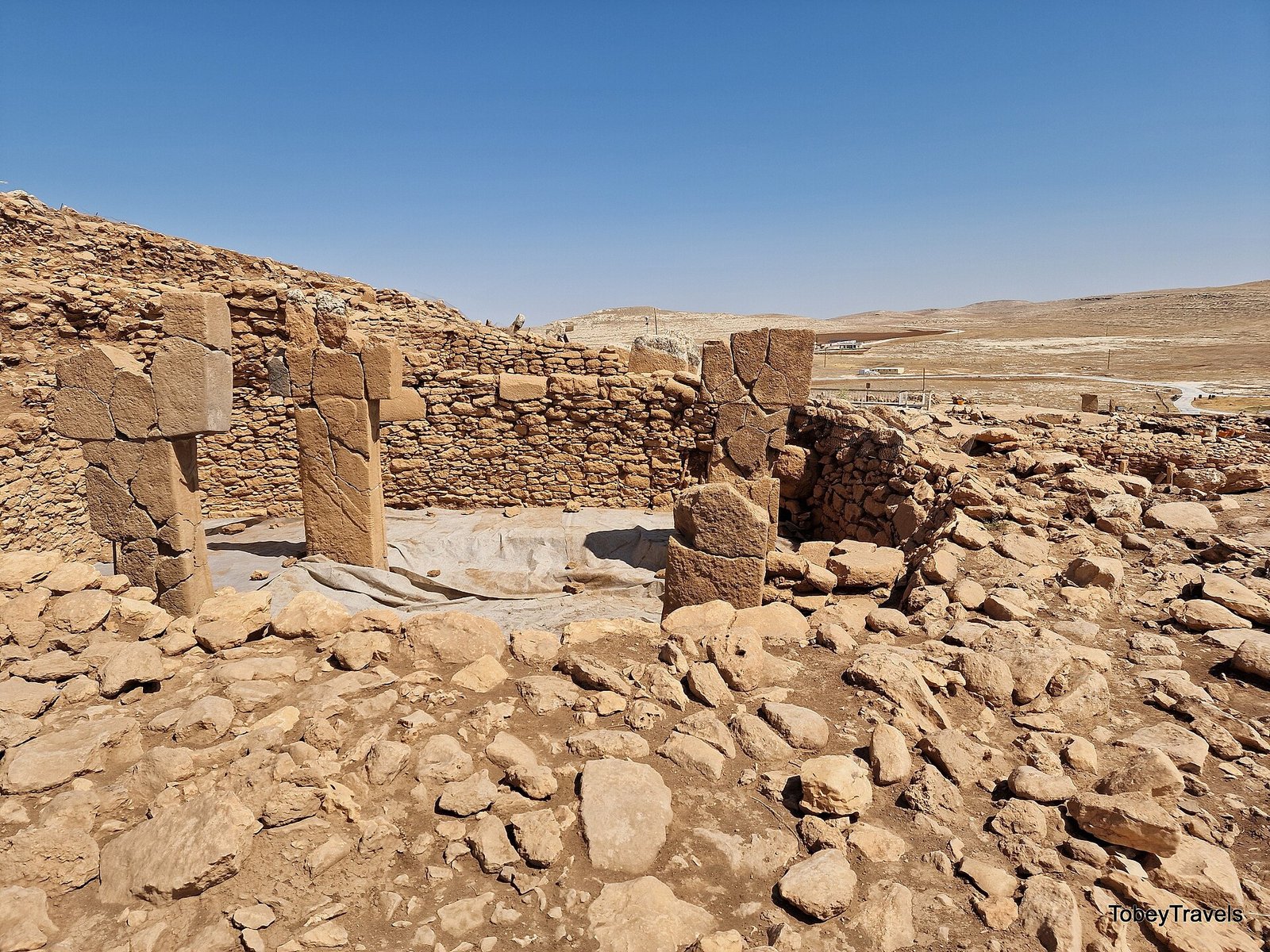
- The toolkit is Stone Age, top to bottom. Excavators find flint and stone tools, wild game and wild plants — no metal, no machinery, no trace of lost high technology anywhere in the layers. Whatever built this was working with hands, stone, and organisation.
- The tradition develops locally. Karahan Tepe isn't a one-off marvel dropped from nowhere. It sits in the wider Taş Tepeler network, where the whole style can be seen emerging, changing, and spreading across the landscape over roughly 1,500 years — exactly what you'd expect of a home-grown culture, not an inherited one.
- The comet reading is heavily contested. Sweatman's Pillar 43 paper drew enormous attention — and serious criticism. Archaeologists note that reading animals as constellations is highly subjective, that the enclosures span different dates, and that the Younger Dryas impact hypothesis itself is not widely accepted. It's a provocative idea, not a settled one.
- "Too sophisticated" assumes they were simple. This is the crux. The premise that hunter-gatherers couldn't have done this is the very thing Karahan Tepe overturns. Moving and carving stone needs people, planning, and time — not a lost super-science.
- Deliberate burial has ordinary explanations too. Recent fieldwork suggests the "backfill" may be a mix of intentional filling, slope collapse, and debris accumulated over centuries — not necessarily a dramatic act of concealment.
- Occam's razor. Every feature of the site can be explained by capable humans doing extraordinary things. Adding an invisible lost civilization doesn't explain anything new — it just moves the achievement to someone we can't find.
You decide
Set the two readings side by side on the points that matter most:
| The question | Lost-civilization reading | Evidence-based reading |
|---|---|---|
| Why so early? | Knowledge inherited from an older, advanced culture | We underestimated hunter-gatherers; skill built up locally |
| Pillar 43 | A star-map recording a comet impact (Younger Dryas) | A powerful but ambiguous scene; the astronomy reading is disputed |
| Why bury it? | Deliberately hidden or preserved | A mix of intentional fill, collapse, and debris over time |
| The toolkit | The "real" technology is missing / lost | Only Stone-Age tools are found — because that's what they used |
| What's still buried | The proof may yet be underground | New finds so far keep fitting the Neolithic picture |
Where the evidence currently points
We'll be straight with you about where the archive stands: the weight of the excavated evidence, as it exists today, supports the mainstream reading — capable hunter-gatherers, building over generations, with no trace of a lost technology. That's the honest state of play, and it's the position most working archaeologists hold.
But the questions the other side raises are not silly. Why does the sophistication appear so early? What is still buried under the other 95% of the hill? What exactly is Pillar 43 telling us? Those are live, open questions — and part of what makes this site so gripping. So: you've now seen both cases at full strength. Which one you find more convincing is genuinely yours to decide — and we'll keep reporting every new find, whichever way it points.
Keep exploring: What Is Karahan Tepe? · the interactive overview · Karahan vs Göbekli Tepe
Frequently asked questions
Was Karahan Tepe built by a lost civilization?
Proponents argue an advanced culture, lost to catastrophe, lay behind it. The excavated evidence — Stone-Age tools, wild plant and animal remains, and a locally developing tradition — currently points to hunter-gatherer builders. Both cases are laid out above.
What is the Younger Dryas comet theory about Göbekli Tepe?
Researchers at the University of Edinburgh argued in 2017 that Göbekli Tepe's Pillar 43 encodes a comet impact around 10,900 BCE, linked to the Younger Dryas cold period. It drew huge attention and serious criticism; it remains contested, not confirmed.
Did aliens build Karahan Tepe?
There is no evidence for extraterrestrial builders. "Ancient astronaut" claims rest on the assumption that early humans couldn't have done it — the very assumption the site overturns.
Why was Karahan Tepe buried?
One reading is deliberate concealment or preservation; another is a mix of intentional backfill, slope collapse, and debris over centuries. The question is still debated.
Who do most archaeologists think built it?
Hunter-gatherer communities of the Pre-Pottery Neolithic, more than 11,000 years ago, using stone tools and organised labour.
Karahan Tepe Research & Archive · Last updated July 2026.
This page presents the strongest arguments on both sides, then reports where the excavated evidence currently points. Sources & further reading: Sweatman & Tsikritsis (2017), Mediterranean Archaeology and Archaeometry, on Pillar 43; the Taş Tepeler project (tastepeler.org) and Prof. Necmi Karul; the German Archaeological Institute's Tepe Telegrams and Lee Clare's work on Göbekli Tepe's formation; and critical discussion of "lost civilization" claims in Skeptical Inquirer and SAPIENS. This is a living archive summary, not an official academic publication.