The Path Through Structure AB — Key Facts
Most ancient buildings are entered and left the same way — a door is a door. The pillar room of Karahan Tepe, Structure AB, is not built like that. To go in, a person passed through an opening barely wider than their shoulders and descended into the rock. To come out, they climbed a different stair, in a different corner. The building doesn't just hold you — it moves you through itself, in one direction.
Through the opening, into the rock
The way in is a circular opening on the south side, about 70 centimetres wide — small enough that an adult has to stoop and turn to pass through it. Beyond it, the floor drops away in a five-step descent into the chamber. You do not walk into Structure AB. You lower yourself into it, through a hole in the stone, into a room of standing pillars sunk below the level of the ground outside.
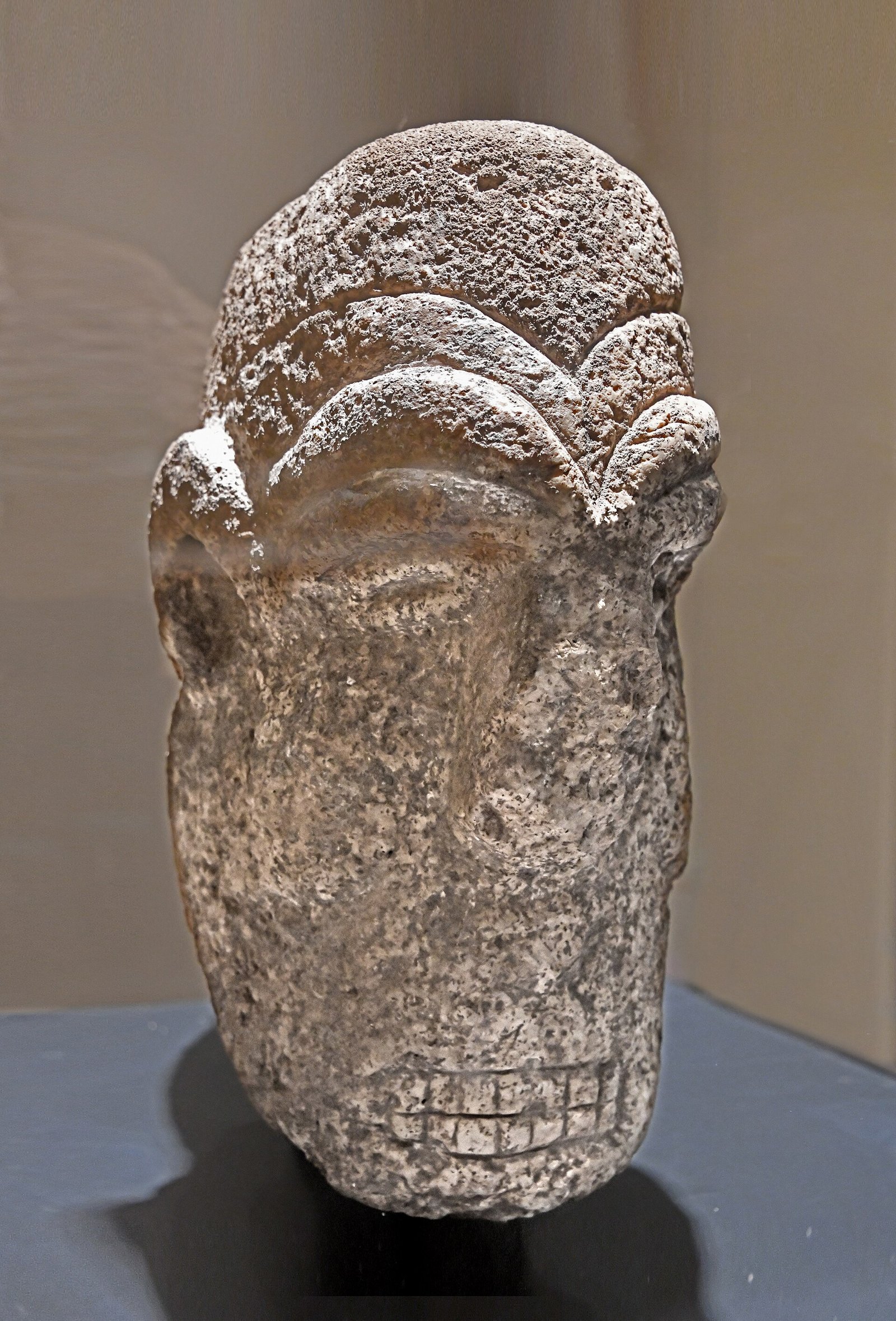
And you are not alone in there. Carved from the upper ridge of the bedrock, a human head watches the space — set so that it faces toward the way in. Whoever came down those five steps came down under its gaze.
A different way out
What makes the path remarkable is the exit. At the northeast corner of the chamber there is a second stair, of four steps — separate from the entrance. From the way the slopes of the steps are worn, the excavator Prof. Necmi Karul reads the south stair as the route down and the northeast stair as the route out. In other words: the wear left by real feet, over real years, appears to record a single direction of travel. In one way, out another. A loop, not a door.
The approach is choreographed too. Karul reports that Structure AB was reached by passing through the great central building, Structure AD — so the descent into the pillar room came at the end of a longer route through the complex, not straight off open ground. A small opening also connects AB to AD, keeping the two chambers in contact even once you were inside.
Why a one-way path matters
A building that you enter and leave by different routes is doing something deliberate. It is controlling sequence — the order in which you meet the space, the pillars, the watching head; the fact that you cannot simply back out the way you came. Across cultures, one-directional movement through a threshold is one of the oldest grammars of ritual: you are not the same on the way out as you were on the way in, and the architecture makes sure you cannot pretend otherwise. Karahan Tepe seems to have built that idea into stone eleven thousand years ago.
What we claim, and what we don't
Frequently asked questions
How did you enter the pillar room at Karahan Tepe?
Through a circular opening on the south side about 70 cm wide, which leads to a five-step descent into Structure AB. The chamber sits below ground level, cut into bedrock.
Is it true you left by a different stair?
The excavation reports a separate four-step stair at the northeast corner. From wear on the steps, Prof. Necmi Karul infers the south stair was used to descend and the northeast stair to exit. This movement reading is his interpretation, not a settled fact.
Why is the pillar room below ground?
Karahan Tepe's signature is architecture cut down into living rock, with pillars left standing from the bedrock — a different logic from Göbekli Tepe's built-up enclosures. Entering meant descending.
Karahan Tepe Research & Archive · Last updated July 2026.
The opening, the two stairs, the descent and the route through Structure AD are documented in Karul (2021) and Taş Tepeler project reporting. The reading of one stair for descent and one for exit is Karul's inference from step-wear and is presented here as attributed interpretation, not settled fact. This is a living archive summary, not an official academic publication.
Explore further: The Pillar Shrine (Structure AB) · They Buried Their Own Temple · The Watching Head · What Is Karahan Tepe?