The Nested Vessel Scene — Key Facts
Most of what makes Karahan Tepe famous is monumental — pillars taller than a person, a head carved from the bedrock. This is the opposite. It is small enough to hold in two hands, and it may be one of the most extraordinary things the site has produced: a deliberately arranged scene, staged inside a stone vessel.
What was found
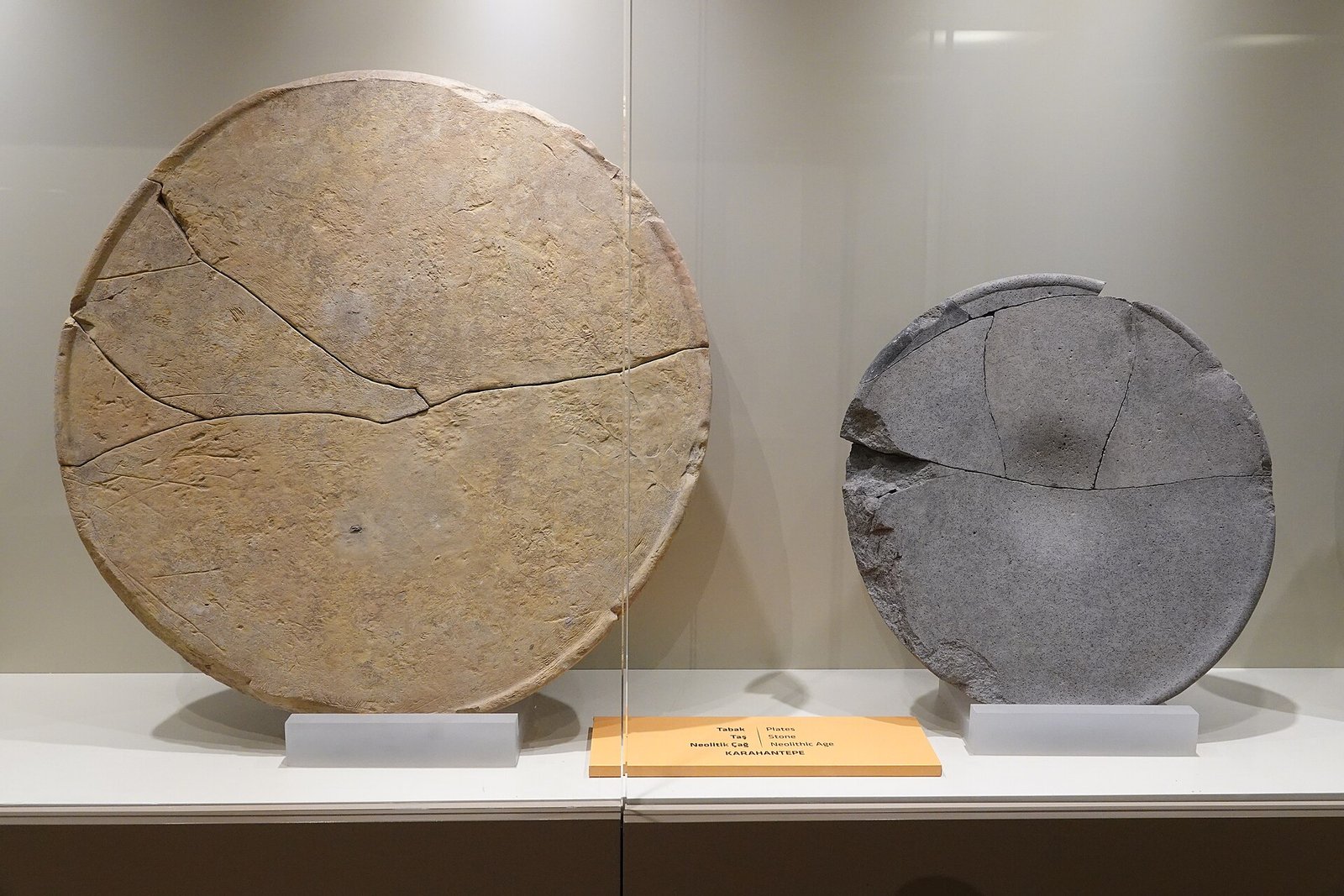
According to the excavation's own account, a large stone vessel at Karahan Tepe held a smaller vessel inside it. Within that smaller vessel were three stone rings and three tiny animal figurines — identified in the reporting as a fox, a vulture, and a boar, each only about four centimetres tall. The detail that turns a set of objects into a scene: the figurines' heads were fitted into the stone rings, as though placed in relation to one another rather than simply stored.
It is not a carving on a wall or a statue standing alone. It is containers, rings, and miniature animals, composed together and left inside the building — closer to a tiny tableau than to a loose object.
"An early three-dimensional story"
The site's excavator, Prof. Necmi Karul, reads the arrangement as organised and deliberate — an early example, in his words, of three-dimensional storytelling. That is a remarkable claim: where Göbekli Tepe and Karahan Tepe usually give us imagery flattened onto pillars, here imagery becomes portable, arranged, and spatial — animals set in relation to vessels, rings, and each other. If it holds up to formal publication, it may be one of the clearest examples of a staged, three-dimensional scene anywhere in the Taş Tepeler world.
What it might mean — and where we stop
This is the kind of find that invites the imagination, and we think that's part of the point of a site like this. A fox, a vulture, and a boar, gathered into a container and closed away, feels like a message left on purpose. But we are careful about how far we take it. The interpretation as a "story" is Karul's, and even he stops at calling its exact meaning unknown. So we hold two things at once: the arrangement is real and deliberate; the myth behind it is not ours to reconstruct. We won't tell you it's the world's first story as settled fact, or that it proves animal worship, or that it was a game or a toy — the evidence doesn't reach that far, and pretending it does would betray the thing itself.
What we don't know yet
- Formal catalogue numbers for the vessels, rings, and figurines.
- Exact measurements beyond the interview-level "about 4 cm."
- The precise find-context linking the scene to Structure BF.
- Whether it was a closure deposit, a staged story, a ritual object — or something we don't yet have a word for.
We'll update this page as the excavation publishes. Until then, what stands is enough: eleven thousand years ago, someone arranged three small animals inside a stone and left them for us to find.
Frequently asked questions
What is the nested vessel scene at Karahan Tepe?
A reported find in Structure BF: a large stone vessel containing a smaller vessel, which held three stone rings and three ~4 cm animal figurines — a fox, a vulture, and a boar — with their heads set into the rings.
Why is it important?
Excavator Necmi Karul describes it as an early three-dimensional story — imagery that is arranged and spatial rather than carved flat onto a pillar, which would make it a rare example of staged narrative in the Neolithic.
What does the scene mean?
Its exact ancient meaning is unknown. We report the arrangement and Karul's interpretation, and deliberately don't reconstruct a specific myth from it.