Free E-Book
Get "Karahan Tepe: The Complete Field Guide"
Join the archive and receive our free e-book — plus updates whenever new discoveries emerge from the Taş Tepeler region.
No spam. Unsubscribe anytime.
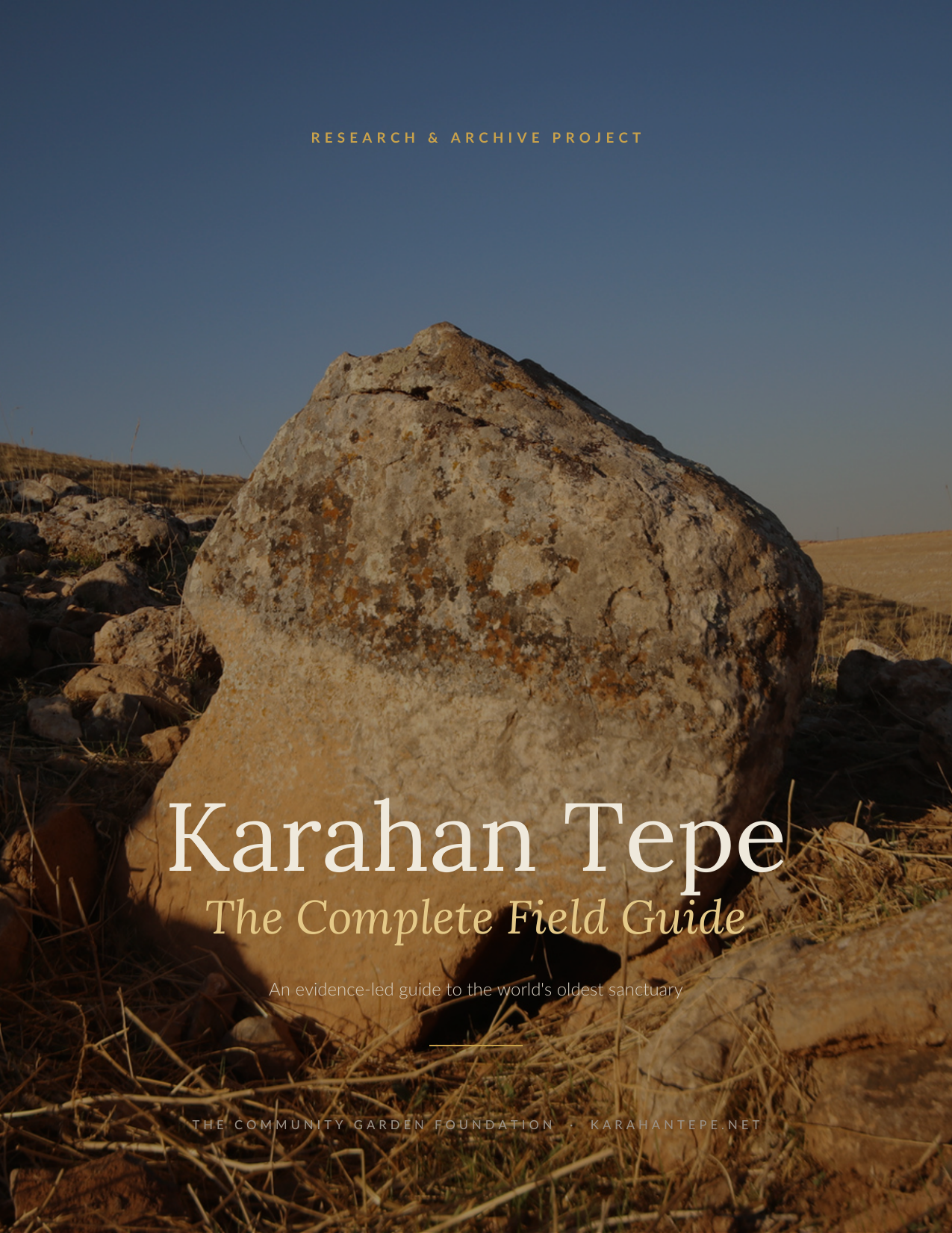
Structure AB · A Feature of the Pillar Room
Cut into the bedrock of Karahan Tepe's most famous chamber is a long, snaking groove — a channel that opens into the Pillar Room from the north. Something flowed here. What it was, we don't yet know.
The Pillar Room is defined by its eleven pillars and the human head that watches over them. But cut into the same bedrock is a quieter feature that may be just as deliberate: a serpentine channel — a long, sinuous groove that opens into the chamber from the north.
The channel is a genuine architectural feature, cut into the living rock rather than added later. Its winding, snake-like form is impossible to separate from the rest of Karahan Tepe, where the snake is a recurring motif — flowing in relief from the carved head, engraved along a bench in the neighbouring pit room, and here, carved as a channel into the floor itself. Whatever these people were doing, the serpent runs through it, in stone and in space.
A channel implies movement — a liquid routed deliberately through the chamber, possibly toward the neighbouring Central Building (Structure AD). That much the architecture supports. But this is exactly where a responsible archive stops and a sensational one keeps talking. The type of liquid is not established. The channel's function is not established. We will not tell you it carried water, or blood, or any other substance, and we will not tell you it proves initiation, purification, fertility, or sacrifice. The honest, and frankly more interesting, position is that a snaking channel was cut to move something through a sacred room eleven thousand years ago — and the question of what is still open.
These are open questions in the published record, not gaps we can fill with a guess. As the excavation clarifies the channel system, this page grows with it.
A long, snake-like channel cut into the bedrock of Structure AB — the Pillar Room — opening into the chamber from the north. It is a real architectural feature reported in the excavation record.
A liquid was likely routed through it, but the type of liquid and the channel's function have not been established, and we don't speculate beyond the evidence.
It shows that the snake — a recurring symbol at Karahan Tepe — was not only carved on walls but built into the architecture itself, and that liquid may have been moved deliberately through the site's most important chamber.
Free E-Book
Join the archive and receive our free e-book — plus updates whenever new discoveries emerge from the Taş Tepeler region.
No spam. Unsubscribe anytime.