The Sayburç Statue — Key Facts
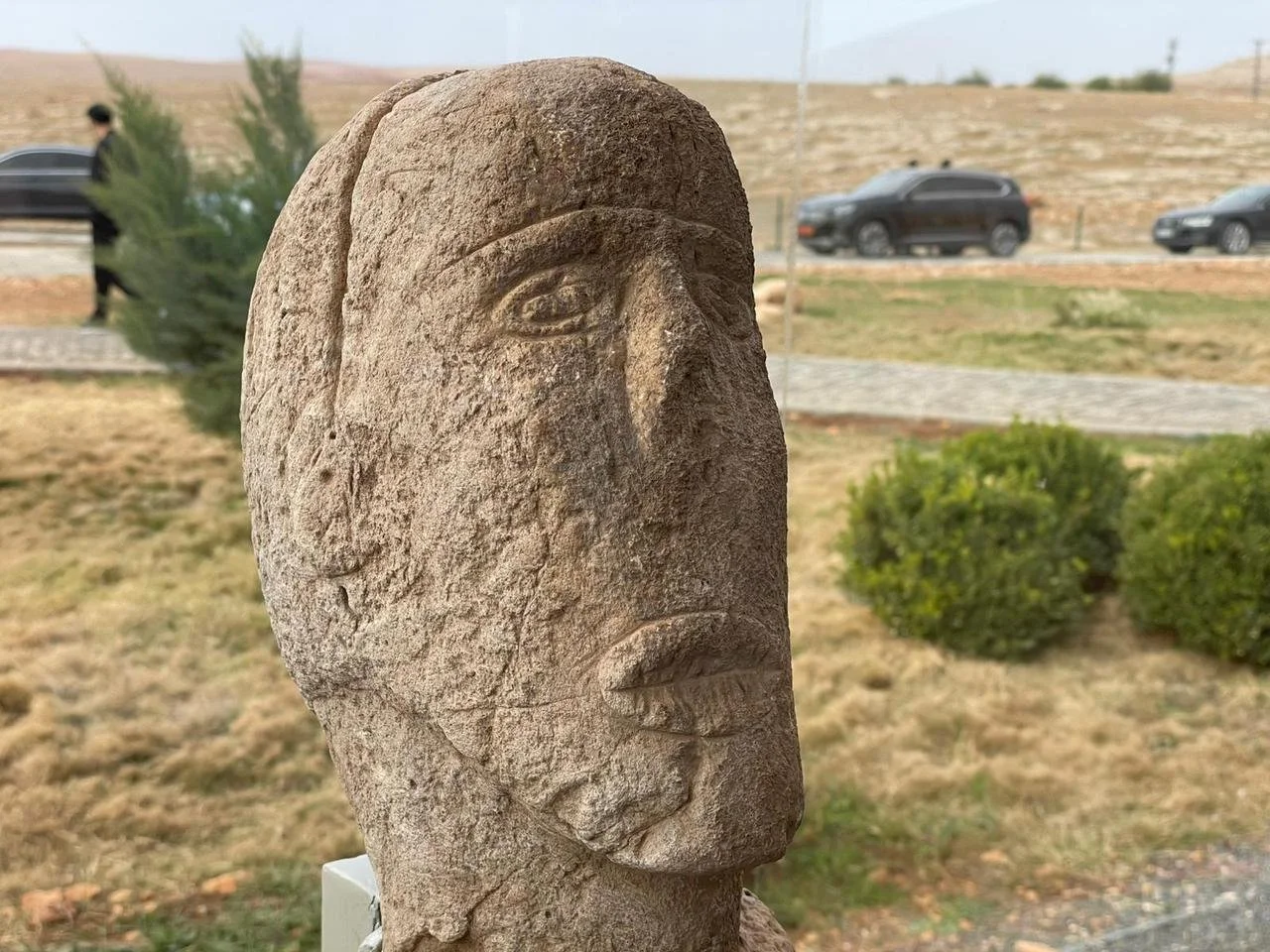
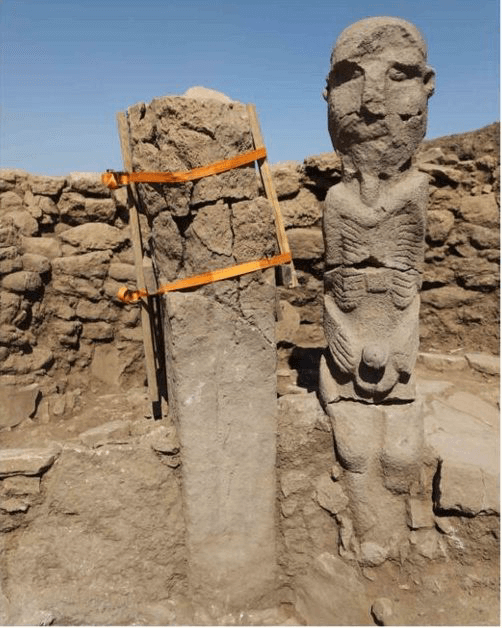
During the 2025 season at Sayburç, the team led by Dr. Eylem Özdoğan uncovered a cluster of human burials and, among them, a carved human statue that stops you cold: a rigid figure with clear rib markings, apparent shell-inlaid eyes, and a mouth that appears deliberately sewn shut. Every one of those details ties it to the symbolic world known from Karahan Tepe and Göbekli Tepe — and it was found not in a temple, but in a courtyard, in the middle of a village.
A village with a complex ritual life
Sayburç, buried under a modern village near Şanlıurfa, has often been treated as a smaller, humbler cousin of the monumental hilltop centres. The 2025 finds argue otherwise. Its people buried their dead inside the settlement, carved symbolic scenes into their architecture, and made objects that reflect the same worldview as the great sites. The new statue drives the point home: it came from a domestic context, which means the beliefs expressed at Göbekli Tepe and Karahan Tepe were also woven into everyday life inside ordinary homes.

The ribs, and what they may mean
Here the ribs almost certainly speak of death. Sayburç has produced numerous burials and loose skeletal remains — this was a community actively handling its dead — and a carved ribcage sits naturally in that world. It may mark the figure as deceased, as an ancestor, or as someone bound up with burial rites. At Karahan Tepe, ribbed human statues also turn up in contexts tied to pits and enclosed chambers, suggesting a shared way of marking bodies connected to death or transformation. Rather than a poetic metaphor, the ribs may be a plain visual cue: this is a dead body.
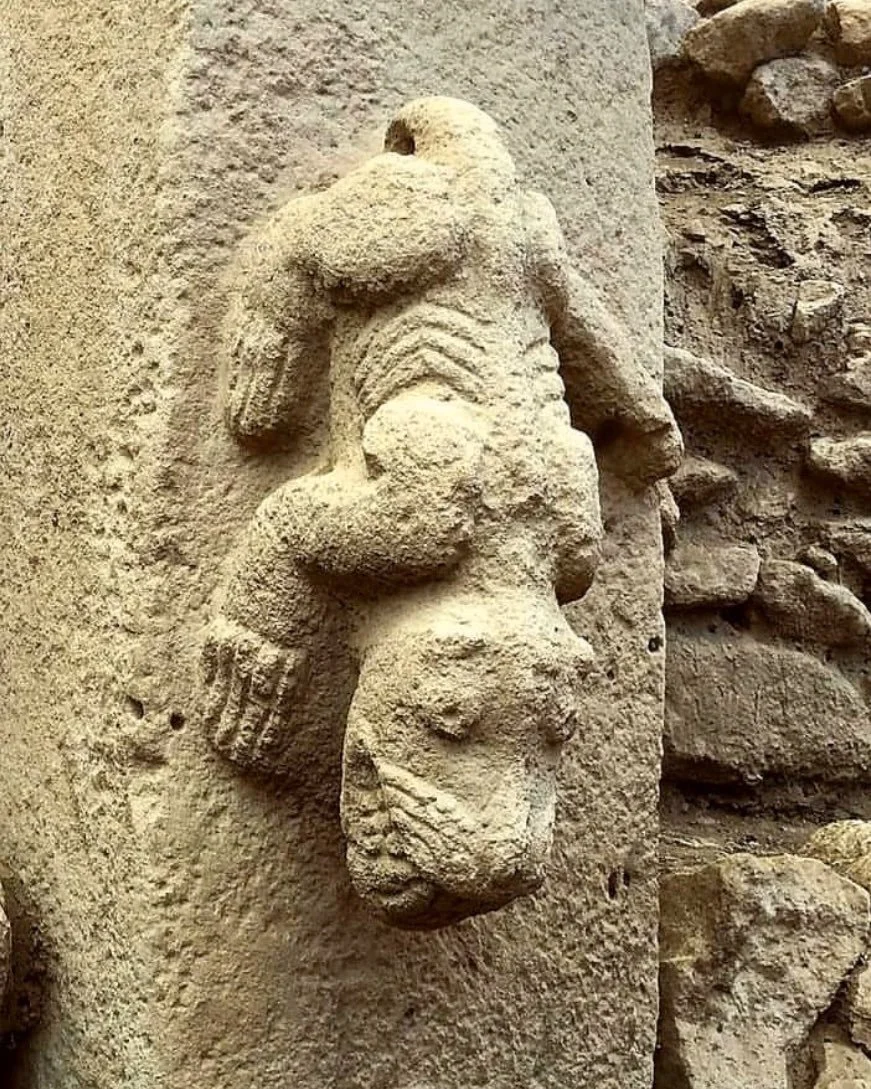
The same detail crosses the line between human and animal. At Göbekli Tepe, a leopard carved on a pillar (Pillar 27) also shows rib markings. When the same device appears on both people and predators across several sites, it starts to look like a shared visual language — the leopard once again standing beside the human at the threshold of death.
The sewn mouth and the shell eyes
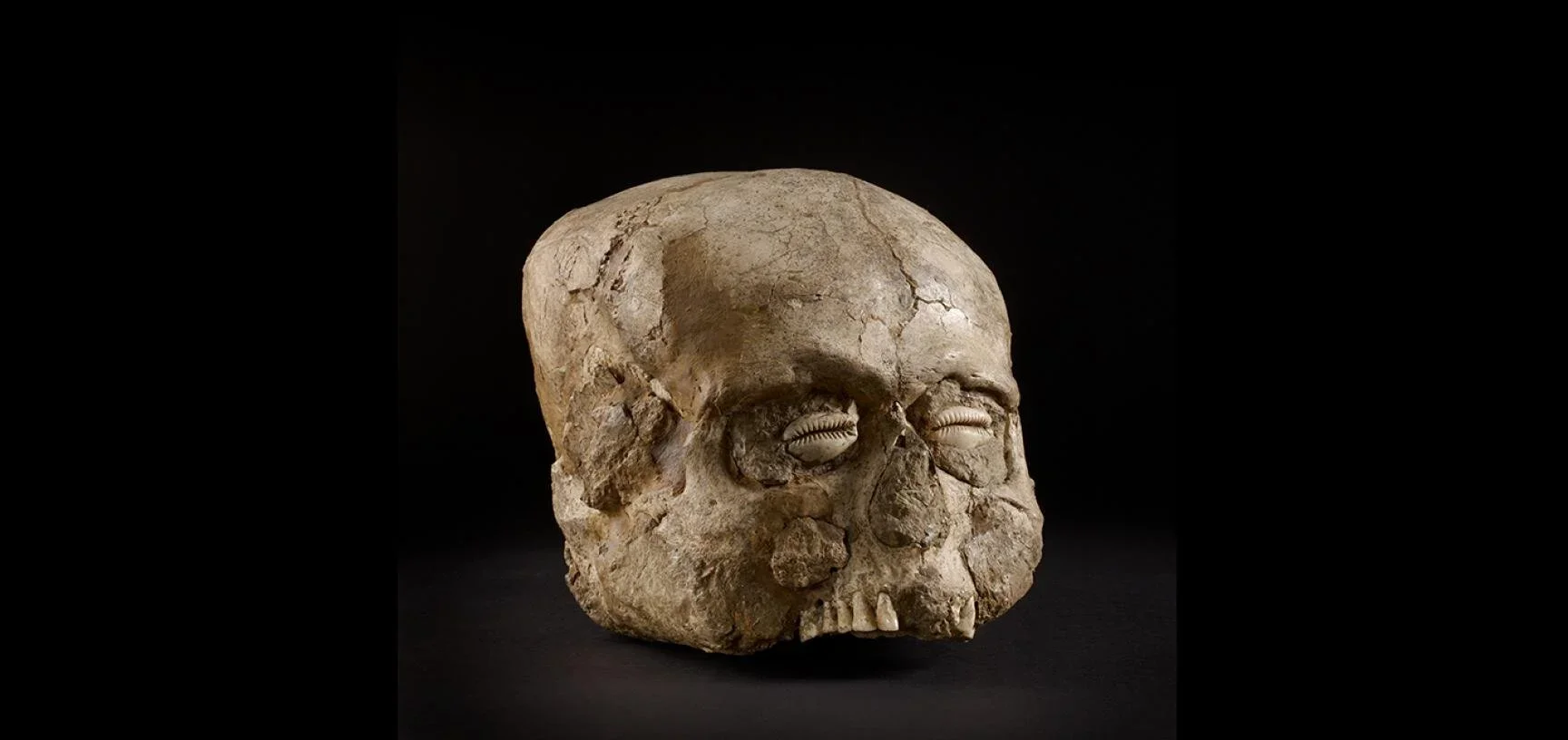
The closed mouth and the shell-inlaid eyes point the same way. Across the Pre-Pottery Neolithic, communities curated human skulls and, in the Levant, plastered them and set cowrie or other marine shells into the eye sockets — famously the plastered skulls of Jericho (around 7000 BCE). Shells stood in for missing eyes, giving the dead a lifelike presence before they were placed in a niche or kept in the home. Marine shells recur at PPN sites from Jerf el Ahmar to Çayönü and into the Levant. Read against that background, Sayburç's shell-eyed, sewn-mouthed figure looks like a sculptural version of the same idea: the dead made present, and made to keep silent.
Why it matters for Karahan Tepe
Karahan Tepe is full of human presence — carved heads, seated figures, the Ribbed Man read in terms of death and fertility — but its rooms rarely explain themselves. Sayburç, close by and closely related, offers something more legible: a figure explicitly marked as dead, in a plain domestic setting. It shows that the symbolism of death and fertility ran across every kind of site and social space — not just the monumental enclosures, but the courtyards and homes beside them. Reading the two sites together, Karahan's silent chambers gain context.
Sayburç has its own dedicated archive. For the full relief, the burials and the statue, visit Sayburc.net.
What we still don't know
Was the statue a specific person from the village, or a general ancestral figure? Did small settlements like Sayburç make their own versions of the traditions seen at the big sites, or were they part of a coordinated ritual network spanning Taş Tepeler — and how did the symbols travel between communities? These are open questions. What the statue already shows is clear enough: ritual life here was not confined to elites or great gatherings. It reached into the homes of the people who lived beside the first temples.
Frequently asked questions
What is the Sayburç statue?
A carved human figure found in 2025 by Dr. Eylem Özdoğan's team, with rib markings, apparent shell-inlaid eyes and a mouth that appears sewn shut. It was found in a domestic context among burials and is read as an image of the dead.
Why does the statue have ribs and a sewn mouth?
Both are read as markers of death. Ribs recur on human (and some animal) figures across the region; the sewn mouth and shell eyes echo the wider Neolithic treatment of the dead, including the plastered, shell-eyed skulls of the Levant. These readings are interpretive, but the pattern is consistent.
How does Sayburç relate to Karahan Tepe?
They are neighbouring Taş Tepeler sites sharing a symbolic world. Sayburç's death imagery and its ribbed figure help interpret Karahan Tepe's ribbed statues and its concern with death and the human form.
Karahan Tepe Research & Archive · Last updated July 2026.
The 2025 Sayburç statue (rib markings, apparent shell eyes, sewn mouth, domestic burial context) is reported from the excavations led by Dr. Eylem Özdoğan; details remain reporting-grade. The Göbekli Tepe ribbed felid (Pillar 27) and the plastered, shell-eyed skulls of the Levant (e.g. Jericho, ~7000 BCE) are published parallels. The death/ancestry reading of the ribs, mouth and eyes is interpretation, offered as such. Photographs show a replica of the Sayburç bench relief, not the 2025 statue itself. This is a living archive summary, not an official academic publication.
Explore further: The Leopard of Karahan · Human Figures · Sayburc.net · More discoveries