The 2025 Dwellings — Key Facts
For years, Karahan Tepe was understood mainly as a place of ritual — pillar chambers, carved heads, the great sealed rooms. In 2025 that picture changed. Excavators uncovered more than thirty dwellings woven into the slope: a honeycomb of small homes with hearths, storage nooks and grinding stones. The people who carved the sacred chambers were not visitors. They lived here. Karahan Tepe is now one of the earliest villages we know.
A honeycomb of homes
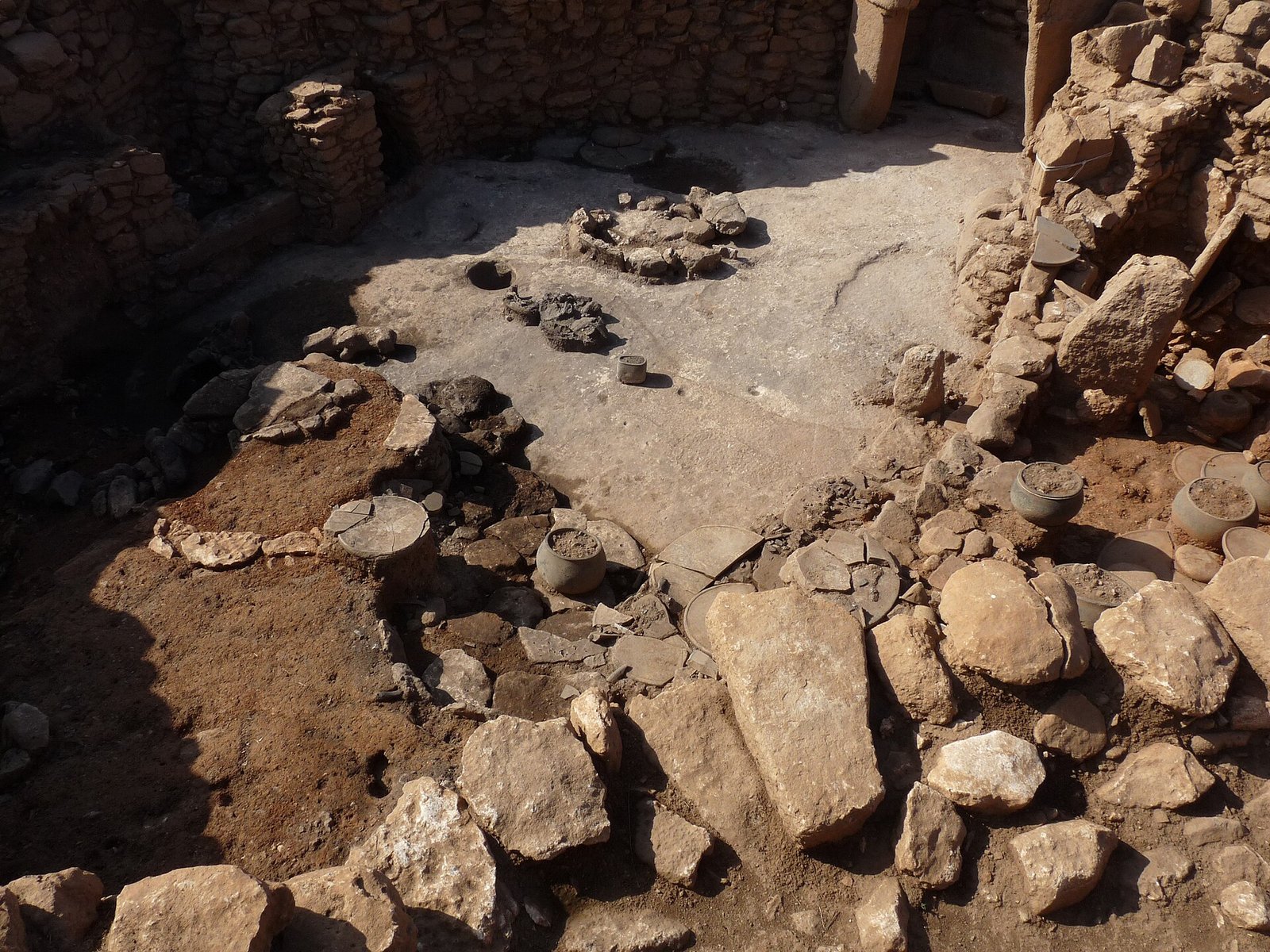
The dwellings are small — roughly three to six metres across — and they crowd together in a dense, honeycomb-like pattern, sharing walls and edges rather than standing apart. Their walls are oval and irregular, not the neat rectangles of later architecture: this is early, experimental building, people still working out how to shape lived space in stone. Some were cut down into the bedrock, in the same carving-into-the-earth logic that defines Karahan's ritual chambers; others were raised over the fills of earlier structures, a settlement built on its own past.
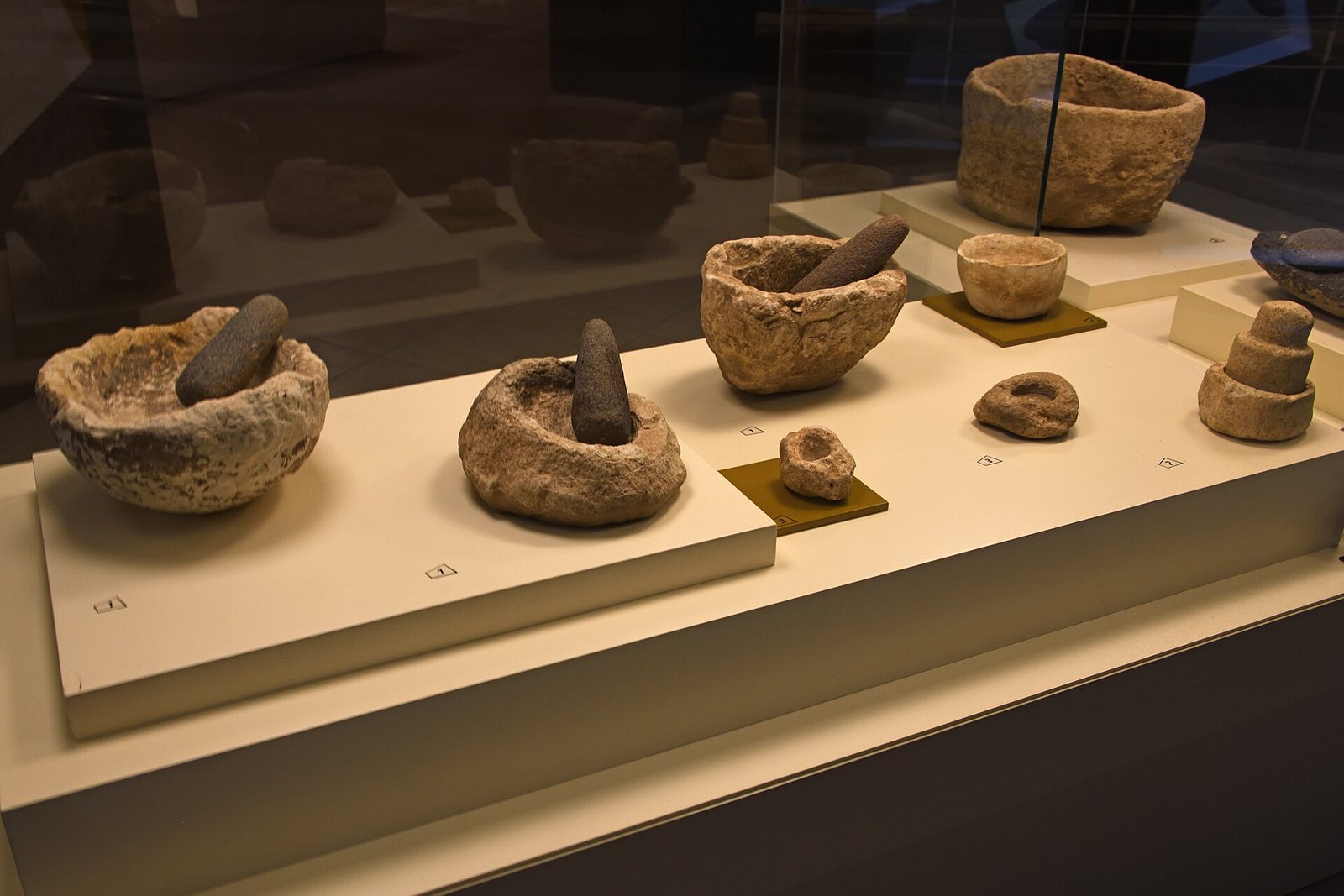
What survives inside is startlingly domestic. Excavators report stone floors, hearths, storage compartments and grinding platforms — the equipment of daily life, preserved with unusual clarity beneath layers of deliberate backfill. You can almost read the day: fire in the hearth, grain on the grinding stone, goods tucked into a wall niche.
The sacred and the everyday, under one roof
The most striking detail is what blurs the line between temple and town: some of these homes contained standing stones of their own. The upright stone — the defining symbol of the great ritual chambers — appears here at domestic scale, inside ordinary houses. Whatever the pillars meant, that meaning was not sealed away in special buildings alone. It lived in the home, beside the hearth. At Karahan Tepe the sacred and the everyday did not occupy separate worlds. They shared a wall.
What they ate
The homes are also rewriting what we know about the Karahan diet. Working from the soil of house floors and the residues trapped in grinding stones, the team has been recovering microscopic plant remains — early results point to the processing of wild grains and legumes. This is the knife-edge moment before farming: these were still, by and large, foragers, gathering and grinding wild plants, not yet farmers sowing fields. Karahan Tepe sits exactly on that threshold between the old world of the hunt and the coming world of the harvest — and now we can see it in the crumbs on a grinding stone.
What we claim, and what we don't
Why this changes the story
The old headline was "the world's oldest temple." The 2025 discovery pushes toward a richer, truer one: one of the earliest known communities. If people lived here in their dozens, generation after generation, then Karahan Tepe was not a lonely shrine visited by wandering bands — it was a place, with homes and neighbours and daily routines, that also happened to build some of the most ambitious ritual architecture on Earth. That reframing — sanctuary and settlement — is the frontier of Karahan research, and it makes the site more human, not less mysterious.
Frequently asked questions
Did people live at Karahan Tepe?
Yes. In 2025, excavators reported more than 30 dwellings at the site — small, honeycomb-arranged homes with hearths, storage and grinding stones — showing that Karahan Tepe was a settlement, not only a ritual centre.
How many houses were found at Karahan Tepe?
More than thirty, each roughly 3 to 6 metres across, densely packed together and preserved beneath deliberate backfill.
Were there standing stones inside the houses?
Some of the dwellings reportedly contained their own standing stones — bringing the symbol of the great ritual chambers into the domestic home.
What did the people of Karahan Tepe eat?
Analysis of house-floor soils and grinding stones points to the processing of wild grains and legumes. They were foragers on the threshold of farming, not yet farmers.
Karahan Tepe Research & Archive · Last updated July 2026.
The 2025 dwellings (30+, 3–6 m, honeycomb layout, hearths, storage, grinding platforms, standing stones in some homes) and the plant-residue diet evidence draw on Taş Tepeler project reporting under Prof. Necmi Karul, via Arkeonews, Anatolian Archaeology and related coverage. Interpretations of the standing stones and of "early domestication" are attributed and kept distinct from the described finds. The photograph shows the excavated site, not a single labelled dwelling. This is a living archive summary, not an official academic publication.
Explore further: Who Built Karahan Tepe? · They Buried Their Own Temple · What Is Karahan Tepe? · More discoveries