Free E-Book
Get "Karahan Tepe: The Complete Field Guide"
Join the archive and receive our free e-book — plus updates whenever new discoveries emerge from the Taş Tepeler region.
No spam. Unsubscribe anytime.
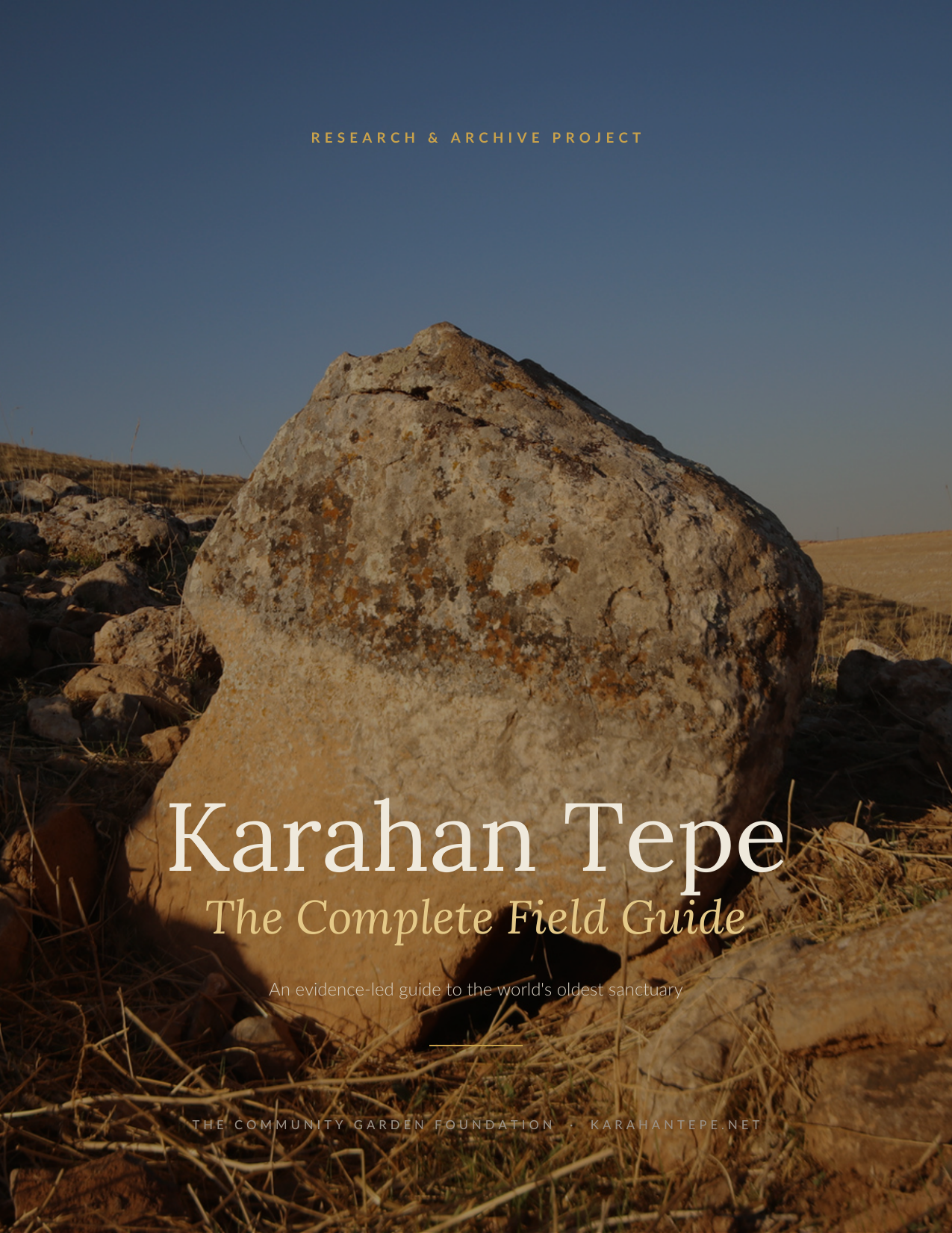
A Comparison
Stonehenge is the monument the world reaches for when it wants to say "ancient." Karahan Tepe was already six thousand years old before the first Stonehenge stone was raised.
People search "Karahan Tepe vs Stonehenge" because Stonehenge is the yardstick — the oldest thing most of us can name. So here is the number that matters: Karahan Tepe is roughly 6,000 years older than Stonehenge. When Karahan's pillars were carved into bedrock, Stonehenge lay six millennia in the future.
Stonehenge was built in stages, beginning around 3000 BCE, with its great sarsen circle raised around 2500 BCE. Karahan Tepe's main phase dates to roughly 9500–8000 BCE. The distance between them — about six thousand years — is greater than the distance between Stonehenge and us today. In other words, the builders of Stonehenge were closer in time to us than they were to the builders of Karahan Tepe.
The age gap isn't just a number — it's two utterly different kinds of society. Stonehenge was raised by settled farmers with pottery, domesticated animals, and organised agricultural communities, in the Late Neolithic and early Bronze Age. Karahan Tepe was carved by people at the very edge of that transition — hunter-gatherers who had not yet fully taken up farming, with no pottery and no metal. That is what makes Karahan so startling: monumental, planned, symbolic architecture appears here before the settled farming life we assumed such building required.
They are also physically different monuments. Stonehenge is a free-standing circle of shaped sarsen and bluestone, hauled and raised on open ground, its stones plain but astronomically aligned. Karahan Tepe is carved down into the living bedrock — sunken chambers, pillars left standing where the rock was cut away, and figures: a human head watching a room, animals in relief, phallic pillars. Stonehenge is abstract geometry; Karahan is a peopled, animal-haunted interior. Both gathered communities and staged something we still can't fully name — but they did it in opposite ways, six thousand years apart.
Yes — by roughly 6,000 years. Karahan Tepe's main phase dates to about 9500–8000 BCE; Stonehenge was built from around 3000 BCE.
About six thousand years — a gap wider than the one between Stonehenge and the present day.
They're different achievements: Stonehenge for its engineering and astronomy by farming societies, Karahan for producing planned, symbolic, monumental architecture thousands of years earlier, before farming. Karahan's age is its headline.
Free E-Book
Join the archive and receive our free e-book — plus updates whenever new discoveries emerge from the Taş Tepeler region.
No spam. Unsubscribe anytime.