 Karahan TepeResearch & Archive
Karahan TepeResearch & Archive
Karahan TepeResearch & Archive
Deep Dive · Faces & Ritual
Traces of red, white and black pigment survive on Karahan's sculpture and plaster — including its most famous statue. The austere grey stone we see today was once vividly painted.
We picture Karahan Tepe in austere grey stone. That is almost certainly wrong. Traces of pigment survive on its sculpture and its walls — and the most famous statue on the site still carries its original colour. The first monuments were not grey. They were painted.
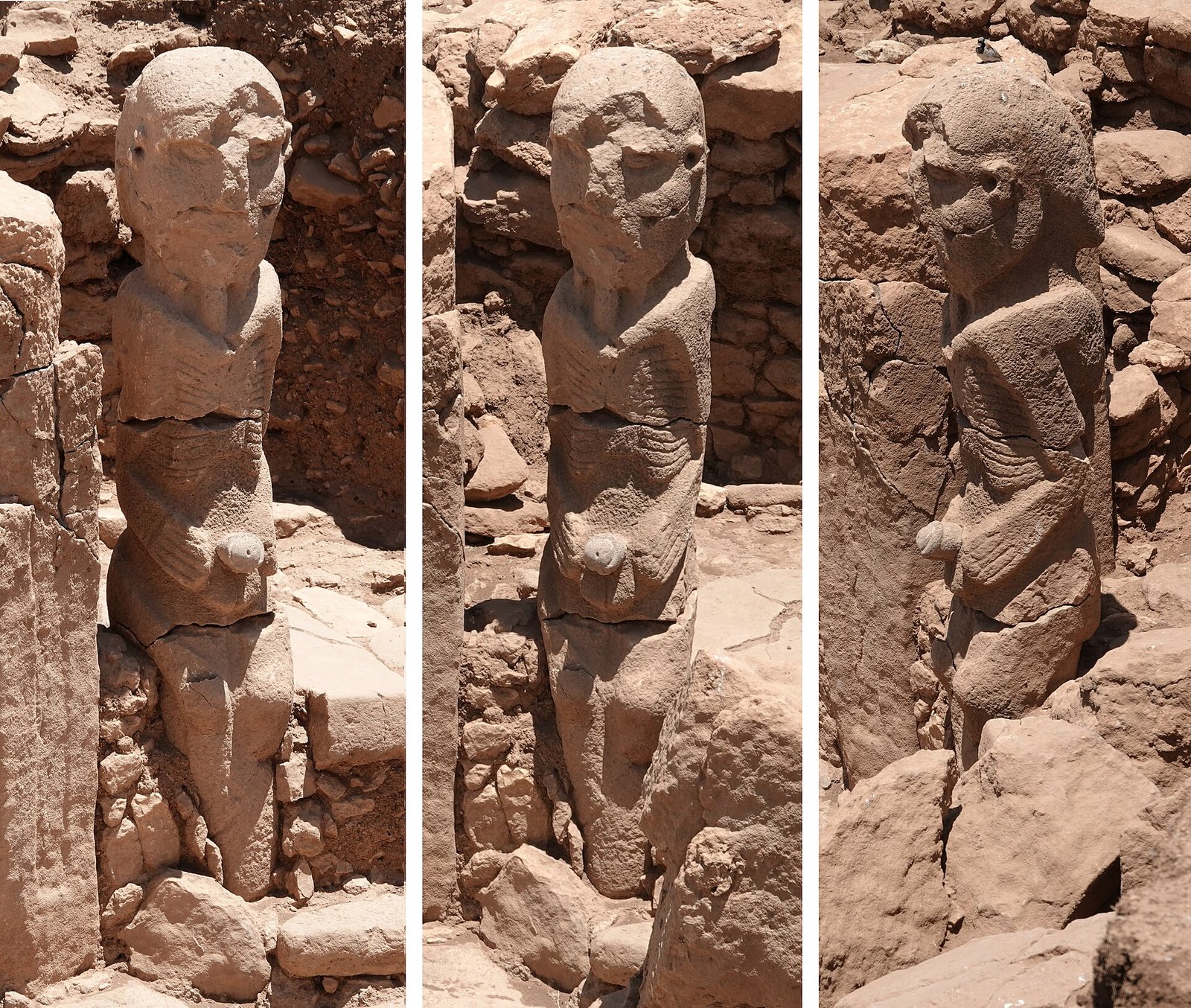
The clearest case is the 2023 Ribbed Man — a life-size human statue found with surviving traces of red, white and black pigment, making it one of the earliest known painted human sculptures anywhere.[1] Beyond it, painted plaster survives on some interior wall surfaces, and specialists expect microscopic analysis of pillar and sculpture surfaces to recover more original colour.[2] Individually these are hints; together they point one way.
Paint transforms how we should imagine the site. A sunken, roofed chamber lit by lamp or a shaft of daylight, its walls plastered and coloured, a red, white and black statue watching from a bench, ranked pillars around it — this is not a museum of grey rock but an immersive, theatrical space. It fits everything else Karahan is telling us: the masks and costume, the amphitheatre built for people to gather and watch. Colour was part of the performance.
The Ribbed Man's pigment is documented. The wider claim — that pillars and walls across the site were painted — rests partly on traces and on analysis that is anticipated or ongoing rather than fully published, so we treat it as reporting-grade. We also avoid the looser online claims (e.g. painted skulls) that outrun the evidence.
How much of the site was painted, and in what schemes? Were colours symbolic — red for blood or life, black for death — or decorative? Did paint mark certain figures as special? As conservation and pigment analysis continue, Karahan may slowly regain its colours. For now, the safest and most exciting statement is simple: it had them.
At least in part, yes. The 2.3 m Ribbed Man statue preserves red, white and black pigment, and painted plaster survives on some wall surfaces — strong evidence the grey stone we see today was once coloured.
Red, white and black pigment traces are reported. Fuller schemes await microscopic pigment analysis.
No. The Ribbed Man's pigment is documented; broader painting of pillars and walls is reported and partly still under analysis, so we flag it as reporting-grade.
Karahan Tepe Research & Archive · Last updated September 2026.
The Ribbed Man's red/white/black pigment is documented (2023 announcement); wider painting of pillars and plaster is reported and partly awaits microscopic analysis, and is flagged reporting-grade. We exclude looser claims (e.g. painted skulls) that outrun the evidence. Images are Karahan Tepe finds (Şanlıurfa Archaeology Museum / on site). This is a living archive summary, not an official academic publication.
Peer-reviewed excavation detail follows Karul 2021. Finds reported in 2024–2025 seasons are cited to project announcements and reputable coverage and are flagged as reporting-grade pending formal publication. See Sources & Method and Open Questions.
Explore further: The Ribbed Man · The Carved Heads · The Stone Masks · More discoveries
See It For Yourself
Our small-group expedition takes you into Karahan Tepe's chambers with expert guides who explain what each one actually tells us.
Visit with our expert team →Free E-Book
Join the archive and receive our free e-book — plus updates whenever new discoveries emerge from the site.
No spam. Unsubscribe anytime.