 Karahan TepeResearch & Archive
Karahan TepeResearch & Archive
Karahan TepeResearch & Archive
Deep Dive · Faces & Ritual
Tiny masks carved in stone and bone, and life-size heads that look like people wearing headgear. Numerous at Karahan Tepe, they hint that the world's first monuments were also stages for masking and costume.
Karahan Tepe is a site obsessed with the human face — and some of its faces are stranger than others. Among the finds are miniature masks carved from stone and bone, and life-size stone heads whose features read less like a bare face than like a person wearing something over it. Small at Göbekli Tepe but numerous at Karahan, these objects have pushed some researchers toward a startling idea: that the people who built the first monuments masked themselves.
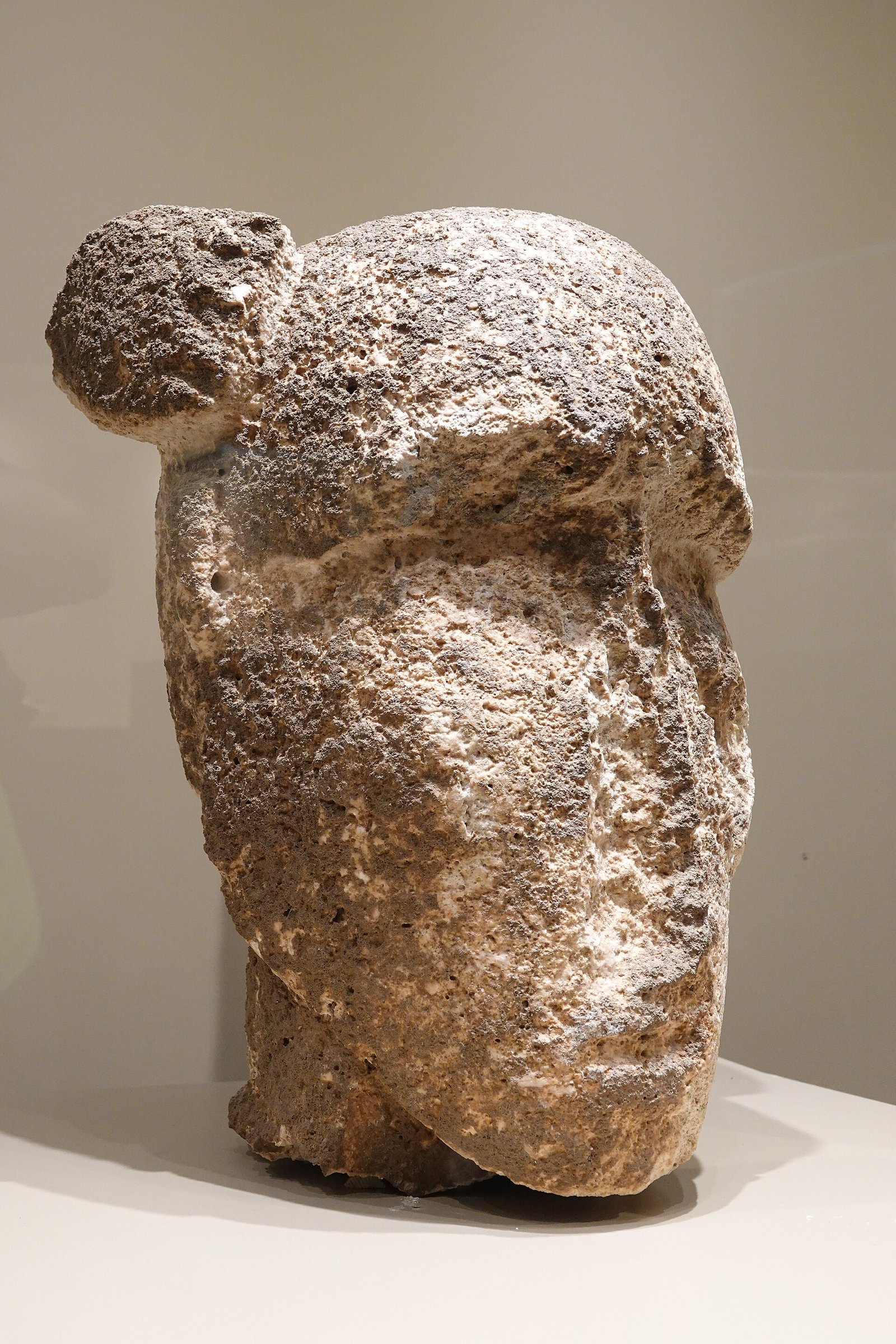
Two related things. First, miniature mask carvings in stone and bone — small enough to hold — that appear to mimic real, life-size masks. Crucially, no life-size masks themselves survive: if they were made of wood, leather, or fibre, they would have rotted away, leaving only these durable copies as their shadow.[1] Second, life-size stone heads whose carved features suggest a person in headgear or a covering, rather than a plain human face. Both are noted across the region but occur in unusual numbers at Karahan Tepe.[1]
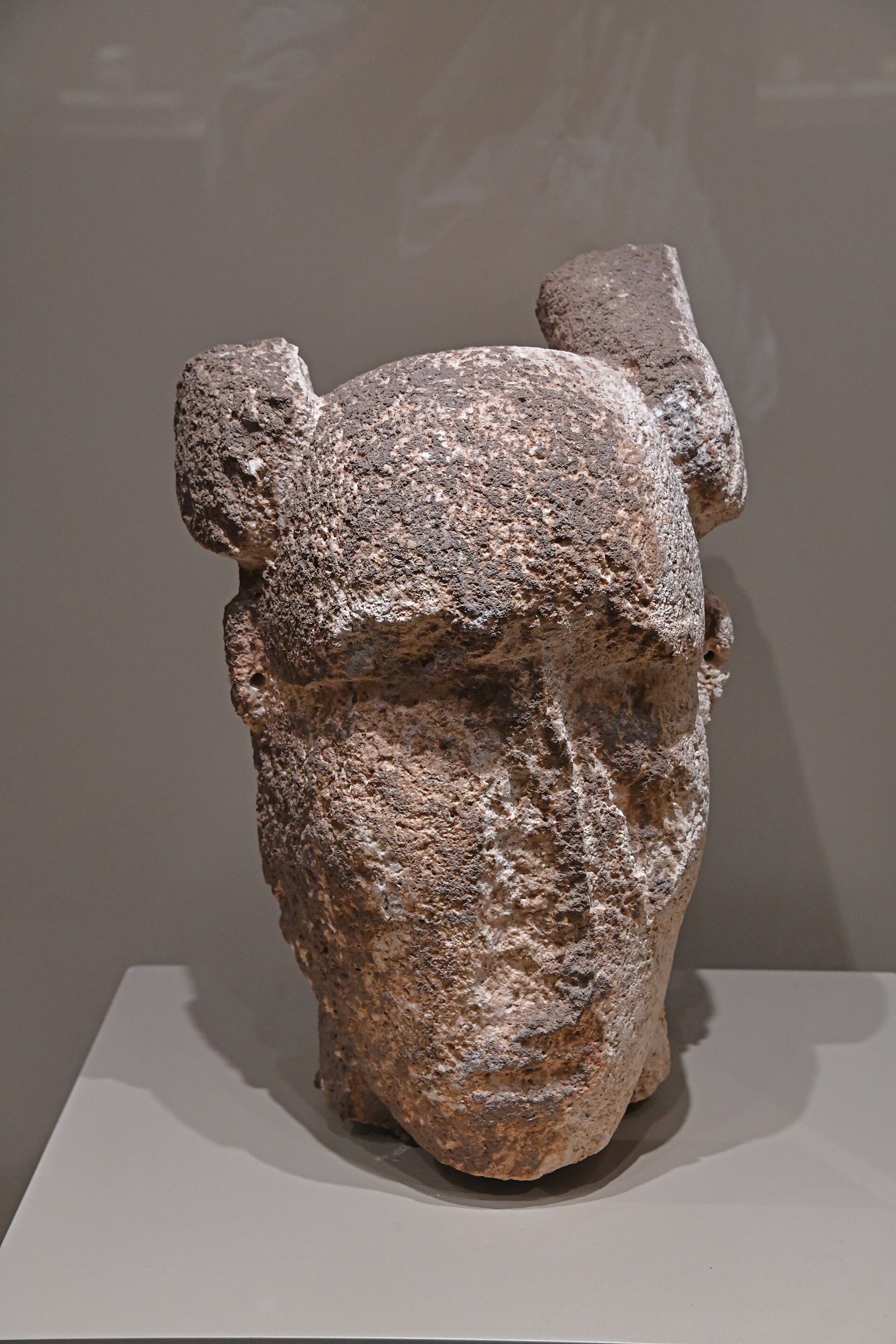
If the small stone masks copy real ones, then real masks existed — and masks are worn. Some researchers argue that Neolithic gatherings at Karahan and its neighbours involved costume and masking deliberately designed to evoke the strange and the frightful, and that this marks these events as special, organised social occasions — planned for set times of the year, not casual meetings.[1] Read this way, the carved heads in the walls and the ranks of pillars are not just art but the backdrop to performance: people transformed by costume, moving through a charged, roofed, sunken space.
This reframes the whole site. Karahan's carved heads, its human figures, and its amphitheatre-like gathering building all point the same way: toward people assembling to watch and take part. Masks add the missing ingredient — transformation. They turn a room of statues into a room of performers, and they help explain why so much labour went into spaces built for groups to gather and see. At Karahan, the human face wasn't only carved; it may also have been worn.
The objects are real and documented: the miniature masks and the mask-like heads exist. But “people wore masks in ritual” is an interpretation drawn from that imagery, not a proven fact — no actual worn mask has been recovered, and the meaning of the costume, if it existed, is unknown. We present the masking argument as a compelling reading of real finds, clearly labelled as interpretation.
Were the masks worn by everyone, or by particular people — leaders, initiates, the dead? What did they represent: animals, ancestors, spirits, something with no modern name? Were the mask-like heads portraits of masked people, or images of the masks themselves? And how does masking connect to Karahan's themes of death (the Ribbed Man, the vulture) and the human form? These are open. What the stone masks already do is priceless: they let us glimpse the first monuments not as silent ruins, but as places where people put on another face.
Possibly. Miniature stone and bone masks that seem to copy real masks, plus stone heads that look like people in headgear, have led researchers to argue that masking and costume were part of ritual gatherings. No worn mask survives, so it remains an interpretation.
If they were made of wood, leather, or fibre they would have decayed over 11,000 years, leaving only the durable stone and bone copies behind.
Similar objects appear at Göbekli Tepe and elsewhere, but they are notably numerous at Karahan Tepe.
Karahan Tepe Research & Archive · Last updated September 2026.
The miniature stone/bone masks and mask-like stone heads are documented finds reported from Karahan Tepe and the wider Taş Tepeler; the reading that they reflect masking and costume in organised ritual gatherings is an interpretation advanced by researchers (reported via Current World Archaeology / The Past and related coverage), offered here as interpretation, not settled fact. No worn mask has been recovered. Images shown are carved heads and faces from Karahan Tepe (Şanlıurfa Archaeology Museum). This is a living archive summary, not an official academic publication.
The masking interpretation is drawn from the objects; where meaning is uncertain we say so. See Sources & Method and Open Questions.
Explore further: The Carved Heads · Human Figures · The Amphitheatre · More discoveries
Free E-Book
Join the archive and receive our free e-book — plus updates whenever new discoveries emerge from the site.
No spam. Unsubscribe anytime.