 Karahan TepeResearch & Archive
Karahan TepeResearch & Archive
Karahan TepeResearch & Archive
Discoveries · 2025 Season
A ~17-metre circular building with tiered stone benches, carved human heads in its walls and seated statues on its floor — an 11,000-year-old place built for people to gather.
Karahan Tepe has produced one of the most evocative structures of the whole Neolithic: a large circular building, nearly 17 metres across, with three wide tiered stone benches curving around a central focal point — and human heads sculpted into its walls. Excavators have called it, cautiously, an “amphitheatre.” Thousands of years before the odeons of the classical world, someone built a room designed for people to sit together and watch.[1]
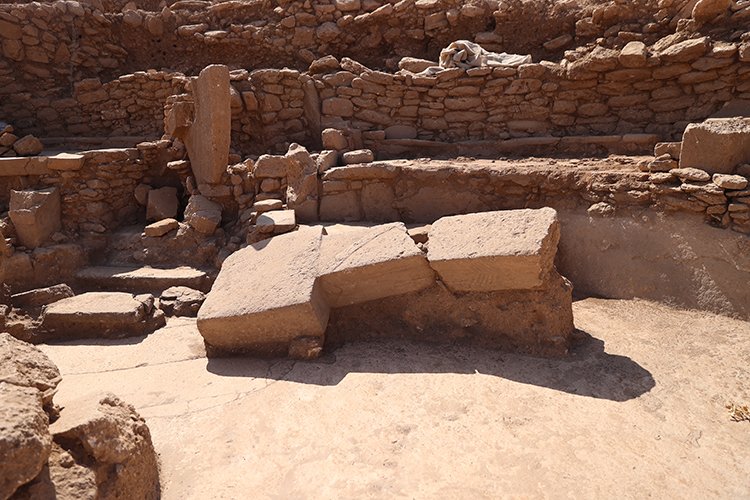
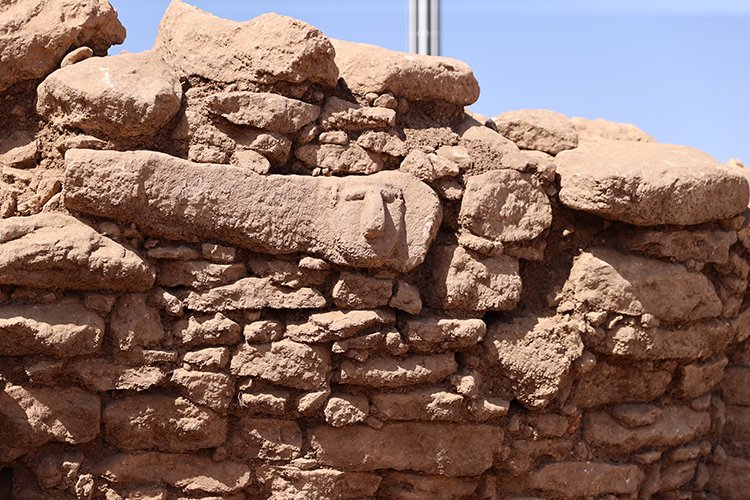
Excavation exposed the building's entire floor, carved directly into the bedrock, and revealed human heads sculpted into the walls along with several seated human statues placed on the ground.[1] That concentration of human imagery is itself significant: across the Taş Tepeler, the earlier symbolic world was dominated by wild animals. Here the emphasis has shifted to the human form — a change of worldview in which people themselves become the centre of ritual and communal identity.
The layout is what stops you. Three wide, tiered benches curve around a central point, where a prominent sculpture is placed — an arrangement that unmistakably recalls an amphitheatre or odeon. It is thousands of years older than any classical example, yet the logic is the same: a shaped space for a group to gather, face inward, and share in something. Excavation director Prof. Necmi Karul notes that the design clearly points to organised group gatherings.[1]
Prof. Karul's fuller 2025 account describes the site's central communal building — Structure AD — in just these terms, and the two are very likely one and the same. In its final form it was a sunken hall roughly 18 m across (originally about 28 m, rebuilt three times), its walls lined with two-step benches divided into about fifteen niche-like bays, some seventeen pillars around the wall, and two central pillars about 5.5 m tall standing face to face at the focus. In plan it closely parallels the great Structure D at Göbekli Tepe.[3]
One detail is still to be reconciled: Karul’s 2025 volume describes AD’s benches as two-step, while the November 2025 announcement of the “amphitheatre” described three tiered benches. We report both and do not merge them — and we treat the identification of the two as very likely but not yet formally confirmed.
Karul is deliberately careful with the word temple. Rather than a space dedicated strictly to worship, he proposes the building's primary role was to strengthen social cohesion — a venue for rituals, storytelling, decision-making, and communal ceremonies that helped bind a newly settled community together.[1] As people shifted from mobile hunter-gatherer bands to settled life, they faced new problems — cooperation, leadership, shared identity — and monumental gathering spaces may have been part of the solution. In that reading, the amphitheatre is less a church than a social engine: architecture built to help people live together. We report this as Karul's interpretation, not settled fact.
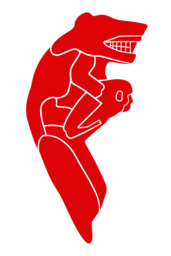
Karahan Tepe was inhabited for roughly 1,400 years, from around 9,400 BCE, across three architectural phases — early circular rooms cut partly into bedrock, then rounded-corner rectangular buildings, then fully rectangular ones.[1] The amphitheatre belongs to a site already defined by the human form: the carved heads, the seated statues, the 2025 human-faced pillar and the 2026 human-on-leopard statue. Karahan holds one of the largest concentrations of human-face depictions known from the Neolithic, and its bedrock-carved architecture is more extensive than Göbekli Tepe's — the amphitheatre is the clearest sign yet that these were people gathering to see one another.
“Amphitheatre” is a helpful shorthand, not a proven function — and Karul's own caution about “temple” cuts both ways. What actually happened on those tiers — ceremony, performance, council, or something with no modern equivalent — is unknown. So are the building's exact phase, its relationship to the connected rock-cut core, and the identities of the seated figures and wall heads. The full context awaits formal publication; until then we treat the specifics as reporting-grade. What's certain is the shape of the room, and what that shape implies: the impulse to gather is very, very old.
A circular Neolithic building nearly 17 m across, with three tiered stone benches curving around a central sculpture, human heads carved into its walls and seated statues on its bedrock floor, revealed in 2025 and likened to an amphitheatre.
The layout strongly resembles one, but "amphitheatre" is a descriptive comparison, not a proven function. The excavators read it as a place for organised group gatherings rather than a temple.
Around 11,000 years old — Karahan Tepe was inhabited for roughly 1,400 years from about 9,400 BCE.
Karahan Tepe Research & Archive · Published September 2026.
The amphitheatre-like building (~17 m diameter, three tiered benches, bedrock floor, wall-carved human heads, seated statues) was reported in November 2025 from the excavations directed by Prof. Necmi Karul under the Taş Tepeler project; exact phase, function and object detail await formal publication and are flagged reporting-grade. Photographs of the structure are credited to Eşber Ayaydın/AA — we link to the source rather than reproduce them; the carved-head and seated-statue images shown here are separate, published Karahan Tepe objects (Şanlıurfa Archaeology Museum / on site). The “amphitheatre” and “social engine” readings are the excavator's interpretation, offered as such. This is a living archive summary, not an official academic publication.
Finds reported in the 2025–2026 seasons are cited to project announcements and reputable coverage and are flagged as reporting-grade pending formal publication. See Sources & Method and Open Questions.
Explore further: The Carved Heads · Human Figures · The Central Building · More discoveries
Free E-Book
Join the archive and receive our free e-book — plus an update whenever a new find emerges from Karahan Tepe.
No spam. Unsubscribe anytime.