 Karahan TepeResearch & Archive
Karahan TepeResearch & Archive
Karahan TepeResearch & Archive
Structure BH · The Structures
The best-preserved building on the Western Terrace — walls still head-high, two-tier benches, and a large stone vessel plumbed to a channel against the north wall.
Structure BH is the best-preserved building on Karahan Tepe’s late-phase Western Terrace — a tall, rectilinear room beside BD whose walls still stand to head height, holding two-tier benches, broken T-pillars, scorch marks, and a large stone vessel set above a two-step platform and a channel. It is the closest thing the site has to a room you could still walk into.
Developing: a chamber in a corner of BH was deliberately sealed under stone slabs and is due to be opened from above in the 2026 season. See The Sealed Chamber →
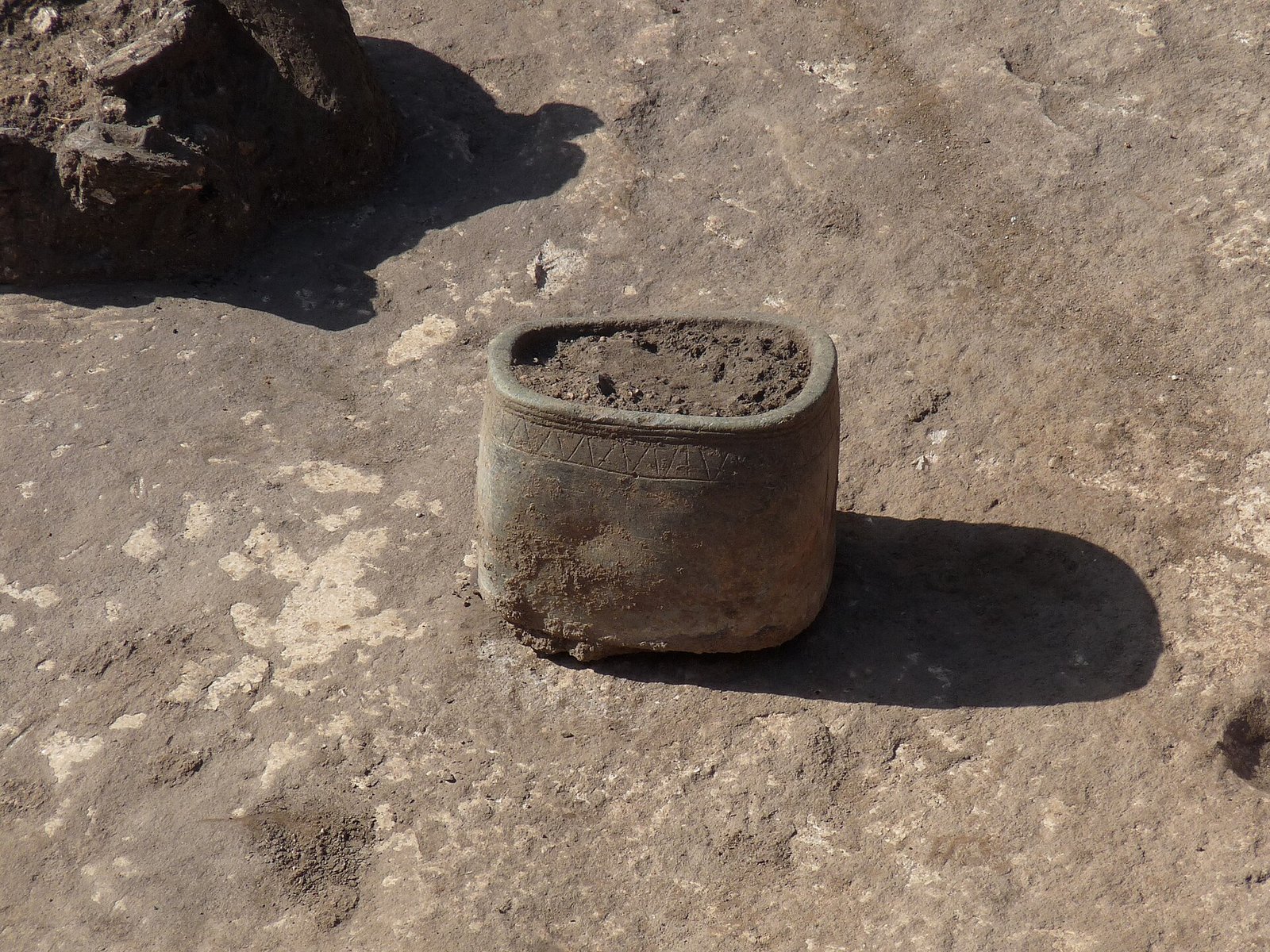
Field reporting describes BH as a roughly 9 × 7 m building with walls surviving up to about 3.5 m high.[1] Inside are two-tier benches, four broken T-shaped pillars, and, against the north wall, a large stone vessel set on a two-step platform with a channel beneath it — plus clear burning traces.[1] The vessel-platform-channel arrangement is a strong research lead, but the checked formal extracts do not yet confirm the “BH” label, exact loci, object numbers, stratigraphy, or function.[2]
The most tantalising feature is functional: a large vessel positioned above a channel, as if built to move a liquid. What that liquid was — water, blood, or another substance — is not established, and we say so plainly. The arrangement echoes the serpentine channel of the Pillar Room and the theme explored in The Serpentine Channel: at Karahan Tepe, liquids seem to have mattered, but their meaning is unrecovered.
BH belongs to the late-phase Western Terrace alongside BD and the domestic AZ. Its exceptional preservation makes it the clearest window onto how these later rooms were built and used — benches for gathering, pillars as figures, and a plumbed vessel that hints at ceremony. It is central to the reporting on Karahan’s later ritual-liquid buildings.
It is easy to call BH a ritual building and be done. The evidence supports a strong lead — a vessel-and-channel installation, benches, broken pillars, fire — but not a settled story. We do not claim what liquid moved through it, why the pillars broke, or what the burning means without formal support. Preservation is not the same as publication.
It is the best-preserved late-phase building at Karahan Tepe — walls up to ~3.5 m, two-tier benches, broken T-pillars, and a north-wall stone vessel on a platform above a channel.
Unknown. The vessel-and-channel was built to move a liquid, but whether water, blood or another substance is not established.
Karahan Tepe Research & Archive · Last updated July 2026.
Peer-reviewed detail follows Prof. Necmi Karul’s 2021 excavation report; 2024–2025 finds are cited to project announcements and reputable coverage and flagged as reporting-grade pending formal publication. We use the excavator’s structure designation as the canonical name and do not collapse the evidence into a single settled function. This is a living archive summary, not an official academic publication.
Peer-reviewed excavation detail follows Karul 2021. Finds reported in 2024–2025 seasons are cited to project announcements and reputable coverage and are flagged as reporting-grade pending formal publication. See Sources & Method and Open Questions.
Browse every excavated structure in The Atlas, or see them in context on the interactive overview.
See It For Yourself
Our small-group expedition takes you into Karahan Tepe's chambers with expert guides who explain what each one actually tells us.
Visit with our expert team →Free E-Book
Join the archive and receive our free e-book — plus updates whenever new discoveries emerge from the site.
No spam. Unsubscribe anytime.