 Karahan TepeResearch & Archive
Karahan TepeResearch & Archive
Karahan TepeResearch & Archive
Deep Dive · Daily Life
Wild gazelle, lentils and vetch, almonds and pistachios, and grains they gathered rather than grew. Karahan Tepe's menu quietly upends the idea that farming came first.
Before you can build a monument, you have to eat. So what fed the people who carved Karahan Tepe? The excavation's own food evidence — animal bone and charred plant remains reported by director Prof. Necmi Karul — gives a surprisingly specific answer, and it's not the one the textbooks would predict: wild gazelle, legumes, and nuts, with grain they gathered rather than grew.[1]
The dominant animal in the bone assemblage is the Persian (goitered) gazelle, reported at roughly 60% of identified remains — a sharper, more focused hunting pattern than the broader animal spectrum at neighbouring Göbekli Tepe.[1] To this the people added legumes such as lentils and vetch, and gathered wild almond, pistachio and terebinth from the surrounding hills. Wild barley and wheat appear too — but as gathered grain, not the product of cultivated fields.[1]
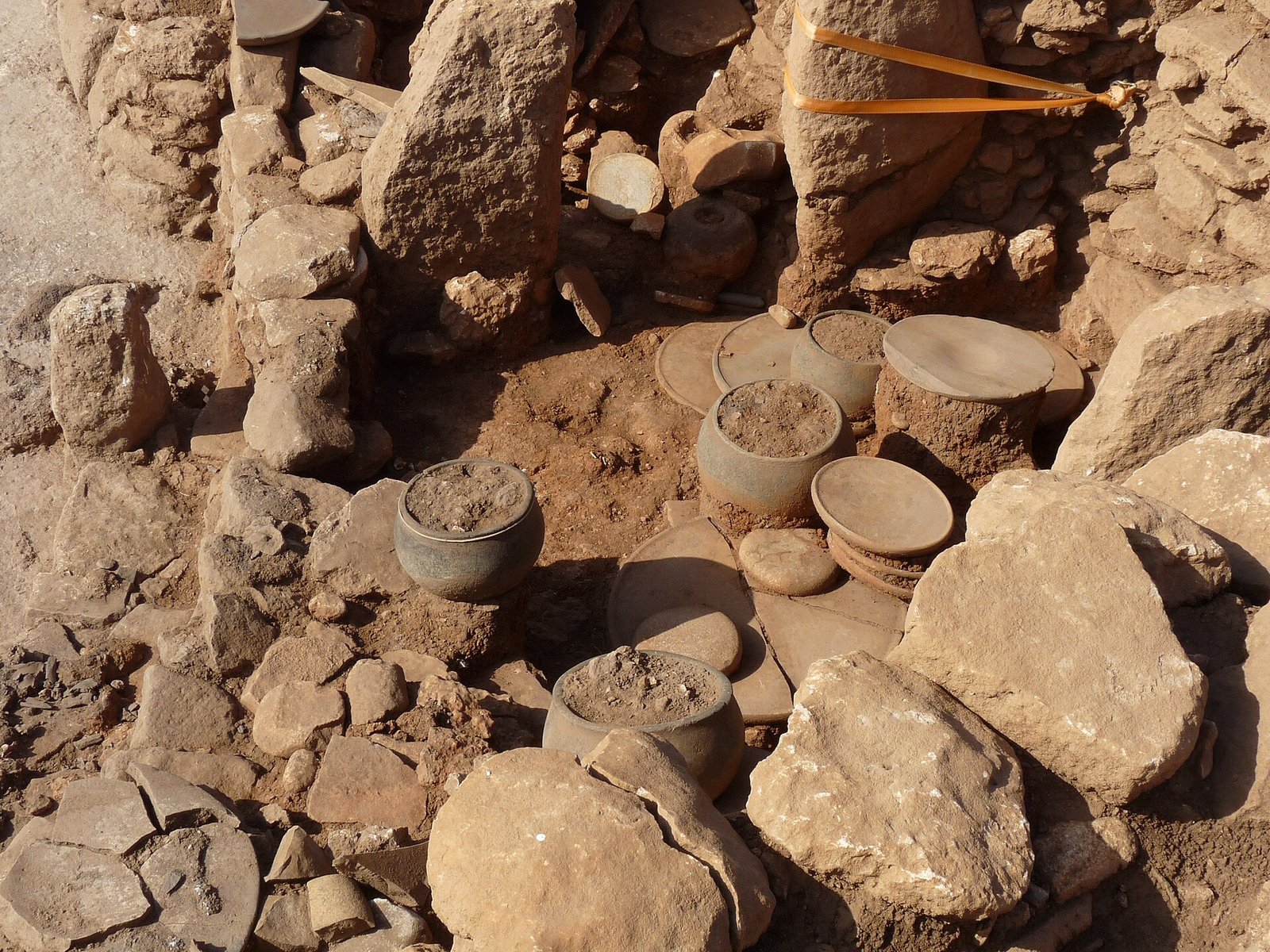
For a century, the standard account ran: farming came first, and then people settled, gathered, and eventually built. Karahan Tepe reverses the order. Here is a community raising monumental rock-cut architecture and living in a village of 30+ dwellings while still hunting gazelle and gathering wild plants — the monuments and the settled life come before the fully farmed economy.[1] The gazelle even appears in the site's art: a running-animal relief and the hind legs of a gazelle are among Karahan's carvings, the hunted animal echoed on the walls.[2]
The dietary picture is drawn from the excavation's zooarchaeological and archaeobotanical data as reported by the team; the full, peer-reviewed analysis is still to come, so we treat the specific proportions as reporting-grade. The direction of the evidence — gazelle-heavy hunting plus wild-plant gathering, ahead of full agriculture — is consistent and well supported across the Taş Tepeler.
How seasonal was the gazelle hunt? Were the wild grains being managed (tended, replanted) on the road to domestication, or simply harvested? How were big gatherings — in buildings like the amphitheatre — provisioned? The food evidence opens a window onto daily life that the pillars alone can't: not just what these people believed, but what they carried home and cooked.
Mainly wild gazelle, plus legumes (lentils, vetch), wild almond, pistachio and terebinth, and gathered wild barley and wheat. They were hunter-gatherers, not farmers.
Not in the developed sense. The grain evidence points to gathering wild cereals rather than cultivating domesticated crops — farming as we know it came later.
It challenges the old assumption that agriculture had to come first. Karahan's people built monuments and lived in a village while still hunting and gathering.
Karahan Tepe Research & Archive · Last updated September 2026.
The dietary data (gazelle-dominated fauna, legumes, wild nuts, gathered wild cereals) is reported from the Karahan Tepe excavation directed by Prof. Necmi Karul and covered by reputable outlets; the full zooarchaeological and archaeobotanical study awaits peer-reviewed publication, so specific proportions are flagged reporting-grade. The gazelle in Karahan's art is documented in survey reporting. Images are Karahan Tepe finds (Şanlıurfa Archaeology Museum / on site). This is a living archive summary, not an official academic publication.
Reported subsistence data pending peer-reviewed publication. See Sources & Method and Open Questions.
Explore further: The Village Beneath Karahan Tepe · The Toolkit & the Trade · Who Built It · More discoveries
Free E-Book
Join the archive and receive our free e-book — plus updates whenever new discoveries emerge from the site.
No spam. Unsubscribe anytime.