 Karahan TepeResearch & Archive
Karahan TepeResearch & Archive
Karahan TepeResearch & Archive
Interpretation · Held Open
Descend a narrow stair into a sunken room of generative stone, under a watching face, beside a predator's power — and a question forms that we can raise but not close: was this a place built to change a person?
This page is different from most on this site. It is not a description of a find — it is a reading, offered openly as interpretation, of what Karahan Tepe's design might have been for. We build it only from documented features, we label every leap, and we never claim it is proven. But the question is worth asking, because when you put the pieces together, they point in a consistent direction: Karahan Tepe looks less like a place you simply visited, and more like a place that did something to you.
Take the documented features of the Pillar Room complex and set them side by side:
Descent. You entered Structure AB through a 70-centimetre opening and a five-step drop, and — from the wear on the steps — appear to have left by a different stair. Movement was one-directional: you did not come out the way you went in.
The phallic field. Inside stood ten phallus-shaped pillars carved from the bedrock, plus a placed eleventh — a room that surrounds the body with generative force.
The watching head. A human head carved from the wall, a snake flowing from its neck, set facing the entrance — a presence that met whoever descended.
The channel and the hidden. A serpentine channel cut into the rock, a roofed, sunken, fire-lit space shut off from open ground.
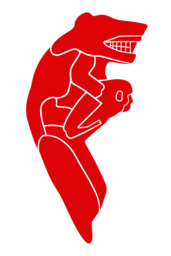
The predator. Across the site, the leopard — the one animal that could kill a person — carved and curated as bone, the sharpest edge of a world that handled dangerous animal power.
None of these features, alone, proves anything. Together, they describe a very particular kind of space: controlled entry and exit, a body lowered out of the ordinary world into a charged, enclosed, generative room, met by a watching face and the presence of the predator, and then released. Across human cultures, that is the recognisable grammar of a rite of passage — a designed sequence meant to move a person from one state to another. It is why Karahan Tepe can be seriously discussed as a candidate place of initiation or transformation. The eleventh, placed stone — a brought-in form among the fixed phalluses — even reads, on this synthesis, like predator power arriving inside the field of generative stone: the hinge of a possible transformation.
And here is the discipline that separates us from the pseudo-archaeology this site attracts. The evidence never hands us a complete ceremony. We cannot name a rite, a candidate, a sequence of acts, or a belief. Every element above is real; the story that binds them is ours, offered as one coherent, specific hypothesis and held deliberately open. We would rather say "this room was built to move a body under pressure, and here is why that looks like transformation" than invent an initiation script and sell it as fact. The honest version — a candidate, not a conclusion — is the more remarkable one, because it is built entirely from what is actually carved into the rock.
It can be discussed as a candidate place of initiation or transformation, based on its documented design — controlled descent, a phallic chamber, a watching head, a rock-cut channel and the predator theme. But this is an interpretation, not a proven fact; no complete ceremony is recorded in the evidence.
The individual features are documented and discussed by the excavators; the synthesis into a rite of passage is an interpretation (including ours), offered as a hypothesis. We keep it clearly separate from the excavated inventory.
The combination: you descend through a narrow opening into a sunken, enclosed room of generative pillars, meet a carved watching head, and move through the space in one direction — the recognisable shape of a rite that changes a person's state.
Karahan Tepe Research & Archive · Last updated July 2026.
Every architectural and sculptural element referenced here (the descent path, phallic pillars, carved head, serpentine channel and the leopard/predator evidence) is documented and sourced on its own page. The synthesis — reading them together as the grammar of initiation or transformation — is our interpretation, offered as an open hypothesis and kept deliberately separate from the excavated record. We do not present "initiation" as an established fact. This is a living archive summary, not an official academic publication.
Peer-reviewed excavation detail follows Karul 2021. Finds reported in 2024–2025 seasons are cited to project announcements and reputable coverage and are flagged as reporting-grade pending formal publication. See Sources & Method and Open Questions.
Explore the elements: The One-Way Path · The Phalluses · The Leopard · The Carved Head
Free E-Book
Join the archive and receive our free e-book — plus updates whenever new discoveries emerge from the site.
No spam. Unsubscribe anytime.