 Karahan TepeResearch & Archive
Karahan TepeResearch & Archive
Karahan TepeResearch & Archive
The Question · Claim vs Evidence
A striking idea has taken hold online: that on the shortest day, light passes through a porthole and lands on the carved stone head. It's a genuinely evocative claim — and one the excavators do not accept. Here it is, fairly, alongside the evidence.
It's one of the most-shared ideas about Karahan Tepe: that its famous rock-cut chamber was built as a kind of solar instrument, so that at the winter solstice the rising sun reaches through a small window and illuminates the carved human head watching from the wall. It's a beautiful image. It's also contested — and the people actually digging the site don't accept it. We think a claim this popular deserves to be laid out honestly, with the evidence on both sides, rather than repeated or dismissed.
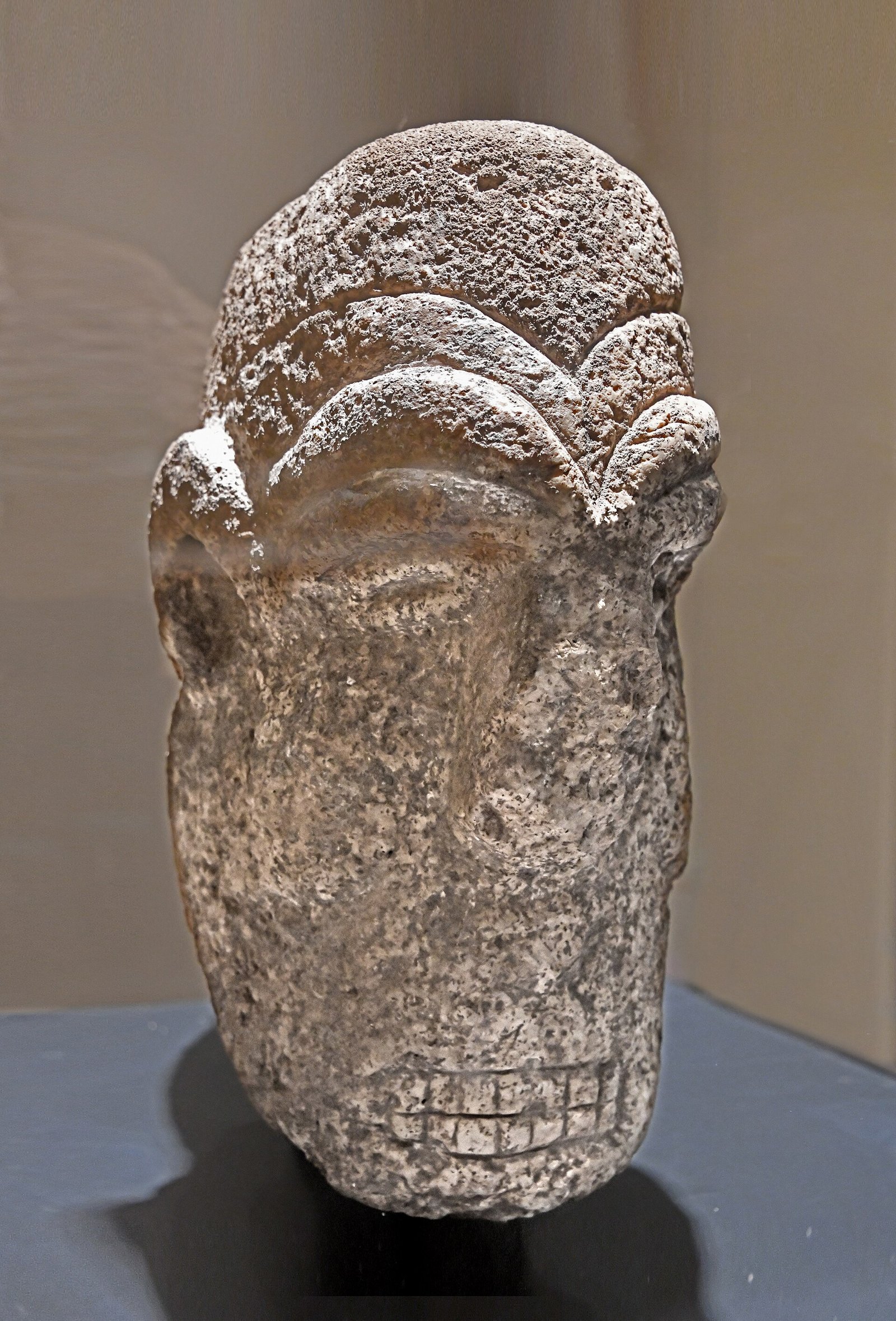
Start with what no one disputes. In Structure AB, the Pillar Room, there is a porthole stone — a deliberately cut circular window — in the wall, and a human head sculpted from the bedrock looking out across the room, among eleven upright pillars. The porthole and the carved head are real, intentional, and dramatic. The builders clearly cared about sightlines, thresholds and how a person experienced the space. That much is solid, and it is genuinely remarkable.
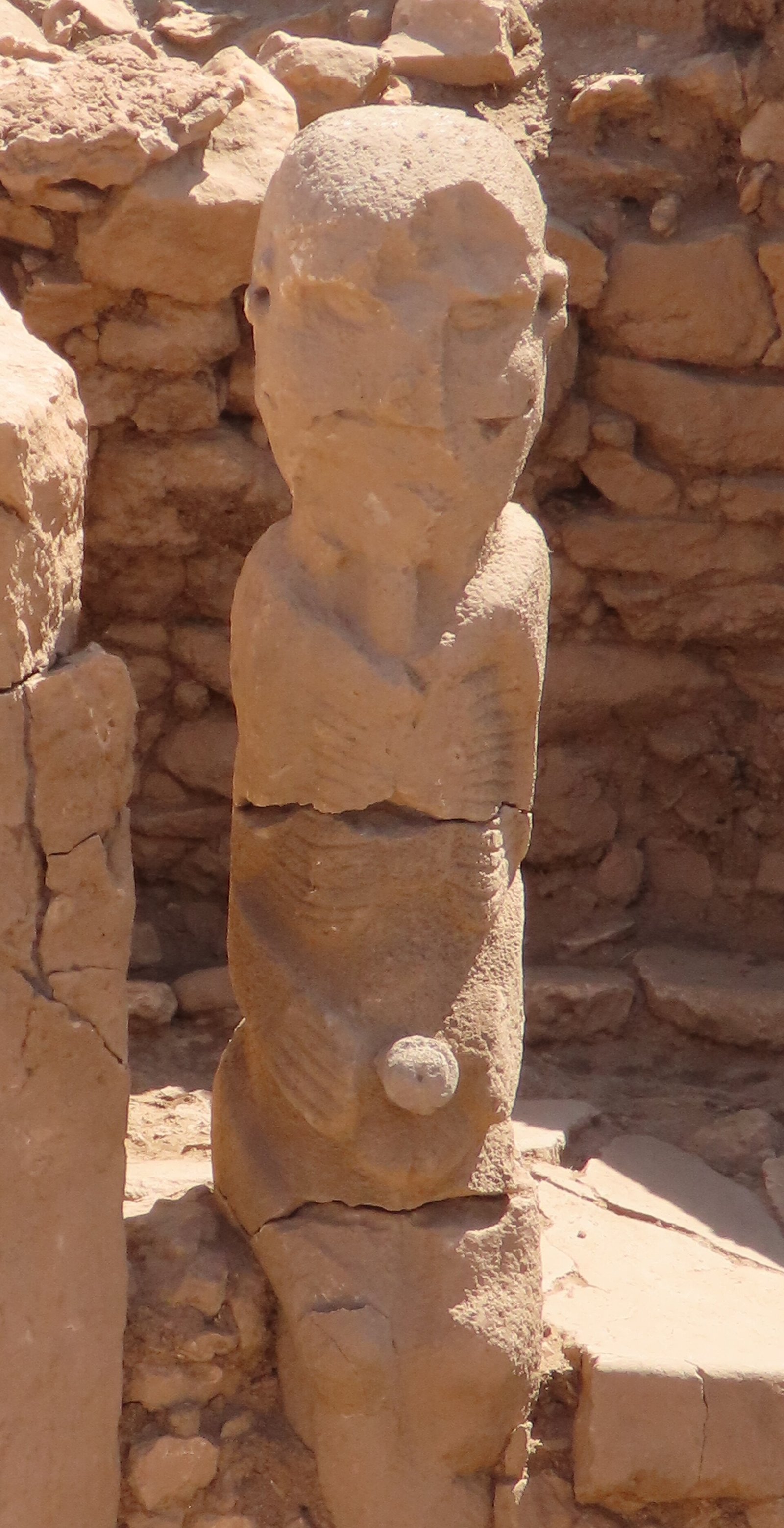
On 20 December 2021, independent researchers Hugh Newman and JJ Ainsworth reported observing, on site, that sunlight entered through a rectangular porthole, passed between the pillars, and lit the carved head on the opposite wall for roughly 45 minutes around the solstice sunrise.[1] From this, some have argued Karahan holds “the oldest winter-solstice alignment on Earth.” A further, more speculative version — associated with Andrew Collins and amplified by outlets like Ancient Origins and Graham Hancock's website — extends the idea to star alignments (the constellation Cygnus and the star Deneb).[2] We report these as the claims their authors make; we do not endorse them.
Here is the part the viral version leaves out. The excavation director, Prof. Necmi Karul, and mainstream archaeologists do not support an astronomical reading, for concrete reasons:
Because it's one of the first things people find when they search for Karahan Tepe, and most of what they find is presented as settled fact or wrapped in far bigger claims — lost super-civilizations, “ancient astronauts,” star gods. Our job is to let you weigh it clearly: the architecture and its drama are genuine; the specific solstice alignment is an alternative interpretation that the excavators reject; and the cosmic-civilization extensions have no archaeological support at all. Holding those three apart is exactly the method we use everywhere on this site.
Could the builders have cared about light, direction and the turning year? Quite possibly — people across the Neolithic clearly did, and Karahan's designers were obsessive about how their spaces were entered and seen. But “Karahan Tepe is aligned to the winter solstice” is not a documented fact; it is a striking claim that runs against the excavation's own evidence for roofing. We present it, we don't assert it, and we'll happily revisit if the excavators ever publish support for it. For what is known about how you moved through and experienced the chamber, see The One-Way Path.
Not as an established fact. Independent researchers reported a solstice-sunrise light effect in 2021, but the excavation team does not endorse an astronomical alignment and has noted evidence the buildings were roofed, which would prevent it.
Independent researchers Hugh Newman, JJ Ainsworth and Andrew Collins, amplified by popular outlets. It is not a conclusion of the peer-reviewed excavation.
Prof. Necmi Karul has said this Neolithic architecture consists of roofed buildings, not observatories, and that no astronomical evidence supports the alignment theory.
Karahan Tepe Research & Archive · Last updated September 2026.
The porthole stone and carved head in Structure AB are documented features of the excavation (Karul). The winter-solstice alignment is an interpretation advanced by independent researchers (Newman & Ainsworth, observation 20 Dec 2021; Collins), not by the excavation team, and it is not accepted by the excavators or by mainstream archaeology, which points to evidence the structures were roofed. The Cygnus/Deneb star-alignment and “super-civilization” extensions are pseudo-archaeological and are not endorsed here. We present the claim to inform readers, clearly separating documented fact from contested interpretation. This is a living archive summary, not an official academic publication.
We cite the alignment sources so readers can examine the claim directly, and we flag them as non-peer-reviewed. See Sources & Method and Open Questions.
Explore further: The Porthole Stone · The Carved Heads · The Pillar Room · Open Questions
Free E-Book
Join the archive for clear, well-sourced Karahan Tepe — where we tell you what's documented, what's interpretation, and what's still unknown.
No spam. Unsubscribe anytime.