 Karahan TepeResearch & Archive
Karahan TepeResearch & Archive
Karahan TepeResearch & Archive
A Hand That Breaks From Nature
On a standing stone at Karahan Tepe, two carved arms reach around the shaft — and each hand ends in not five fingers, but eight. Look closer, and the mystery only deepens.
Some finds hand you a fact. This one hands you a question you can't put down. At Karahan Tepe the T-shaped pillars are not just posts — they are bodies, arms carved reaching around the stone. But on one of them, look at the hands. Where you expect five fingers, there are eight. On each hand. Carved deliberately, into stone that has stood for more than eleven thousand years, by people who knew exactly how many fingers a hand should have.

This is not a slip of the chisel. The people of Karahan Tepe carved lifelike faces, animals caught mid-movement, ribs and spines and hands rendered with real anatomical control. A hand is not a hard thing to count. So when a figure is given eight fingers instead of five, the extra count is not a mistake — it is a choice. Someone wanted this figure to have hands that no living person has. Why? Here the honest answer is also the thrilling one: nobody knows. No text explains it. No key unlocks it. What survives is the strangeness itself — carved on purpose, and left for us to feel.
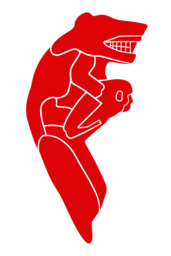
This is where the mystery deepens instead of dissolving. A short distance away, at the sister site of Sayburç, a carved figure raises an open hand — with six fingers. Not eight. Not five. Six. Two neighbouring communities, in the same Neolithic world, each carving human hands with the "wrong" number of fingers — and different wrong numbers. It is as if the count of the fingers meant something to these people: a mark, a rank, a way of saying a figure was more than a person — a language of the hand that we can plainly see and completely fail to read. The eight and the six are not an error to be corrected. They are a pattern to be wondered at.
Across the ancient world, giving a figure the wrong number of fingers, limbs, or eyes is one of the oldest ways of saying this is not an ordinary person — a spirit, an ancestor, a being, someone caught in the act of transformation. The eight-fingered figure has drawn vivid readings in that key: some look at it and see a fusion of creatures, a shoulder that suggests a bird, arms that curve like snakes, a figure becoming a mediator between worlds. We will not tell you that is what it is — no one can. But we refuse to wave it away either. In a place already charged with descent, predators, and the human body pushed to its edge, a figure with eight fingers on each hand belongs to exactly that world of the uncanny — and it keeps its secret intact.
A standing pillar at Karahan Tepe carved as a human figure, whose hands each show eight fingers instead of five. It is a deliberate, non-natural detail — and it remains at the site.
Nobody knows. The carvers were highly skilled, so the extra fingers are clearly a deliberate choice, not an error. Marking the figure as something more than an ordinary human is one idea — but the meaning is genuinely unsolved, which is part of what makes it so striking.
No — and the difference is the interesting part. The figure at nearby Sayburç has six fingers on one hand; the Karahan figure has eight on each. Two sites, two different "wrong" numbers — a hint that the count of the fingers carried meaning across the region.
It is at Karahan Tepe. Its exact find-structure and current display location are reported inconsistently, so we don’t state them as fact.
Karahan Tepe Research & Archive · Last updated July 2026.
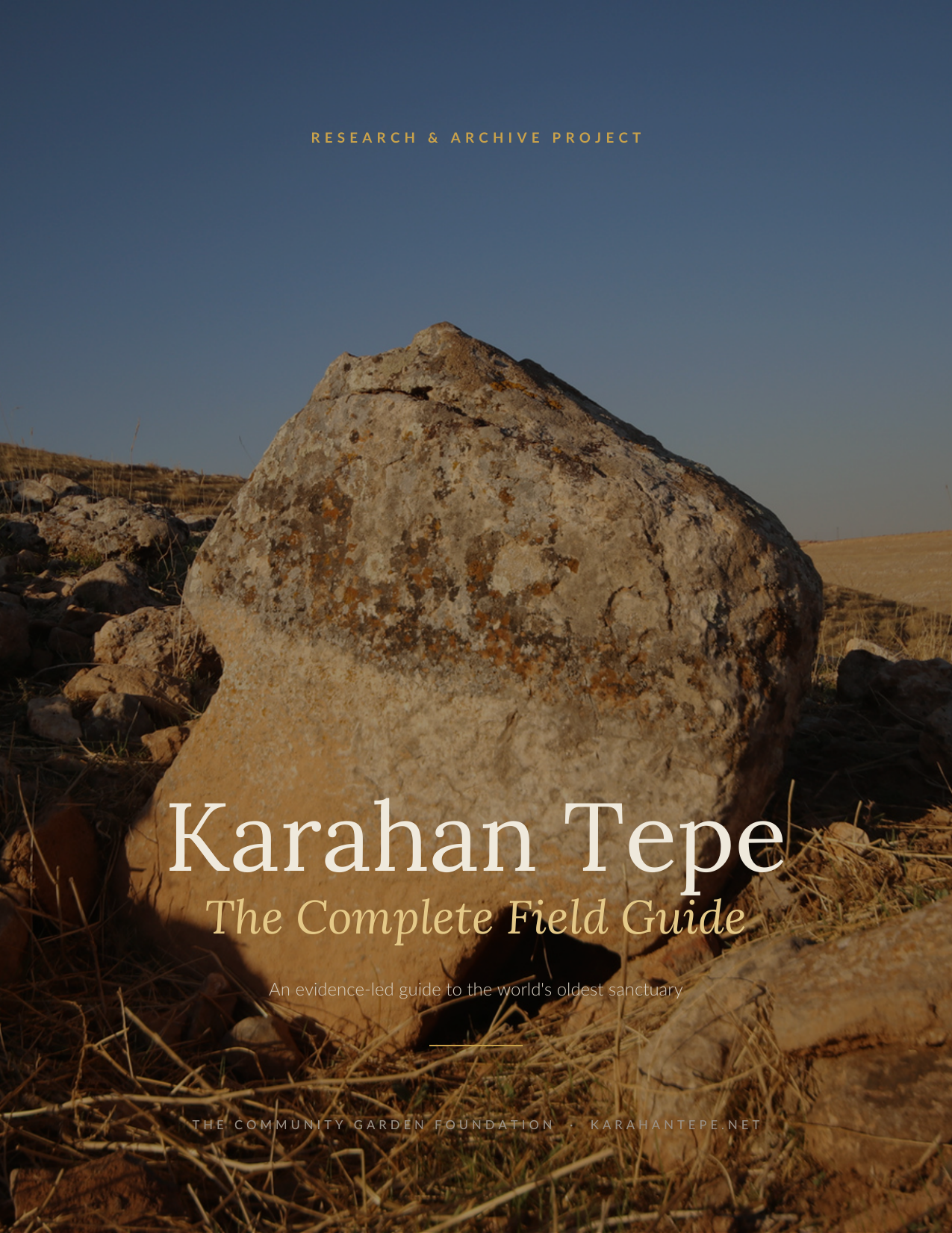
The eight-fingered figure is described in reporting and observation at Karahan Tepe. Some specific labels and decodings that circulate online — a particular structure designation, the site's current location, and "bird-snake shaman" readings — come from independent researchers and are not confirmed in the formal excavation record, so we present the finger detail as the anchor and treat any single interpretation or claim as open. The photograph is a genuine Karahan Tepe pillar-figure carved with arms and hands — the "pillars as human bodies" tradition this figure belongs to — shown here for that tradition; a dedicated photograph of the eight-fingered hand itself will replace it. This is a living archive summary, not an official academic publication.
Peer-reviewed excavation detail follows Karul 2021. Finds reported in 2024–2025 seasons are cited to project announcements and reputable coverage and are flagged as reporting-grade pending formal publication. See Sources & Method and Open Questions.
Explore further: The Carved Heads & Human-Faced Pillar · Symbols & Animals · Human Figures · All artifacts
Free E-Book
Join the archive and receive our free e-book — plus updates whenever new discoveries emerge from the site.
No spam. Unsubscribe anytime.