 Karahan TepeResearch & Archive
Karahan TepeResearch & Archive
Karahan TepeResearch & Archive
Structure BF · The Structures
A small special building beside the Central Building — and the source of the nested-vessel scene: a vessel within a vessel holding a fox, a vulture and a boar.
Structure BF is small, but it punches far above its size: a special building beside the great Central Building that produced what Necmi Karul has called one of the earliest three-dimensional scenes ever staged — a stone vessel set inside another vessel, holding three tiny animals. It is also where the site’s handling of animals, fire and bone gets genuinely strange.
BF is a small public or special building immediately beside Structure AD, furnished with T-shaped pillars and a dense assemblage of objects: stone vessels and plates, small animal figurines, selected animal remains, and fire features.[1][2] The cleanest reported counts are three small animal figurines, three stone rings, and one smaller vessel set inside one larger vessel.[2] Much of the faunal material — the “burned skulls” and selected bones — is still described in plural, reporting-grade terms and awaits formal zooarchaeological publication.
In Karul’s 2025 account, BF is one wing of a single connected complex with Structure AD: floor pits physically link the two buildings, and BF — like the great hall beside it — was deliberately filled in at the end of its use.
The showpiece is the nested vessel: a vessel-within-a-vessel containing three miniature animals — reported as a fox, a vulture and a boar — which Karul reads as a deliberately arranged, staged tableau, effectively a story told in three dimensions.[2] We give this its own deep dive in The Earliest 3D Scene. The reading is Karul’s interpretation of a real, carefully composed find; we mark the line between the object (documented) and the narrative (interpretation).
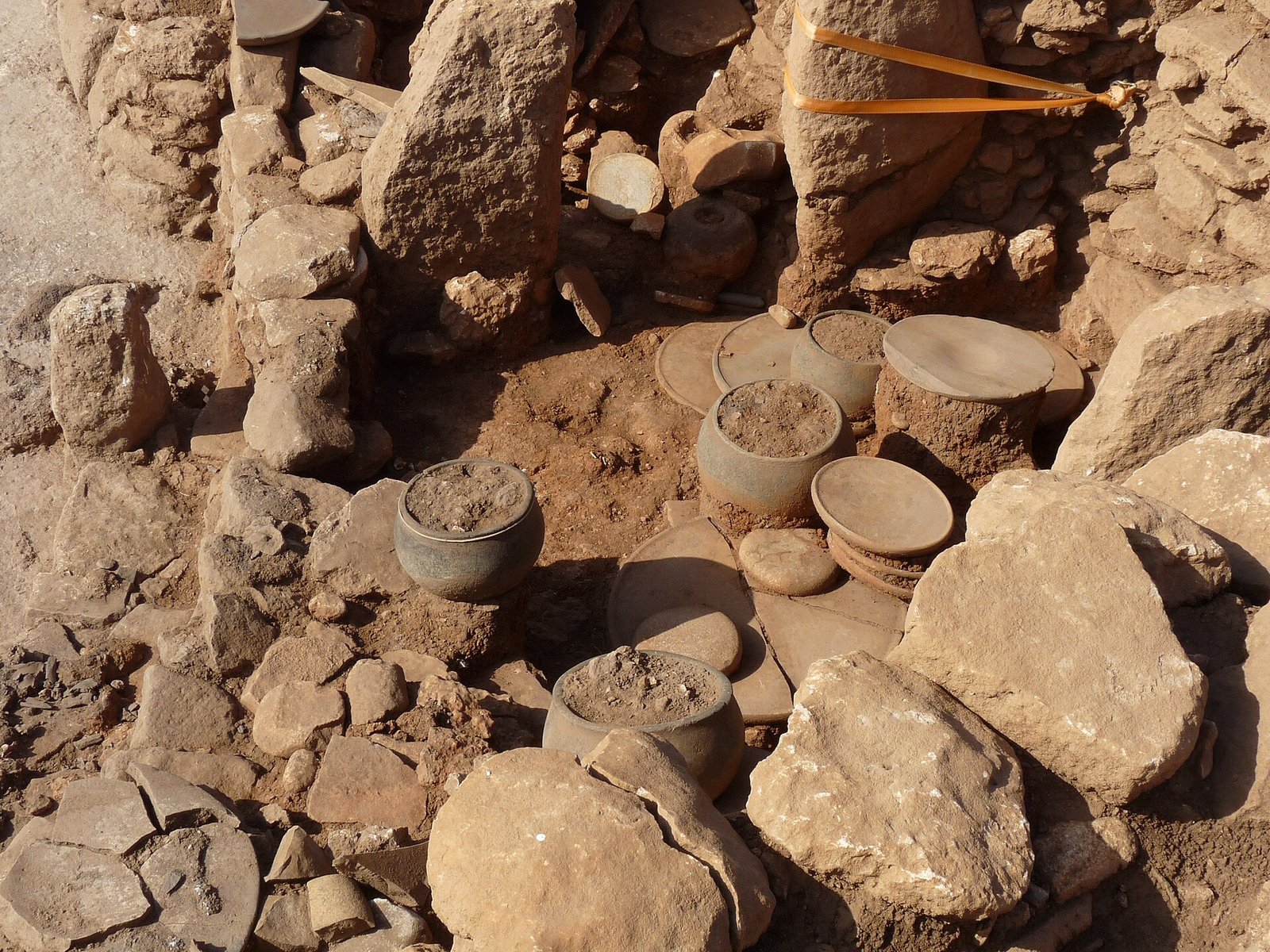
BF turns the area beside AD into a workshop of meaning: a place where objects were made, arranged and burned. It links to the site’s treatment of animals in Animal-Part Deposits and to its handling of the dead in Who Built It, where the skull evidence sits. Read together, they suggest ritual practice woven through ordinary-looking material.
The vessels, rings and figurines are documented objects with clean counts. The “earliest 3D story” is Karul’s compelling interpretation of how they were composed. The fauna — how many skulls, which species, burned how — is not yet a formal catalogue, so we report it as leads, not totals. This is a discovery hub, not a closed case.
A small building beside the Central Building that produced stone vessels, three stone rings, burned bone and the nested-vessel scene — a vessel-in-vessel holding three tiny animals, read as one of the earliest three-dimensional scenes.
They are reported from the 2024–2025 seasons but not yet published as a formal zooarchaeological catalogue, so we treat the fauna as reporting-grade.
Karahan Tepe Research & Archive · Last updated July 2026.
Peer-reviewed detail follows Prof. Necmi Karul’s 2021 excavation report; 2024–2025 finds are cited to project announcements and reputable coverage and flagged as reporting-grade pending formal publication. We use the excavator’s structure designation as the canonical name and do not collapse the evidence into a single settled function. This is a living archive summary, not an official academic publication.
Peer-reviewed excavation detail follows Karul 2021. Finds reported in 2024–2025 seasons are cited to project announcements and reputable coverage and are flagged as reporting-grade pending formal publication. See Sources & Method and Open Questions.
Browse every excavated structure in The Atlas, or see them in context on the interactive overview.
See It For Yourself
Our small-group expedition takes you into Karahan Tepe's chambers with expert guides who explain what each one actually tells us.
Visit with our expert team →Free E-Book
Join the archive and receive our free e-book — plus updates whenever new discoveries emerge from the site.
No spam. Unsubscribe anytime.