 Karahan TepeResearch & Archive
Karahan TepeResearch & Archive
Karahan TepeResearch & Archive
Structure AA · The Structures
A shallow room cut into the bedrock beside the Pillar Room — its bench carved with a snake, a fox tucked beneath the stairs, and its pits deliberately filled and sealed.
Structure AA — sometimes called the “Pit Room” — is a shallow chamber cut into the bedrock at the heart of Karahan Tepe, immediately beside the far more famous Pillar Room. It is smaller and lower than its neighbours, but it carries two of the site’s most quietly striking images: a snake gliding along a bench, and a fox tucked beneath the stairs.
In Karul’s 2021 excavation report, Structure AA is described as a roughly rectangular room about 8.5 by 7 metres and only about 1.1 metres deep — shallow compared with the sunken Pillar Room next door.[1] Along its western side runs a long bench, reached by steps, and the floor holds a series of small pits together with a northern pit. When the room went out of use it was deliberately filled, and a stone cover was set over the filled structure — the same pattern of intentional closure seen elsewhere on the site.
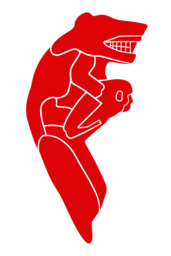
Two carvings give AA its character. A snake is worked in low relief along the bench, and a fox is carved beneath the stairs, near a niche.[1] Both animals recur across Karahan Tepe and the wider Taş Tepeler world, and the snake in particular echoes the serpentine imagery beside the carved head in the neighbouring Pillar Room. We report these as engraved features; what they meant to the people who made them is not something the excavation can decode, and we don’t pretend otherwise.
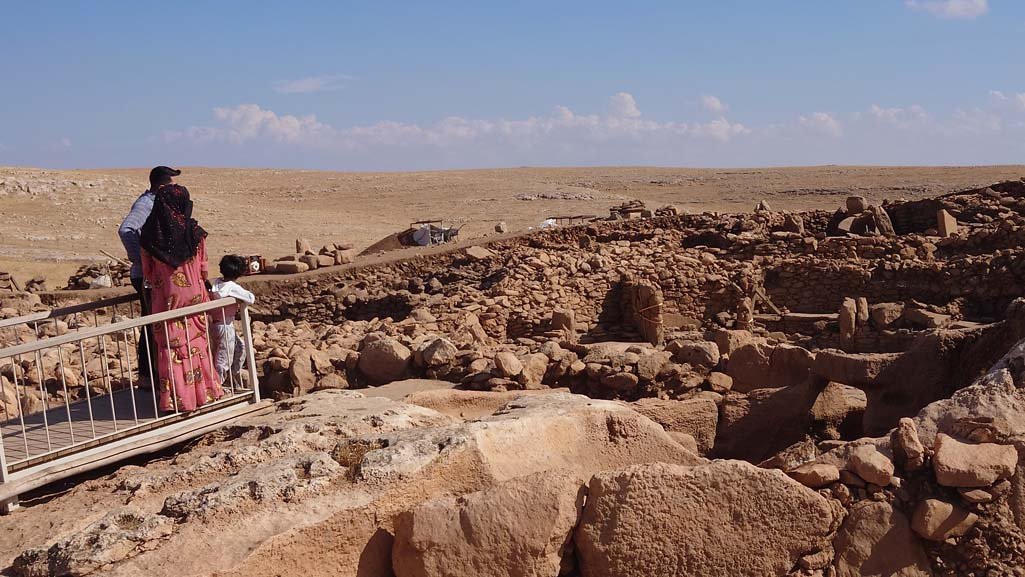
AA is one of three connected rock-cut rooms at the centre of Karahan Tepe, alongside the Pillar Room (AB) and the large Central Building (AD). Its shallow scale and animal imagery make it read less as a monument in its own right than as part of a choreographed group — a point developed in The One-Way Path, which traces how visitors seem to have moved through these linked spaces.
It is tempting to read the snake-and-fox pairing as a story. The honest position is narrower: AA gives us a compact package of architecture and animal imagery, deliberately closed at the end of its life. That the closure was intentional is well supported; that the animals encode a specific myth is not established. We hold the two apart on purpose.
A shallow bedrock-cut room about 8.5 × 7 m beside the Pillar Room, with a west bench, small pits, a carved snake and a fox, later deliberately filled and covered.
For the small pits cut into its floor. The name is descriptive; the function of the pits is not yet fully published.
Karahan Tepe Research & Archive · Last updated July 2026.
Peer-reviewed detail follows Prof. Necmi Karul’s 2021 excavation report; 2024–2025 finds are cited to project announcements and reputable coverage and flagged as reporting-grade pending formal publication. We use the excavator’s structure designation as the canonical name and do not collapse the evidence into a single settled function. This is a living archive summary, not an official academic publication.
Peer-reviewed excavation detail follows Karul 2021. Finds reported in 2024–2025 seasons are cited to project announcements and reputable coverage and are flagged as reporting-grade pending formal publication. See Sources & Method and Open Questions.
Browse every excavated structure in The Atlas, or see them in context on the interactive overview.
See It For Yourself
Our small-group expedition takes you into Karahan Tepe's chambers with expert guides who explain what each one actually tells us.
Visit with our expert team →Free E-Book
Join the archive and receive our free e-book — plus updates whenever new discoveries emerge from the site.
No spam. Unsubscribe anytime.